by Dan Masterton
Over the last few months, my wife, Katherine, and I have been trying to decide what to do for our oldest daughter, Lucy, for kindergarten.
We serendipitously bought our house in 2019, a year sooner than we planned, while we were awaiting the arrival of our second kiddo, Cecilia. Not only did it spare us the insanity of this housing market, but it also put us five houses down the street from a public elementary school. The school grades out average by public standards, but the proximity, its feeding into a really strong middle school, and the diversity of our community are all easy marks in its favor.
On the other hand, we also are thinking about Catholic elementary school. We belong to a parish that jointly sponsors a school with the other parish in town, and as registered parishioners, we would be able to send Lucy there at the parishioner rate – still a significant cost nonetheless.
Going there would make her a part of a Catholic school community with daily religion class and prayer, Sacramental prep, and regular Mass. We also looked at a multi-parish school in the next town over that was a bit bigger, a bit more expensive, and offered more robust programs, but to receive their parishioner rate, we would need to re-register and re-establish ourselves in a new community – something I didn’t think we could do in time.
I could go on and on about the pros and cons, but this is the top-line discussion we were in the middle of having.
And then the diocese abruptly announced that our parish school was closing. At the end of this year. Period.
The usual criticisms certainly apply, as the diocese cited not just low, decreasing enrollment but also financial instability. The Church has had to divert tons of money addressing sexual abuse scandals with legal fees and settlements; the Church doesn’t do enough to manage and foster finances, sustain schools, and mobilize communities; the Church isn’t particularly transparent about these processes with ultimatums or deadlines before fairly suddenly announcing it is merging or closing schools.
I am not one to get particularly lathered up when these decisions come down, assuming generally that those who’ve rendered the decision do so with big-picture awareness and all the hard and gloomy facts. When people come out with rants and complaints or begin trying to stage rallies or hold fundraisers, I think it comes from a good place, but is an unfortunate case of too little, too late. That sort of support must come steadily, on a perennial basis, for a school to be sustained.
This all makes me feel somewhat implicated. We toured the school, and we led them on the way you do when you are trying to consider an open-ended decision. We didn’t update them on our process (we’ve been in a holding pattern while we consider job situations and budgeting). And we didn’t approach this decision as if we were very likely going to choose Catholic school – in fact, we perhaps most leaned toward using public schools K-8 and saving up for Catholic high school.
I wouldn’t say that I feel like I’m part of the problem. I follow the news from our school closely, knew the basic facts, and walked into our tour as an invested and supportive parishioner. However, I also have not been part of the solution. I didn’t consider using their Pre-K program for our preschool needs; I haven’t donated any time or money in the three years I’ve belonged to the school’s parish; I didn’t come into this gung-ho that my kids would go there. And now the option will be gone.
I don’t know how, over time, I will feel about my part – or, more broadly, my parish’s part – in how this came down. But it is another data point in a trend that worries me. If the mobility and flexibility of Millennials, and the informality and aversion to affiliation of GenZ behind us, continue in this way, then what other institutions will disintegrate before we have a chance to use them, to become a part of them, to help them evolve and grow anew?
Maybe there will yet be a new wave of Catholic education that proceeds from our generations’ unique approach. Could the later starts to our families and child-bearing mean stronger financial footing among families who do send their kids to Catholic schools? Could the contraction in schools prune away space for as yet unknown growth? Could the changes in how young adults approach training, early career, and trajectory mean a different model for staffing schools?
I like to think hopefully, and not see closure as an unmitigated bad. For now, the starkness of this reality stares us in the face rather unapologetically. Perhaps over time, different trends will sketch an arc toward something brighter.
Tuesday, May 3, 2022


Wednesday, April 27, 2022
The Preferential Option for Creation
by Dan Masterton
One of the most challenging but most impactful parts of Catholic Social Teaching to our daily living is the Preferential Option. This theme is spelled out with different titles, depending where you look. You might see “Preferential Option for the Poor” or “Preferential Option for the Poor and Vulnerable.” When I share this theme or teach about it, I like to stretch out the title a little bit.
When I lead service, I want others to encounter and think about people who society has pushed off to its margins. In my Viatorian spirituality, we would describe it as making sure to walk closely and compassionately with people who “society accounts of little importance.” So I usually call this theme “Preferential Option for People Who Are Marginalized.” And I challenge myself this way: Christ calls us to intentionally consider people who are marginalized in everything we do individually, socially, and communally.
One thing that helps me carry this out is establishing routines and habits to make positive behaviors more consistent. So, my wife and I set a line item in the monthly budget: $20 (at least, sometimes more) that is for an undefined donation to respond to the needs of people who are marginalized. At some point, usually as I close up the bills and payments for a month, we identify some kind of social need, usually related to the news or a story we’ve heard from friends, and send our donation that way.
One day last week, a morning social media scroll reminded me it was Earth Day. I had forgotten the date of the holiday, but it wasn’t totally off my radar. My daughters and I had passed through a gardening event at the library a few days earlier, and we used their materials to create seed balls out of newspaper and sunflower seeds. My older daughter had made an Earth Day sign at preschool a few days earlier, too.
Throughout the day, I was glad to find that Catholic friends, Catholic media outlets, and others online were marking Earth Day, too. Some folks offered prayers. A friend re-shared her old tips on resisting “wish-cycling” of non-recyclable items. And NPR shared a special episode about the economic complexity of recycling and also re-shared this mini-documentary from last year that helps unravel the myths of recycling and challenge people to reduce their front-end consumption, which I watched with my daughter.
As the day unfolded, I wanted to act. Of course, I’m liking and re-tweeting stuff during my scroll breaks, but I get uncomfortable when I feel like I’m only a slacktivist – what could I do, even if small?
When I went grocery shopping, I grabbed my reusable bags. They’ve been allowed again informally for a few months, and I’m back to using them almost 100% of the time (still forget once in a while!). When I grabbed my cart, they were offering one free reusable bag for Earth Day! And sharing that their corporate headquarters had given full go-ahead to allow all reusable bags (hooray for the end of un-green pandemic restrictions!). Hopefully, this helps folks like me get back to 100% reusables and maybe helps spur other laggers to become adopters, too.
In many ways, Care for Creation and good stewardship oddly remain fringe issues. The extent to which mainstream thought accepts the need to spend, legislate, and act differently in light of climate change is still pretty flimsy. So, really, the earth is treated largely as marginal. And what have my thoughts and actions for Earth Day been if not preferentially opting for Creation?
It’s dawning on me that a preferential-option mindset is fundamental to justly caring for God’s Creation as long as change eludes us. The deep need to do charity and justice by people on the margins remains, but this added element fits alongside as part of a holistic mindset.
So, I went to my favorite Catholic group, the Saint Kateri Conservation Center, and sent our bit for the month of April to support their work. Their impressive staff of professional and faith-filled experts work as volunteers and apply their fundraising to their ministry and outreach – if you feel inclined to opt for Creation financially, perhaps in step with Earth Day or Arbor Day, join me in supporting the Kateri crew. Or at least follow them on Twitter or Instagram.
As we contemplate the call of Christ to intentionally think, speak, and act in ways that consider people on the margins, may we, too, find our ways, even when small, to opt for God’s Creation and be better stewards.
One of the most challenging but most impactful parts of Catholic Social Teaching to our daily living is the Preferential Option. This theme is spelled out with different titles, depending where you look. You might see “Preferential Option for the Poor” or “Preferential Option for the Poor and Vulnerable.” When I share this theme or teach about it, I like to stretch out the title a little bit.
When I lead service, I want others to encounter and think about people who society has pushed off to its margins. In my Viatorian spirituality, we would describe it as making sure to walk closely and compassionately with people who “society accounts of little importance.” So I usually call this theme “Preferential Option for People Who Are Marginalized.” And I challenge myself this way: Christ calls us to intentionally consider people who are marginalized in everything we do individually, socially, and communally.
One thing that helps me carry this out is establishing routines and habits to make positive behaviors more consistent. So, my wife and I set a line item in the monthly budget: $20 (at least, sometimes more) that is for an undefined donation to respond to the needs of people who are marginalized. At some point, usually as I close up the bills and payments for a month, we identify some kind of social need, usually related to the news or a story we’ve heard from friends, and send our donation that way.
One day last week, a morning social media scroll reminded me it was Earth Day. I had forgotten the date of the holiday, but it wasn’t totally off my radar. My daughters and I had passed through a gardening event at the library a few days earlier, and we used their materials to create seed balls out of newspaper and sunflower seeds. My older daughter had made an Earth Day sign at preschool a few days earlier, too.
Throughout the day, I was glad to find that Catholic friends, Catholic media outlets, and others online were marking Earth Day, too. Some folks offered prayers. A friend re-shared her old tips on resisting “wish-cycling” of non-recyclable items. And NPR shared a special episode about the economic complexity of recycling and also re-shared this mini-documentary from last year that helps unravel the myths of recycling and challenge people to reduce their front-end consumption, which I watched with my daughter.
As the day unfolded, I wanted to act. Of course, I’m liking and re-tweeting stuff during my scroll breaks, but I get uncomfortable when I feel like I’m only a slacktivist – what could I do, even if small?
When I went grocery shopping, I grabbed my reusable bags. They’ve been allowed again informally for a few months, and I’m back to using them almost 100% of the time (still forget once in a while!). When I grabbed my cart, they were offering one free reusable bag for Earth Day! And sharing that their corporate headquarters had given full go-ahead to allow all reusable bags (hooray for the end of un-green pandemic restrictions!). Hopefully, this helps folks like me get back to 100% reusables and maybe helps spur other laggers to become adopters, too.
Later, I had been meaning to get some more wildflowers and native items planted. (I have six milk jugs where little shoots of local plants are sprouting – fingers crossed to transfer them soon!) So I dumped old, weedy soil from our two little deck planters out into the compost. I shoveled out some deep-bin humus to put in the planters and combined it with a little new store-bought soil. Then I planted the seed-balls that my daughter and I made, as well as some additional sunflower seeds.Free reusable bag on the way into @meijer this morning! 🤓
— Dan Masterton (@ThisLadDan) April 22, 2022
Hope this helps folks restart the habit of reusable bags after the pandemic restricted it, or perhaps even start fresh and build a new habit.
Single use plastic bags are straight up silly. https://t.co/tKyHSLKR67 pic.twitter.com/QOWZRCMT22
As the day was wrapping up, I realized that I hadn’t made our preferential option for the month, but I thought giving for Earth Day isn’t opting for the marginalized. Then I paused. Or is it?My little earth day effort — planting seed balls my daughter helped make along with some sunflower seeds and using our backyard compost for the renewed soil from our little deck planters. #EarthDay2022 pic.twitter.com/lwLEEmeX75
— Dan Masterton (@ThisLadDan) April 22, 2022
In many ways, Care for Creation and good stewardship oddly remain fringe issues. The extent to which mainstream thought accepts the need to spend, legislate, and act differently in light of climate change is still pretty flimsy. So, really, the earth is treated largely as marginal. And what have my thoughts and actions for Earth Day been if not preferentially opting for Creation?
It’s dawning on me that a preferential-option mindset is fundamental to justly caring for God’s Creation as long as change eludes us. The deep need to do charity and justice by people on the margins remains, but this added element fits alongside as part of a holistic mindset.
So, I went to my favorite Catholic group, the Saint Kateri Conservation Center, and sent our bit for the month of April to support their work. Their impressive staff of professional and faith-filled experts work as volunteers and apply their fundraising to their ministry and outreach – if you feel inclined to opt for Creation financially, perhaps in step with Earth Day or Arbor Day, join me in supporting the Kateri crew. Or at least follow them on Twitter or Instagram.
As we contemplate the call of Christ to intentionally think, speak, and act in ways that consider people on the margins, may we, too, find our ways, even when small, to opt for God’s Creation and be better stewards.
Tuesday, April 19, 2022
The Greatest Sign of Intelligence?
by Dan Masterton
“I think we should start every conversation — whether it’s the president making a speech, or us doing a show — with ‘ok, obviously, I’m a jackass, but I’ve prepared this evening of entertainment’ or ‘here’s the state of the union’… the fact that people are too insecure to admit to our foibles I think is one of our greatest failings.” -Nick
“I think the greatest sign of intelligence — I’m always impressed — when someone speaks like that, they have my full attention.” -Conan
In pastoral ministry, from teaching in the classroom to forming young leaders to directing retreats, I always hope that I can be someone who creates a space with conducive conditions for growth, and at the same time, I hope I never appear to be someone who is completely sure of himself or who has all the answers.
This is a bit easier to do in direct ministry, but perhaps a bit harder to do when writing or presenting. That’s why I was struck by this exchange between Conan O’Brien and Nick Offerman on his podcast.
Earlier today, I offered a session at the annual National Catholic Educational Association (NCEA) conference. I submitted a proposal about bringing Catholic Social Teaching to all areas of Catholic school campus life. My thought was trying to offer a little bit of “what” on what CST is, some “why” on its importance, and a whole lot of “how” on making it happen.
On the whole, I’ve always struggled to toe a good line. How can I demonstrate expertise without being dismissive or superior? How can I offer adaptable advice and examples without being wishywashy or pulling my punches? My hope is always to give a strong portrait of what I have seen work and why I think it’s worth trying, but to leave space for questions, to filter it through their skills and passions, and adapt what I offer so that it can be practical and effective in their ministry. I could never manage a schtick or gimmick and am a terrible, timid self-promoter. How can I overcome this and still do something helpful with peers?
So in my presentation, in slightly cleaner language, I used that little exchange as a way to try to contextualize the information I was about to offer. It’s an explicit way to hold two truths in tension that bracket the effort I make in accompaniment with other ministers:
First: at my core, I am a bit of a jackass — ask my wife or brothers or best friends.
Second: I have education and experience, passion and skills, and a desire to share and engage in exchanges to help spur good ministry.
I’ve always found ministry, especially writing, to be largely self-edifying – something that I can enjoy as a good in and of itself, only made greater when it takes root in others, builds communities, and nurtures deepened faith. This cheeky but authentic exchange from Conan’s podcast helped clarify a healthy approach – one in which ministry is offered as gift, in humility and imperfection, not with clicks or quotas or superficial metrics as its objective, but rather Christ.
This is a bit easier to do in direct ministry, but perhaps a bit harder to do when writing or presenting. That’s why I was struck by this exchange between Conan O’Brien and Nick Offerman on his podcast.
Earlier today, I offered a session at the annual National Catholic Educational Association (NCEA) conference. I submitted a proposal about bringing Catholic Social Teaching to all areas of Catholic school campus life. My thought was trying to offer a little bit of “what” on what CST is, some “why” on its importance, and a whole lot of “how” on making it happen.
As I brainstormed and outlined and compiled slides and resources, I worried a bit that my ideas might be too idealistic, too disruptive, too antagonistic. At other times, I did have some self-reassurance that my education and experience justified offering this perspective as best as I could.@ThisLadDan dropping brilliant ideas to infuse CST across the entire curriculum. plus, he shared a google drive full of resources, making it easy for me to share ideas with everyone in my school. pic.twitter.com/LFTe4JDAGq
— Cari White (@MnMonster11) April 19, 2022
On the whole, I’ve always struggled to toe a good line. How can I demonstrate expertise without being dismissive or superior? How can I offer adaptable advice and examples without being wishywashy or pulling my punches? My hope is always to give a strong portrait of what I have seen work and why I think it’s worth trying, but to leave space for questions, to filter it through their skills and passions, and adapt what I offer so that it can be practical and effective in their ministry. I could never manage a schtick or gimmick and am a terrible, timid self-promoter. How can I overcome this and still do something helpful with peers?
So in my presentation, in slightly cleaner language, I used that little exchange as a way to try to contextualize the information I was about to offer. It’s an explicit way to hold two truths in tension that bracket the effort I make in accompaniment with other ministers:
First: at my core, I am a bit of a jackass — ask my wife or brothers or best friends.
Second: I have education and experience, passion and skills, and a desire to share and engage in exchanges to help spur good ministry.
I’ve always found ministry, especially writing, to be largely self-edifying – something that I can enjoy as a good in and of itself, only made greater when it takes root in others, builds communities, and nurtures deepened faith. This cheeky but authentic exchange from Conan’s podcast helped clarify a healthy approach – one in which ministry is offered as gift, in humility and imperfection, not with clicks or quotas or superficial metrics as its objective, but rather Christ.
Tuesday, April 12, 2022
Not All Traditions Have Milkshakes
by Dan Masterton
As far back as I can remember, my mom always made an Easter bunny cake for Easter Sunday. With some basic box mix and a can of frosting, she baked the mold, and frosted it white with some accents color for the bunny’s features. Then, there was always the jelly bean garnish scattered around the plate, that we jokingly considered bunny poop. Even nine years after she passed away, my dad still uses the same mold, same process, and achieves the same traditional result for us.

When I was a middle-schooler, and I was responsible enough that my parents let me ride my bike places, I rallied some friends to go to Good Friday Living Stations at our parish. We knew some friends who were acting in the prayer service, so I persuaded a few other friends to come see them in the service with me. I enticed them by offering some french fries and milkshakes afterward. It was never more than a few of us – and the treat sounded better than it was (served out a little window at a defunct train-station McDonald’s in my hometown) – but it became a tradition that lasted several years, and eventually included driving, until we all went off to college.
At the University of Notre Dame, the Easter Vigil at the basilica is a heck of an event. A ton of seating is reserved for the families of RCIA students and staff and clergy, and then a huge line forms to try to get those last few seats. People start queueing hours beforehand. The liturgy is big and beautiful and the full reflection of what Easter joy ought to be in the Risen Lord. And unlike meatless Good Friday, the custom following Easter Vigil Mass was not shy or restrained, though it did still involve milkshakes. Catholics flocked to the nearby Steak’n’Shake just down the road, and we gorged ourselves on greasy burgers, shoestring french fries, and indulgent milkshakes. And with the three-plus-hour Mass not starting until 8pm, we usually only made it to our table about midnight.
Easter ought to be marked by joy, celebration, literal feasting. Catholics, and many Christians, are oddly skilled at embracing the ashen sackcloth of Lent but sometimes struggle to make the pivot to a feast-filled Easter – maybe because we’re too guilty about the indulgences we allow ourselves the other 320 days of the year?
Either way, one of the strange realizations I have from time to time is that I am the primary mover for these things now. Growing up, I gained these traditions from my parents and family; in school, my friends and I sort of took turns collaborating on stuff; in adult life, it sort of continues to be a social group effort; now, as a parent and spouse, and as the primary stay-at-home parent, it's more or less up to me to try and get things started.
It means trying to be proactive and intentional about doing things that could become traditions – and not necessarily predetermining that something will become a “tradition” just because I managed to pull it off once (it’s possible no one will like it!).
One success in my children’s young lives is the importance we’ve placed on their patron saints. We invoke their patrons each night at bedtime prayer; we talk about their stories and examples when we naturally can; and we celebrate their feast days each year with ice cream (hopefully also a daily Mass, a service project, or more as they get older).
Coming out of the steepest restrictions of the pandemic, we hope we can be more active in our parish, that we can get to know the folks at our favorite fully reopened brewery, that maybe we become “regulars” at a few of our increasingly favorite places. On the same token, we hope holidays, birthdays, and other special occasions take on this hallowed traditional feel. I know I need to do my best to bring my family together with our loved ones and ensure we have opportunities to make great memories. I know I also need to leave plenty of space for my kids and family to stumble upon traditions we didn’t even know we wanted. Hopefully, this Easter is another step toward a lifetime of rich and joyful celebrations, for our family and yours.
As far back as I can remember, my mom always made an Easter bunny cake for Easter Sunday. With some basic box mix and a can of frosting, she baked the mold, and frosted it white with some accents color for the bunny’s features. Then, there was always the jelly bean garnish scattered around the plate, that we jokingly considered bunny poop. Even nine years after she passed away, my dad still uses the same mold, same process, and achieves the same traditional result for us.

When I was a middle-schooler, and I was responsible enough that my parents let me ride my bike places, I rallied some friends to go to Good Friday Living Stations at our parish. We knew some friends who were acting in the prayer service, so I persuaded a few other friends to come see them in the service with me. I enticed them by offering some french fries and milkshakes afterward. It was never more than a few of us – and the treat sounded better than it was (served out a little window at a defunct train-station McDonald’s in my hometown) – but it became a tradition that lasted several years, and eventually included driving, until we all went off to college.
At the University of Notre Dame, the Easter Vigil at the basilica is a heck of an event. A ton of seating is reserved for the families of RCIA students and staff and clergy, and then a huge line forms to try to get those last few seats. People start queueing hours beforehand. The liturgy is big and beautiful and the full reflection of what Easter joy ought to be in the Risen Lord. And unlike meatless Good Friday, the custom following Easter Vigil Mass was not shy or restrained, though it did still involve milkshakes. Catholics flocked to the nearby Steak’n’Shake just down the road, and we gorged ourselves on greasy burgers, shoestring french fries, and indulgent milkshakes. And with the three-plus-hour Mass not starting until 8pm, we usually only made it to our table about midnight.
Easter ought to be marked by joy, celebration, literal feasting. Catholics, and many Christians, are oddly skilled at embracing the ashen sackcloth of Lent but sometimes struggle to make the pivot to a feast-filled Easter – maybe because we’re too guilty about the indulgences we allow ourselves the other 320 days of the year?
 |
| Mmmmmmmmmm... Steak 'n' Shake... |
It means trying to be proactive and intentional about doing things that could become traditions – and not necessarily predetermining that something will become a “tradition” just because I managed to pull it off once (it’s possible no one will like it!).
One success in my children’s young lives is the importance we’ve placed on their patron saints. We invoke their patrons each night at bedtime prayer; we talk about their stories and examples when we naturally can; and we celebrate their feast days each year with ice cream (hopefully also a daily Mass, a service project, or more as they get older).
Coming out of the steepest restrictions of the pandemic, we hope we can be more active in our parish, that we can get to know the folks at our favorite fully reopened brewery, that maybe we become “regulars” at a few of our increasingly favorite places. On the same token, we hope holidays, birthdays, and other special occasions take on this hallowed traditional feel. I know I need to do my best to bring my family together with our loved ones and ensure we have opportunities to make great memories. I know I also need to leave plenty of space for my kids and family to stumble upon traditions we didn’t even know we wanted. Hopefully, this Easter is another step toward a lifetime of rich and joyful celebrations, for our family and yours.
Tuesday, April 5, 2022
Dispensation and Obligation
by Dan Masterton
My dispensation from my Sunday Mass obligation was lifted, effective Palm Sunday. Bishop Hicks of my home Diocese of Joliet wrote that, with the end of mask mandates and the easing of social gathering restrictions, it is time to reinstate the obligation of Catholics in our diocese to attend Sunday Mass.
This ends a weird and wild two-year period in which Catholics, on a wide scale, were not expected to be at Sunday Mass. And the only time during my life when I ever missed Mass, for any reason, on consecutive weeks, let alone for months on end.
I appreciate the way Bishop Hicks shared his decision. First, he noted the perennial canonical exception from obligation for those who are ill or contagious; I think gaining awareness of this exception is a blessing of the pandemic, perhaps inviting greater sensitivity from me in the future about caring for my neighbors instead insisting on going to Mass unless I’m in the hospital or something. Additionally, Bishop Hicks emphasized the joy of a community reuniting, and doing so for such a special purpose as communion in Mass. And he identified our return to full Sunday celebrations as a “welcome home.” Amen, bishop.
Bishop Ron Hicks holds a special place in his heart for St. Oscar Romero. As we celebrate Romero’s feast day, learn more about this humble archbishop from El Salvador and why he ranks among our bishop’s heroes.
— Diocese of Joliet (@DioceseofJoliet) March 24, 2022
WATCH the video: https://t.co/IlD13wG3UZ pic.twitter.com/HVk5K1uz9F
Here's our guy, Bishop Ronald Hicks.
One area of liturgical life that gained major exposure was the simulcast Mass. With congregations unable to gather in person, parishes largely turned to live-streaming and recording, such that they could keep their parishioners engaged remotely. Cathedrals and major churches that had already been doing this for years seemed ahead of the curve, and may have won greater viewership by having higher production values and wider-reaching broadcast channels already in place. Some young adults I worked with asked some religious priests to do a Mass over Zoom, not just to give them a more intimate, familiar group but also to maintain some level of interaction – speaking responses, doing communal petitions at the Prayers of the Faithful, and faith-sharing after Mass.
 While televised Mass has been a staple of ministry to the ill and homebound – who would also receive hospitality visits with the Eucharist – it threw most of us into the deep end without experience. And personally, I was not a fan. Early on, when it was new and I thought it may be short-lived, I certainly tuned in, especially during Lent and Easter. However, I came to find it largely unfulfilling, maybe a commentary both on the incompleteness of the medium and of me. I didn’t feel drawn to speak the responses or sit and stand and kneel or pray along with the songs or to thoughtfully pray for spiritual communion; I couldn’t figure out how to engage and let it fade from practice. I can’t crawl into my kids’ heads, but my older daughter could only really stick with it for a short time before losing track.
It challenged me to feel greater empathy for the homebound and ill, who might only engage with liturgy in this way. It left me wondering what better ways could be found, if any. And it pointed me toward growing hunger to return to the Mass in the before-times way – spoken congregational responses, even if murmured; the sung prayers and hymns, even if off-key; and the communal presence of the church, even if haggard and half-assed. It has been a blessing to get back to the routine of Sunday mornings, and I’ve relished bringing my family back to our pews.
As we returned to the parish though, it has definitely gotten me wondering on the perennial questions that are only more acute now. How will we cover budget shortfalls that aren’t recovering? How can we reanimate lapsed community life? What is/will be my role in this? How can I try to be more active? To what extent do we get engaged in our school and/or RE program?
For starters, I was able to attend an in-person listening session for young adults that my parish held as part of our synod gatherings. In addition to providing input to the prompts, I also got to meet a member of the parish council and share some of my hopes for fellowship among parents and families. One of my ideas has been to copy the parents’ group from my previous parish, and the councilor who I met encouraged me to pursue it. I emailed the parish staff yesterday, and they promised to discuss it at their staff meeting.
In the meantime, growing hope is before us. First and foremost, the numbers of cases, hospitalizations, and deaths are as low as they’ve been since our data tracking got fully functional in late spring 2020 – this drop, along with natural immunity and the hope that vaccination rates will keep ticking up, bodes well.
In the pews, especially at St. Francis of Assisi in Bolingbrook, IL, I find hope in the diversity in our refilling pews – our parish gathers people of many races and ethnicities and of all ages, and I think reflects a Church alive. I can see this, too, in the young people who regularly minister as greeters and choir members and cantors and the students who represent our joint parish school at special Masses and in fundraisers. I’m also heartened by the way many still wear masks by personal choice even in the absence of a mandate, how we maintain a section where masking and social distancing is required, and how I’ve never seen a dispute of any kind at our church, or any resistance to the vaccine endorsements from our priests and holding of a vaccine clinic on our grounds.
I hope that, as my family gains new stability and as the parish comes back to full function, that we can be more involved, more outgoing, and more engaged, starting with this parents’ group idea. And I hope that others, no matter how much or how little you went to Mass these last two years, will get back in the habit again. What better time to rejoin in-person communion than Holy Week and Easter!? The Risen Lord awaits.
I hope that, as my family gains new stability and as the parish comes back to full function, that we can be more involved, more outgoing, and more engaged, starting with this parents’ group idea. And I hope that others, no matter how much or how little you went to Mass these last two years, will get back in the habit again. What better time to rejoin in-person communion than Holy Week and Easter!? The Risen Lord awaits.
Tuesday, March 29, 2022
To Build Up "A Civilization of Love"
by Dan Masterton
In Spring 2017, I wrote an open letter to Cardinal Blase Cupich.
At the time, I was living in Chicago and working for an archdiocesan parish school. One year earlier, our cardinal announced that he had initiated a universal twelve-week paid leave following births and adoptions for all full-time workers in the Archdiocese of Chicago. I still remember coming to that faculty meeting and feeling instant excitement as our pastor relayed this good news to our staff. In the back of my head, I knew that my wife, Katherine, and I were about to try to start our family.
Shortly after, we found out we were expecting. We worked through a fairly healthy pregnancy for Katherine and welcomed Lucy into our newly expanded family. I spent the first twelve weeks of Lucy’s life at home, with my wife and her, practicing fatherhood and this new phase of spousal living, in full breadth and depth. It was and is an immense blessing, and I wrote to my bishop to share my gratitude and reflections.
And he wrote back! What a guy!
 |
| Here's the reply he sent. Still think it's super neat! |
As the honeymoon wore off, we tried to get our ducks in a row for my transition to part-time work and stay-at-home parenting and Katherine’s return to work. I remember thinking that this new benefit in Chicago would be a harbinger to the Church and wider culture: twelve weeks paid is a reasonable, fair standard, and a basic opportunity that should be guaranteed to as many parents as possible.
Two years later, after a longer period of trying and wondering, our second child came along. This time, I was working part-time and without benefits. I had arranged with my supervisor to over-work for several weeks and “bank” hours, such that I could take a few weeks with almost-zero hours around the birth and net out to even. Katherine’s full-time benefits (in a different job now) were basically the same as before, but let’s zoom in on that a bit.
As a registered nurse at a large hospital, her benefit was short-term disability pay. It would cover about two-thirds of her expected earnings for six weeks (or extended to eight upon the surgeon’s approval of a recovery following a C-section delivery) to recover from labor and delivery. A twelve-week leave was protected by the FMLA policy, but those final six weeks are considered “bonding time” rather than recovery – so that meant either lost pay or applying accrued Paid Time Off hours in order to be paid. We of course used up 100% of the PTO bank during FMLA to keep her pay as normal as possible, but this didn’t get us to full coverage. We swallowed a modest but not insignificant amount of lost wages to afford her a little over three months with each of our newborns.
As many of our contemporaries navigate all of this and we compare notes, it seems our setup was about average, maybe a bit better than average. We do have some friends who have put in several good years of high-level work at their companies and earned their way up from robust base benefits to even better ones, including paid leaves lastings over six months and the chance to start leave a few weeks before the due date. Yet, there are others who, because of unusual or insufficient benefit structures or unconventional jobs, lack a formal leave on par with any of this.
So it’s been a head-scratcher for me to look back at the Archdiocese of Chicago in 2016 – an entity which has closed or merged several parishes, scraped by and sold assets to fund settlements for horrible abuse crimes, and always struggled to pay competitive market wages – and find that it was ahead of the curve in establishing this crucial benefit for us. We were told when it was established that they simply decided to increase the annual raise in the parish assessment fee to the diocese, and explained that this added cost would be borne proportionally by all communities as a necessary step forward (nice!). And while I thought and hoped it was the opening of the floodgates, it appears in retrospect that is very much not the case.
The great work by the team at FemCatholic compiled a portrait of leave policies in the dioceses of the Church that is rough to say the least. They were both thorough and transparent in how they assembled this data, and their coverage is illuminating. Start with this headline, and then read the whole thing. Please.
My next thought is that diocesan offices are a great place to scrutinize. Even if their central staffs are small, they are the standard-setter for a region of parishes, schools, and organizations, at least by reputation if not in actual formal governance. If dioceses can be challenged and confronted to pursue this crucial benefit more robustly, then perhaps the progress across parishes, schools, and other institutions will come more widely and quickly. And then our faith communities can become a stronger example for a culture of life and the call to family, community, and participation.
So what do we do? On a smaller level, there’s certainly ways to keep conversations going – comparing notes with friends and family going through a pregnancy, learning about the wide range of benefits out there, keeping the ball rolling. For ourselves, we can ask our supervisors or HR teams about existing policies and benefits, and advocate that twelve-week paid leaves for new parents be seriously considered and explored. And on the wider scale, we can join up with the community that FemCatholic is trying to raise across our Church. Sign their petition, and add your name to a growing list of Catholics trying to highlight the need for this life-giving benefit.
I once tried to talk to a bishop. Turns out he was listening and responded!
Two years later, after a longer period of trying and wondering, our second child came along. This time, I was working part-time and without benefits. I had arranged with my supervisor to over-work for several weeks and “bank” hours, such that I could take a few weeks with almost-zero hours around the birth and net out to even. Katherine’s full-time benefits (in a different job now) were basically the same as before, but let’s zoom in on that a bit.
As a registered nurse at a large hospital, her benefit was short-term disability pay. It would cover about two-thirds of her expected earnings for six weeks (or extended to eight upon the surgeon’s approval of a recovery following a C-section delivery) to recover from labor and delivery. A twelve-week leave was protected by the FMLA policy, but those final six weeks are considered “bonding time” rather than recovery – so that meant either lost pay or applying accrued Paid Time Off hours in order to be paid. We of course used up 100% of the PTO bank during FMLA to keep her pay as normal as possible, but this didn’t get us to full coverage. We swallowed a modest but not insignificant amount of lost wages to afford her a little over three months with each of our newborns.
As many of our contemporaries navigate all of this and we compare notes, it seems our setup was about average, maybe a bit better than average. We do have some friends who have put in several good years of high-level work at their companies and earned their way up from robust base benefits to even better ones, including paid leaves lastings over six months and the chance to start leave a few weeks before the due date. Yet, there are others who, because of unusual or insufficient benefit structures or unconventional jobs, lack a formal leave on par with any of this.
So it’s been a head-scratcher for me to look back at the Archdiocese of Chicago in 2016 – an entity which has closed or merged several parishes, scraped by and sold assets to fund settlements for horrible abuse crimes, and always struggled to pay competitive market wages – and find that it was ahead of the curve in establishing this crucial benefit for us. We were told when it was established that they simply decided to increase the annual raise in the parish assessment fee to the diocese, and explained that this added cost would be borne proportionally by all communities as a necessary step forward (nice!). And while I thought and hoped it was the opening of the floodgates, it appears in retrospect that is very much not the case.
The great work by the team at FemCatholic compiled a portrait of leave policies in the dioceses of the Church that is rough to say the least. They were both thorough and transparent in how they assembled this data, and their coverage is illuminating. Start with this headline, and then read the whole thing. Please.
My first thought was disappointment, and sadness. Five years after the joy and consolation of my leave, the progress hasn’t been made in our Church. We are easily criticized for raging against a culture that condones abortion but not robustly enough advocating for greater support of mothers, parents, and families. Let’s keep doing a better job of standing for whole lives, conception to natural death, with deep quality and dignity of life at all points.Today on the feast of the Annunciation, we want to start a conversation with the #CatholicChurch on #maternityleave. See the findings from our Investigation of all 176 dioceses in the US, here: https://t.co/2Vv3AY2ASx #civilizationoflove #prolifeproleave
— FemCatholic (@FemCatholic) March 25, 2022
My next thought is that diocesan offices are a great place to scrutinize. Even if their central staffs are small, they are the standard-setter for a region of parishes, schools, and organizations, at least by reputation if not in actual formal governance. If dioceses can be challenged and confronted to pursue this crucial benefit more robustly, then perhaps the progress across parishes, schools, and other institutions will come more widely and quickly. And then our faith communities can become a stronger example for a culture of life and the call to family, community, and participation.
So what do we do? On a smaller level, there’s certainly ways to keep conversations going – comparing notes with friends and family going through a pregnancy, learning about the wide range of benefits out there, keeping the ball rolling. For ourselves, we can ask our supervisors or HR teams about existing policies and benefits, and advocate that twelve-week paid leaves for new parents be seriously considered and explored. And on the wider scale, we can join up with the community that FemCatholic is trying to raise across our Church. Sign their petition, and add your name to a growing list of Catholics trying to highlight the need for this life-giving benefit.
I once tried to talk to a bishop. Turns out he was listening and responded!
On #MothersDay, May 8th, we will be sending this letter to the #USBishops. While bishops are not solely responsible for diocesan leave policies, we are inviting them as leaders to partner on advancing the conversation for paid leave in their dioceses. https://t.co/0jT1SMkt4S
— FemCatholic (@FemCatholic) March 26, 2022
Tuesday, March 22, 2022
Sports Sometimes Don't Stink (Before They Quickly Stink Again)
by Dan Masterton
I have always been big into sports – playing, coaching, watching.
After getting married and becoming a parent, two big things changed.
First, I deprioritized watching sports to de-crowd my time for my family. As much as I’d love to turn on every Chicago and Notre Dame game, I know that my kids won’t be able to resist staring at the screen and that I will struggle to multi-task and play with them the way they deserve. I still make appointment viewing out of playoffs, bowl games, and the opening weekend of March Madness, among others, but I just don’t watch as much and follow as closely as I used to do. And that’s mostly ok.
Second, I’ve learned to be a fan differently. My wife, Katherine, was a good enough sport to get mildly into hockey and the Chicago Blackhawks as we dated. She gained an understanding of hockey and can watch analytically, and she got to know some of the star players and big stories. At the same time though, she openly vented about how bad sports fans can be in objectifying players. Regularly, she’d hear me and others criticize players personally, get mad about their contracts, suggest they retire or request a trade, or worse. Her idea: acknowledge their humanity and focus on that first. Criticize their play if you must, but don’t criticize or demean the person. Seems so simple, right? It’s a tough habit to break, but I’m grateful for her influence on me here.
So with this evolving mindset, I may not watch and follow like I used to do, but I certainly read plenty still. And there’s lots to be upset about right now.
Major League Baseball owners and players just completed an acrimonious owner-induced lockout. Even if the players are certainly the more sympathetic side, it still disillusions me as the upper-class and super-upper-class quibble over money, only making the consumption of baseball for fans and families more and more expensive.
The NFL’s Cleveland Browns just shelled out a ridiculous amount of draft picks and record-shattering guaranteed money to acquire a talented quarterback who has an extraordinarily significant quantity and quality of sexual misconduct allegations hanging over his head. And the team claims to have vetted him thoroughly without speaking directly to his accusers or their direct representation. This becomes yet another example of on-field performance overshadowing misconduct off the field.
And our Chicago Blackhawks are slowly limping out of one of the most disgusting sexual assault incidents and mishandlings in modern sports, which directly impacted our own players as well as subsequent athletes who our former coach then preyed upon.
I think bad news is bad news. We don’t have to rub our noses in it; we shouldn’t ignore it entirely. I try to absorb it, think critically on it, blow some steam. And I also try to look for good, even if it’s elsewhere. Luckily, there were two stories of what I’d consider uncommon good elsewhere in Chicago sports this week.
In baseball, the Cubs closed the deal that brought Japanese slugger and outfielder Seiya Suzuki to town. He will make $85 million over five years, and the Cubs will pay his former team in Japan over $10 million to release his rights. The good news here? (Other than generational wealth for the Suzuki family?)
Seiya was a big fish in the free agent market, and many teams wanted him to come to their clubhouse. The Cubs made their pitch over Zoom and then in person, when the general manager, owner, and manager paid a visit, in addition to a future Cubs teammate making his personal pitch through their shared agent.
When Suzuki vetted the Cubs, he spoke with former Cubs pitcher Yu Darvish, one of the best Japanese players ever to come over to MLB. The Cubs famously traded Darvish away, shedding his large contract while obtaining very young prospects whose potential contributions would be many years away. It was sad for fans who loved Yu and knew he was a big part of any success we might gain, and probably a bit sad for Yu who had endeared himself to the fans and become quite beloved in Chicago.
Nonetheless, when asked about the Cubs, Yu gave Seiya a glowing review and assured him he’d be well supported – something you might not expect, given it was an unrequested trade that sent him out to San Diego. It was consoling to me to see Darvish – who remains a good pitcher, a wealthy man, and a fan favorite of a person – set aside any potential bad taste to tell the truth to a fellow countryman looking to make the same difficult leap Darvish had taken a few years back. The Cubs also delayed the formalization of the deal until they could arrange a secret visit to Wrigley Field for him, complete with custom greetings on the giant video boards. (Bleacher Nation collected some of the best notes here, and linked to a couple great articles about the effort to sign Seiya.)
Over on the west side, the Chicago Blackhawks, while also reassembling their social credibility, have to reassemble a hockey roster, and soon hire a new coach. With the trade deadline looming, a few names on our roster were obvious candidates to be shipped out to play for a competitive team, and also net the Hawks some assets that could help us down the line. The chief candidate was Marc-Andre Fleury, our veteran goalie.
Fleury is a particularly potent case when it comes to objectifying athletes. To some extent, athletes are paid handsomely to tolerate lots of travel, being traded (or negotiate clauses against it), spending long stretches away from family, etc.; yet, they are still owed respect and decency, in my opinion. Last summer, Fleury’s former team, the Las Vegas Golden Knights, needed to trade him and the final year of his $7 million annual salary. The Blackhawks had space for his contract and a need for a good goalie, so they completed the deal. The issue?
Fleury had joined the Knights through the expansion draft, after playing the first decade of his career in Pittsburgh. He had lost his job there, and the Knights communicated with the Penguins about selecting Fleury. He had time to prepare for the transition and deeply embraced the chance to start fresh. He quickly fell in love with Vegas and became the face of their brand new franchise. He imagined he’d play the balance of his career in Vegas, allowing his family to maintain its stability, and retire there. Unfortunately, his contract became one of the easier ways for them to do the necessary rework of their roster, so he was likely headed out. They just… didn’t talk to him about it. He got sent to the Hawks abruptly and without communication. Initially, he didn’t think he’d report, instead just foregoing that last $7 million and retiring. The Hawks’ leadership met with him and helped him gain comfort about coming to Chicago, which he ultimately did and quickly endeared himself to a new team and fan base.
The Hawks handled the trade deadline differently for him, and with him, essentially offering him veto power. The team and the player agreed on Minnesota as a potential landing spot, and they were interested. Fleury could join a playoff team and remain reasonably close to Chicago, where he could have his wife and children remain for the school year, with an easy route to visit for the last few months. For their trouble, the Hawks netted a big draft pick and space to play younger goalies. Good stuff all around.
Greed, misconduct, and more do much to muddy the waters of competition and spectating that should be a fun escape. I’m grateful I’m not as compartmentalized as I once was, and can find and value these moments of humanity tucked into the nooks and crannies of a complex landscape. Sports often stink. Then, for a minute, they don’t. And it’s neat to acknowledge and savor it, before they stink again.
Subscribe to:
Posts (Atom)
Featured Post
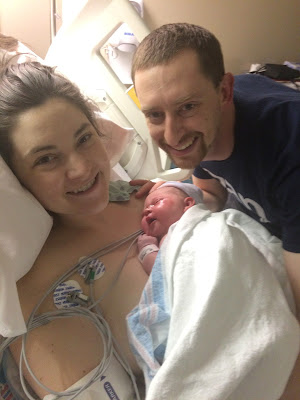
Having a Lucy
by Dan Masterton Every year, a group of my best friends all get together over a vacation. Inevitably, on the last night that we’re all toge...
-
by Dan Masterton Picking up my periodic thread on The Simpsons ( click back here to read my series intro and first post ), today I'm ...
-
5 years ago, I interviewed with members of the campus ministry department at a Catholic university. I had been accepted for graduate school,...
-
 by Dan Masterton Over the ten years of our relationship, my wife has had cause to poke fun at me for plenty of reasons. Chief among them ma...
