Thursday, May 9, 2019

#TreatYoShelf: 05/09/19

by Dan Masterton

This week, two deservedly noteworthy people in the world of Christian faith passed away...

Jean Vanier and Rachel Held Evans died this past week.

Jean Vanier

I recommend heading to L'Arche's official page for the scoop on this amazing guy. L'Arche is the organization he founded and built into a huge, international community. Their countercultural model of live-in companionship for people with various special needs prophetically insisted upon the dignity of all people and all life and created a mutual, reciprocal community rhythm for everyone involved. Jean was 90.

Rachel Held Evans

I have been reading Rachel for years, most notably when I took her Searching for Sunday on my honeymoon with me as beach reading. Her way of coupling earnest lived faith with a grounded, accessible desire to learn and share hearty theology was a blessing to everyone who reads her work. Rachel had become a mother in the last few years, and her husband and she welcomed their first two kiddos into the world. She died rather suddenly and unexpectedly after a hospital admission, allergic reactions, and complications escalated all within a month. She was just 37. I recommend reading Elizabeth Dias' NYTimes feature on Rachel to learn more about her.

Eternal rest grant unto them, O Lord, and let perpetual light shine upon them.
May their souls and all the souls of the faithful departed, through the mercy of God, rest in peace.
Amen.

+ + +

"Francis: Women deacons commission gave split report on their role in early church" by Joshua J. McElwee via National Catholic Reporter

As sure as the sun rises in the east, Pope Francis will give an informal press conference on the flight back from his most recent international trip. In this case, Francis surprised us with an update on the study of a potential women's diaconate (dare I say, restoration of the diaconate?). Turns out, his study buddies couldn't agree on the historical roots in the Church, and now they've taken to studying their various theses to learn more about it. Translation? We haven't really gotten anywhere, so no one will be holding their breath on this one. From what I've learned over the years, it seemed the probable path to a potential women's diaconate would be a secondary form of Holy Orders, hopefully with a comparable scope of ministerial practice. Stay tuned for another decade or two? Ideally, it will come sooner.

"My Body, My Children's First Home" by Haley Stewart via CarrotsforMichaelmas.com

Haley with one of her four kiddos.
The spiritually of motherhood and pregnancy is beautiful and definitely something that will hopefully reach more and more moms in favor of pop pregnancy culture and fluffy blogs. Here, Haley celebrates how her children first lived within her as she nourished and carried them toward birth. The resonance between the physical touch of a mother and child with the intimate time of pregnancy term is beautifully unpacked in this post. It echoes what feels like a growing trove of motherhood and parenthood reflections, which sadly but necessarily must include the challenges of infertility, miscarriage, still birth, and complications and infant mortality. Tea with Tolkien Kaitlyn reflects regularly in her tweets about the grief of miscarriage; Leah Libresco beautifully and solemnly celebrated how her body could be a loving tomb for her child; Tim O'Malley long ago started a trajectory of reflections on infertility, adoption, and parenthood.

"Why are most Democrats not confronting Trump on immigration?" by Marcela Garcia via Boston Globe

Julian Castro is among the candidates that has caught my attention most in the early going. Among his intelligent, measured, and substantial platforms so far, he is going for the specifics on immigration, including decriminalizing the federal crime of illegal entry, reducing detention facilities and reorganizing ICE and the authorities governing immigration. More candidates need to address this head on, and whoever will gain the nomination and run opposite of Trump will need to present ideas that reflect justice, solidarity, and human dignity in a way that honors the traditions of America and its social values. (Side note: Julian is Catholic and not shy about it. I'm a fan of how Pete Buttigieg has brought faith into the conversation on the Democrat side, but I fear his momentum is making him prone to sound bytes. His recent comments suggesting God couldn't be a Republican aren't necessarily wrong but take this thread into a silly and pointless space that is unproductive.)

Thursday, May 2, 2019

#TreatYoShelf: 05/02/19

by Dan Masterton

Another month brings another batch of sad news of violence, from the extremist terrorism in the Easter attacks in Sri Lanka to yet another gunman shooting up a school in North Carolina. Now, as much as ever, is a time when the world needs the prophetic social teachings of the Church on the dignity of life, the earnest effort by people of faith to be good companions in person and in solidarity, and the worldwide network of relief and development work that the Church sustains. Modern society is often more and more adept at working across cultural and religious lines to collaborate in support of human need, and we need to continue building those partnerships and strive to preempt future tragedy.

Plenty of good stuff to get to reading this week...

"The Infinity Gauntlet Holds a Dead Saint’s Hand IRL" by Josh Noem via Grotto Network

Previously, I had seen some Catholic folks point out the stark similarities (pun intended) between the Infinity Gauntlet from the Marvel Cinematic Universe and the relic of St. Teresa of Avila's hand. Here, this article offers a deeper dive into the potential connections between the comic illustrator who originally drew the item and the historical and contemporary events, including the distribution of Teresa's relics and the rise and fall of Spanish dictator Francisco Franco. Long story short, there's lots of overlap if not a conclusive connection!


"Promoting the Common Good and Option for the Poor in the Trump Era: An Interview with Stephen Schneck" by Robert Christian via Millennial Journal

This is a neat interview with a wonderfully intelligent and articulate Catholic in public life. Prof. Schneck has some great perspective on the potential dissonance and tension of Catholic social teaching and traditionally Democratic values. He helps unpack the centrality of prioritizing the poor, keeping solidarity and subsidiarity front of mind, and social justice a higher priority than any libertarian individualism streaks.

"Universal Health Care Might Cost You Less Than You Think" by Matt Bruenig via NYTimes Opinion


This is a great op-ed on health-care. Frequently these articles take on a political bent, arguing about how American or un-American things like socialized systems, universal mandates, and reduced free market choice might be. Instead, this article analyzes the going rates for employer-based premiums and frames them as a percentage withholding from total pay relative to the average wage. His article (and these additional charts via Twitter embedded below) shows how considering one's health-care premium contribution in the same bucket as taxes, social security, etc. demonstrates that the existing system places heavier burden on poor and working-class people while disproportionately benefitting rich people. It's a different but substantial way to engage the costs citizens carry to support their health-care and provides a fresher footing for considering the health-care debate.
"How Trump is able to exploit the abortion issue, and why that’s bad for everyone" by Sam Sawyer, SJ via America Magazine

The abortion debate is gearing up to be as divisive and wedged as ever. States are passing laws -- some that go to the extreme to uphold abortion and some that strive to further restrict abortion -- that are meant to spur court cases and pursue a Supreme Court hearing. To help keep a solid sense of the issues, grounded, deliberate articles that offer an honest brokerage and a humble perspective can help us make sense of things well are huge. This article offers some admissions of shortcomings on the side of pro-lifers, reasonable criticisms of the approach of those who advocate for choice, and incisive discussion of how Trump does more harm than good with his lies and brutish approach.

"Former Sen. Joe Donnelly's new initiative: Teach Democrats to value rural voters" by Tony Cook via Indy Star

Sen. Donnelly was a casualty of the 2018 midterms. While Democrats won new seats all over the House, the Senate was a different story. Red states booted their blue Senators by a decent margin, and the homogenization of the parties continued with folks like Sen. Joe Manchin (D-WV) as some of the last exceptions. To try to help Democrats avoid defeats like this in the future, two of these ousted Senators are trying to use leftover campaign funds to help fellow politicians learn how to connect with rural voters and run a more inclusive campaign. Personally, I find people who run against the common lean of their party help create diversity of opinion and foster discussion around tough issues, so it'd be great to see a resurgence in moderate Senators from both parties, or even folks who ideologically lean opposite to much of their caucus.

"Drowning In Parenting Advice? Here's Some Advice For That" by Selena Simmons-Duffin via NPR All Things Considered

Let me tell you -- when pregnancy comes, so does a ton of unsolicited advice, unfounded advice, and pop culture advice. We fell victim to the "we'll buy the What to Expect When You're Expecting" book as a knee-jerk reaction; it's not bad, but it's written in a cheeky sort of way that doesn't feel totally sound. Luckily, a health-care provider recommended the Mayo Clinic books to us, and their installments on pregnancy and baby's first year were our go-to resources. Needless to say, the quantity of resources is crazy. This article/clip is an interview with an author who has sought to comb through all these studies and ideas out there and try to provide a curated set of advice that simplifies the stress.

Thursday, April 25, 2019

#TreatYoShelf: 04/25/19

by Dan Masterton

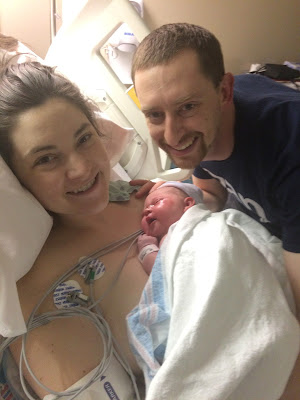
Pardon the absence from the normal Thursday fun these last two weeks -- lots of things are happening here in my little family, and updates should be coming soon!

In the meantime, let's get back to some Thursday links to populate your end-of-week reading list...

"The wrong way to ask Catholics for money amid the sex abuse crisis" by Melissa Cedillo via America Magazine

The timing of this year's Catholic Appeal certainly wasn't optimal, as the clerical sex abuse crisis continued with incomplete disclosure and incomplete accountability from our Church. Non-profit groups depend completely on charitable giving, so it's not really an option to forego planned giving campaigns like this that keep the wheels turning for the Church's many outreaches. However, it doesn't mean that it should unfold ho-hum just the same way it does every other year. A dear friend of mine was rightly agitated by the manner of this year's appeal and wrote eloquently about her experience from the pews as she attended Mass.

"UN: No screen time for babies; only 1 hour for kids under 5" by The Associated Press

I am home with my 2-year-old most of the time, and screens are a constant battle. Any screen anywhere anytime will captivate her and steal her attention. Shedd Aquarium with tank after tank of fascinating sea creatures? Nah, I'll just noodle on these educational tablets instead. Shelves and toy chests full of books and playthings? Nah, I'll look above it all to the TV. Enjoying my self-driven playtime with this toy I picked? Nah, I'd rather sabotage the call you just received on your phone. I try to be very diligent. We used to allow her one episode of a show per day, plus whatever residual TV watching she might do during the two hours or so that we might park it in front of the TV; now, we've gotten her a tablet with interactive apps that we can limit to 30 minutes total to replace that one episode per day. We also wrap our day up by cuddling with one episode of TV at the end of the evening. Yet here, the WHO recommendation is even tighter than that. It's going to be some serious uphill sledding for millennial parents as we grapple with the long tentacles of technology while raising kids.

"The Relentlessness of Modern Parenting" by Claire Cain Miller via NYTimes

On a related note, this NYTimes article from the winter has a deeper dive into the changing trends of parenting and how parents these days try to navigate the mess of decisions. A longer read, but full of intrigue.

"3 Joyful Things to Feast on During Easter Week" by Jessica Mannen Kimmet via Grotto Network

Catholics stink at feasting but are weirdly good at fasting. Did you know after forty austere days of sacrifice for Lent, we're supposed to feast for FIFTY days of Easter!? We're not so observant of this, and Jess Kimmet has some goods to make our Easters feaster. You may also enjoy this archival post of the old TRH on Easter from a few years back!

"Religion News Service, AP and The Conversation launch global religion journalism initiative" from Religion News Service

As a journalism nut, I love to see religious beat writers digging up fun stuff from the world of religion, religiosity, and religious practice. To apply journalism to the world of religion is to educate ourselves on the modern expression of human spirituality. Probably the best guy going at this is America Magazine's Mike O'Loughlin. So this press release was a wonderfully welcome bit of news that will hopefully spur plenty of links for me to share here. Way to go, team!

* * *

Finally, our most recent series on how normal Catholics can/should/ought to be wrapped a few weeks ago, and I just wanted to reshare my piece from our series. As a few of my friends move and tackle adult logistics and evaluate and reevaluate career choices and transitions, it continues to ring true to me that it's quite the puzzle for millennials to tackle in 2019 and beyond. I enjoyed trying to articulate my discerned rationales for taking the various plunges of my adult life. Check it out!

Monday, April 8, 2019

TRH on Catholic Normalcy No. 3: Starting a Family

by Dan Masterton

In an underrated later episode of The Simpsons, Homer almost converts to Catholicism. Bart gets expelled from public school, so his parents place him in Catholic school, which is a more affordable private school option that comes with great discipline (delivered by stereotypical Irish nun and priest). Homer goes in intending to scold the priest, but instead, he is quickly wooed by a pancake dinner, a bingo night full of prizes, and the opportunity for a clean slate through the Sacrament of Reconciliation.

When he returns home, Marge suspects something, saying, “You’ve been out all night and you look like you’ve accepted someone as your personal something.” Homer admits he’s been at the Catholic church and likes what he found. Marge hears him out a bit, but she’s still mad about the incense at a recent Catholic wedding that ruined her pantsuit -- she swears she won’t be having another twelve kids. Homer reassures her he only means ten, tops, and slides her a pamphlet: Plop ‘til You Drop.


This is the low-hanging fruit of Catholic stereotypes. We are the faith that is simultaneously lampooned for being prudish and backwards with sex while also being prolific in having children (which, according to science, is the result of having sex). Chalk it up there with the Christological controversy at Chalcedon as one of the great paradoxes of our faith.

I am happily married to my beautiful, loving wife, Katherine. We were married when I was 26 and she was 24; our first child was born when I was 28 and she was 26. To us, that felt normal and just about the right timing; peculiarly, many people remarked that we were young, even though we didn’t feel like we were.

We have had and continue to have a strong relationship and have effectively practiced Natural Family Planning according to the Creighton Model, which has naturally spaced our pregnancies right in line with our mutually discerned intentions. Now, with a two-year-old daughter and the hope and desire for more children, we’re living the increasingly full rigors of family life -- weathering the lean, late nights and reveling in the joy-filled good times.

But all of this wouldn’t be considered normal by most people, and I don’t just mean by non-Catholics or non-believers but by many fellow Catholics, too. Married at 24? Just enjoy your 20s and “settle down” later after you figure more of this out. Using NFP? Why do that outdated, unscientific stuff when birth control is available. Kids before 30? Get some more time and money under your belt first. Maybe some people would jump into these adventures similarly to how we did, particularly if their situations were different, but we certainly feel more like oddballs then mainstreamers. Why do all of this?

I was eager to start a family. My heart told me that waiting until we had more money, less student debt, a bigger home, etc. was attractive but perhaps not all it’s cracked up to be. Having entered a career with minimal earning power, and knowing what Katherine’s earning power would be following her terminal degree, I knew it’d get better financially, but not earth-shatteringly so. To me, my (our) youth, health, and energy were the greatest assets, more than any house, minivan/second car, suburban forever house, or other thing could ever be. Let’s invest that into starting a family now.

I knew we could bootstrap it as needed through our kids’ childhood, be smart and tactful as they grew up, and do our best to save toward our home, our kids’ education costs, and our retirement as we could along the way. The latter invited fidelity and humility while the former path felt abstract and potentially indefinite or even endless; the goalposts for “readiness” just felt like they could be moved and adjusted over and over again forever. Meanwhile, I wanted to invest my late 20s and 30s into my kids’ early years. I knew I could crawl and climb and carry with greater ease and trade the liberty of twenty-something life for the potential of an empty nest and grown kids to visit in my 50s. And ironically, having to discern all this through the constant reevaluation of NFP rather than the less complex equation of artificial birth control only affirmed the ideas we considered; the process can be challenging, but the open, regular dialogue has been a backbone of our marriage.

At its core, I simply felt called to fatherhood -- and not in general, not later, not sometime. Part and parcel of my discernment of marriage to Katherine and with Katherine was having kids and raising them with her. We both knew that the fullest sense of who we were made to be was waiting in our family, where we felt the ways we loved each other would be drawn even more strongly outward from us through our children. In fact, one of the handful of reasons I liked the name Lucy for our first child was that Katherine thought -- and I agreed -- that she’d come into her own as she became a mother, and the name Lucy shares root words with light, i.e. she is the light that brings who Katherine (and me) more fully to who she was made to be.

On a wider scale, I’m very ok with a mess. I’m a minimalist, kind of anti-materialistic, and very ok with hodge-podge, beat-up, mismatched, used, repurposed, resourceful stuff. This comes from my not-quite-desert-ascetic but definitely Catholic spirituality. So when it comes to family life, I don’t need everything to be “ready.” Yes, I want a safe, secure, healthy family life. No, I do not need pristinely painted walls, matching new furniture, or frequent professional photo shoots, etc. (though, occasional photo shoots for sure). Give me Lucy’s used end table from the letgo app; give me wall art, pillows, and curtains handmade by Katherine and friends for the nursery/bedroom; give me my grandma’s old sitting chair from her living room.

Basically, give me a mess. I’m good with the mess. I enjoy the mess. Two kids will make it crazier? Let’s go. God wired me to be a multi-track thinker; it certainly makes contemplative spiritual life tricky, but it puts family management in my wheelhouse. I can think through the household chores as I wind Lucy down for a nap, so that I can get clothes to the washer, pay the bills, move clothes to the dryer, do some dinner prep, catch up on some writing and editing, retrieve and fold the laundry, and then get some milk and a snack for Lucy as she wakes up. Thank God I’m 30 as I take a bite out of this life. It’s uniquely tasty.

But when you zoom out on our social life, looking to our close proximity, most of our similar-aged friends and family are on different tracks. We have friends whose early adult lives were or are stacked up with graduate studies, medical school and residency, moves for career and school, moves for relationship discernment, assertive career pursuits and paths, and more. Looking at about our 15 closest friends and family members/couples in Chicago, two-thirds are married or engaged to be married soon, and only three have kids. The interesting thing is that almost all of these people are faithful, mass-going Catholics -- so this trend of delaying marriage and family (whether personally chosen or thrust upon them circumstantially) or not pursuing one or both at all isn’t just outside the Church but within it, too.

As a result, despite my personal vocational security, I often find myself frustrated. Why are we so often on an island with our daughter? Our friends are wonderfully loving and patient with her, but why don’t they have kids of their own yet so they can all play together? I don’t linger long on accusatory angst over differences of disposition; instead, reality pulls me back to earth with reminders of what people without kids may be facing or thinking -- infertility or trouble conceiving and sustaining a pregnancy, career challenges and discernment, personal issues with physical or mental health, interpersonal marital challenges, and Lord knows what else.

I always hope our marriage and attempt at parenthood is an accessible, realistic, gritty example for our friends and family. And most of all, I hope others would be comfortable inviting us to accompany them through any and all of their discernment, whether thick or thin. Ultimately, I try to live my marriage and family like I live my faith according to an old “garden analogy” -- if I tend to my faith and my family and my marriage with diligence, and if my garden blooms and grows in beautiful ways that others can witness, then I hope others would see it and ask me about it.

* * *

One of the realities any couple has to face is that falling completely in love with someone means both that they will love you profoundly and that they will hurt you profoundly. Deepest love can only be given and received with authentic vulnerability. By opening oneself wholly to another, one also becomes vulnerable to potential hurt.

Love perfects as a decision, and making the decision to love your significant other invites the possibility of serious hurt as well as amazing, joyful love. It’s a reality we embrace as we dig into the depth of marital love. I would offer that this same reality is true of having, raising, and loving children. It should be a decision integral to the marriage, and it should be a decision of love, which inevitably makes one vulnerable to both pain and joy. My daughter drives me up the gosh dang wall when she obstinately refuses things we ask, when she is selfish and won’t share, when she’s inconsolably awake in the middle of the night, and more; my daughter also brings my heart its greatest consolation when she spontaneously gives hugs and kisses, when she learns new words to express herself (current highlights: “thank you” and “ta-da!”), when I witness her learning in real time, and much more.

If you have the courage to say before God and the Church that you commit yourself to marriage, then that same love that binds you and your spouse can flow forth from you to your future children. The light of our faith shines through the Sacrament of Marriage on into our weary parental hearts and conveys the Love of God forward from parents on to kids.

Thursday, April 4, 2019

#TreatYoShelf: 04/04/19

by Dan Masterton

"American Mothers are Trying Harder Than Ever–So Why Do We Feel Like We’re Failing?" by Elizabeth Tenety via Motherly

This is a great examination of the palpable challenges for mothers, and for parenting and starting/raising a family more broadly as well. I knew that managing our lives would be wholly different and decidedly more complex once we had kids; I did not have a way to know the degree to which that would be true. I am immensely grateful for my twelve weeks of paternity leave, and I cherish that we chose to take our leaves together. It kills me that so many go without this benefit, and I feel like (hope!) the social tides are turning in a positive direction here.

"Pete Buttigieg on faith, his marriage and Mike Pence" by Fr. Edward Beck via CNN

I gotta say Mayor Pete is my early favorite in this crowded Democratic field (I also like the intelligence and pragmatism of Andrew Yang, the thoughtfulness and authenticity of Julián Castro, and a few other bits). I read his memoir, and I've found his interviews and appearances to be heavy on integrity, consensus solutions, and practical approaches. Additionally, his religious attitude is refreshing. He's a I-just-live-my-faith sort of guy who just likes being a church-going Christian. That's a plus. What's troubling are the beginnings of unattractive answers on abortion (say it ain't so, Pete!) when I'm just looking for someone who moderates their pro-choice positions. Overall, Mayor Pete remains exciting and intriguing. Check him out.

"When Joe Biden Voted to Let States Overturn Roe v. Wade" by Lisa Lerer via NYTimes

I don't mean to make these links heavy on politics, and especially don't mean to hit you with two abortion-heavy links. However, I wanted to include this interesting history on Senator Biden's policy positions. It shows the way a thoughtful, earnest guy tries to wrestle with a difficult issue. I certainly don't agree with the way he proceeded in all of this, but the article profiles the process and the evolution thoroughly.

"Just One Game" by Brett Taylor at Bleacher Nation

Finally, another sports thing! Sportssportssports! One of my favorite sports writers out there is technically a blogger but approaches his craft with such thoughtfulness, nuance, and deliberate contextualization that he's better than a lot of the bigwigs. Here, Brett reflects on the realities of Opening Day and being a fan at the start of a season with high expectations for a good team. We will inevitably overreact (just as we are) and get disproportionately upset -- we shouldn't dismiss that, but there's also danger in going so extreme. Brett brings his usual carefulness to help get us grounded for another 162-game season.

Monday, April 1, 2019

TRH on Catholic Normalcy No. 2: Primary Priorities

by Tim Kirchoff

I’d like take a break from my colleagues’ discussions of family life and Christian vocation to talk about something far more worthwhile: politics. More specifically, the primary season is (already!) beginning, and candidates for every level of office are looking to build momentum.

If nothing else, the 2016 election proved how much primaries matter. The awful choice with which we were confronted in the voting booth in November was the result of a lengthy series of primaries in which candidates, party officials, media personalities, and voters all made decisions that contributed in some way to the result. Trump’s fixation on building a wall was not inevitable, nor was Trump’s nomination, or Clinton’s. If we are conscientious in the way we approach the 2020 primary season, we may be able to make a much more satisfying decision next November, or if we fail in 2020 as we did in 2016, at least we will have dared something different.

As Catholics, we are not politically unified. Many of us are more likely to argue with fellow Catholics over partisan politics than we are to argue with members of our respective parties about moral policies. We focus more on justifying our voting patterns and partisan affiliations than actually influencing our parties for the better. We are sycophants when we ought to be prophets, representing our respective parties within the Church more than the Church in our political parties.

What would happen if, for just one year, we reversed this dynamic? Instead of trying to change someone’s mind (or even just convince ourselves) about the merits of one party or candidate, let’s challenge our parties to be worthy of the support they demand of us.

I have in mind one issue for each major party—one subject on which the party orthodoxy is so willfully morally blind that even the slightest challenge to it would be noteworthy and ever-so-welcome.

Republicans

The administration’s family separation policy was, from the very start, a moral travesty, and the depth of this policy’s turpitude has only become more apparent with time. The administration, with other viable policy alternatives, decided to detain children separately from their parents before their asylum hearings. These children were traumatized and maltreated, apparently with few or even no considerations made as to how they might be reunited with their parents afterward. All of this was done, rather transparently, in order to try to scare people away from applying for asylum. That is, people who were trying to enter America legally were subjected to needless and deliberate cruelty in order to dissuade people from attempting to enter through this entirely legal method.

Catholics who lean Republican must not hide from this awful truth. The Republican Party needs to understand the intentions and effects of this policy. If you’re a Catholic who leans Republican, talk to your politically-active friends about the family separation policy. They should be willing to agree that any reasonable person would be entirely justified in regarding the administration’s policy as deliberately cruel, and that "never seeing your children again" is.


Democrats

The board members of Democrats for Life of America have been quite vocal lately. Charles Camosy recently suggested that there is room in the Democratic presidential primary field for a pro-life candidate. I confess I see a great deal of appeal in the idea of a pro-life democrat like the governor of Louisiana stepping forward and showing just how much of the Democratic Party is in fact open to a pro-life candidate, regardless of whether they end up winning the nomination.

Here, though, I want to focus on what the laity can accomplish on the ground, as opposed to actions that depend entirely on the decisions of politicians. Michael Wear’s recent essay in The Atlantic offers insights that are more immediately relevant.1
“There is no sense that anti-abortion Republicans are influenced by the stories of women like Dr. Jen Gunter or Erika Christensen. There is no sense that pro-choice Democrats are aware of sincere pro-life Americans, or take seriously the claim that abortion is an attack on the very human dignity Democrats rightly invoke (and, yes, many anti-abortion Republicans ignore) when discussing immigration, poverty, or human rights. Now our politics are only for the absolutists, those who deny any place for doubt or humility. 
[…] I have spoken with women who work at pro-life pregnancy clinics who condemn any language that shames women or increases the moral burden women feel. They work with pregnant women who are facing immense pressures and seemingly impossible situations every day, and approach the issue of abortion with compassion, not callousness.”
What I would like to see from the Democratic side is a repudiation of the talking points that denigrate pro-lifers, either by pretending that pro-life pregnancy clinics don’t exist, or by pretending that these clinics exist only to shame and coerce women into giving birth. The truth is that the people most involved in the pro-life cause are working not to deny women a choice, but to empower them and give them the necessary resources (financial and otherwise) to recognize that abortion is not their only option.

Speak to your Democratic friends about the good work done by pro-life activists. Praise pro-lifers, and let your friends in the Democratic Party know that the single best way for a presidential candidate to get your attention would be to acknowledge the pro-life movement in good faith.

* * *

The biggest obstacle, which I have thus far ignored, is that many Catholic Republicans will be inclined to think of the family separation issue as something that was fabricated or, at best, exaggerated by biased media, and many Catholic Democrats have a view of the pro-life movement that is colored by the worst elements of the movement. Catholic partisans will not be in a position to argue what I suggest above, because too few of them will even be prepared to believe the argument in the first place. Catholics on both sides are more prepared to believe partisan sources than members of their own Church.

The bishops, for all their faults in moral leadership, can at least offer us an example here. The bishops have different interests and areas of activism, but they fundamentally trust -- or at least do not eagerly contradict -- USCCB committees on other issues. The bishops trust each other on abortion, immigration, and the environment more than they trust partisan sources.

We in the laity, meanwhile, have very little trust in each other. In losing trust in each other, we lose the ability to witness to the whole of the Gospel. We have become too much part of our parties, too defined by the dominant political culture, rather than living out our vocations in the different parts of the political spectrum. Catholics on the right aren't sufficiently familiar with the Church's involvement in serving immigrants, much less engaging in solidarity with immigrants. Catholics on the Left repeat tired lines about abortion opponents as being merely "pro-birth," and in the worst cases issue barely a whimper in defense of the unborn,2 so far divorced are they from the realities of pro-life activism.We need to pursue at least some small ways that we can renew trust in each other.


1 Also the author of a book that helped radically change the way this long-time Republican thinks about politics and the Obama administration.↩


2 Michael Sean Winters makes this case rather well here.↩

Thursday, March 28, 2019

#TreatYoShelf: 03/28/19

by Dan Masterton

Almost halfway through Lent! Hope your resolve in good and strong, and your temptations remain a welcome invitation to Lenten prayer. My fast from alcohol has been enjoyable and refreshing while my daily caffeine limit has come with its struggles. I appreciate the chance for intentionality and feel like its been a good rooting in moments of prayer.

On to some links!

"Human Contact Is Now a Luxury Good" by Nellie Bowles via the NYTimes

This is fascinating. There's ton of interesting trends identified and analyzed in here, not least among them the flip in perception of technology. Whereas previously, technology was seen as a signifier of wealth and advantage, it's now often felt to be that a lack of technology indicates one's freedom to choose. This is a great taking-of-stock for where we're at with processing technology.

"E.U. Sets Standard With Ban on Single-Use Plastics by 2021" by Hillary Leung via Time

Per usual, the US will lag behind other places that are more willing to acknowledge human agency in ruining the earth. Capitalism has its benefits, but ecological and environmental concerns are not given much weight when it comes to making money. Kudos to the EU for this first step and a continued emphasis on polluter-pays. Hopefully, they see success while not sacrificing much economically and more places in the US will follow and put pressure on the federal standards here. Hopefully, people with disabilities, young kids, and others who depend on straws can gravitate to alternative reusable options.

"How Theo Epstein has changed from Boston to Chicago" by Jesse Rogers via ESPNChicago

Let me sneak a sports story in here. Theo Epstein is the President of Baseball Operations for my favorite team the Chicago Cubs, meaning he oversees all executives involved with personnel, player development, etc. He is lauded within the industry and in other sectors for his leadership style, which is founded on communication, transparency, and getting ahead of the curves. Here, this profile talks about how he's matured since getting his first big job in his late 20's, inviting the influence of being a husband and dad into his work philosophies and taking a different approach to how he manages people and his role. Cool read.

"Why the 'Mormon' church changed its name. (It's about revelation, not rebranding.)" by Daniel Burke via CNN

This one is a cool study in modern religion. It covers a lot of neat angles into the Church of LDS, from religious leadership to prophecy to semantics and more. This religion has long been fascinating to me for their claims of new revelation, their unique cosmology, their differing practices, and most of all, their excellent strong family life. This article is sort of a where-things-are-at report that digs into some of the current developments.

"Pope Francis ring-kissing controversy draws confusion over the long-standing tradition" by Christopher White via Washington Post

I'm not real into this controversy, as it's sort of just a way to fight a culture war within the Church. However, this article and this journalist do a solid job of laying the groundwork for why this is a tradition and how Francis is handling it. Regardless of what you think or don't think, this is a solid read if you just want to become more informed surrounding this issue.

Featured Post

Having a Lucy

by Dan Masterton Every year, a group of my best friends all get together over a vacation. Inevitably, on the last night that we’re all toge...