Showing posts with label TRH on Catholic Normalcy. Show all posts

Monday, April 8, 2019

TRH on Catholic Normalcy No. 3: Starting a Family

by Dan Masterton

In an underrated later episode of The Simpsons, Homer almost converts to Catholicism. Bart gets expelled from public school, so his parents place him in Catholic school, which is a more affordable private school option that comes with great discipline (delivered by stereotypical Irish nun and priest). Homer goes in intending to scold the priest, but instead, he is quickly wooed by a pancake dinner, a bingo night full of prizes, and the opportunity for a clean slate through the Sacrament of Reconciliation.

When he returns home, Marge suspects something, saying, “You’ve been out all night and you look like you’ve accepted someone as your personal something.” Homer admits he’s been at the Catholic church and likes what he found. Marge hears him out a bit, but she’s still mad about the incense at a recent Catholic wedding that ruined her pantsuit -- she swears she won’t be having another twelve kids. Homer reassures her he only means ten, tops, and slides her a pamphlet: Plop ‘til You Drop.


This is the low-hanging fruit of Catholic stereotypes. We are the faith that is simultaneously lampooned for being prudish and backwards with sex while also being prolific in having children (which, according to science, is the result of having sex). Chalk it up there with the Christological controversy at Chalcedon as one of the great paradoxes of our faith.

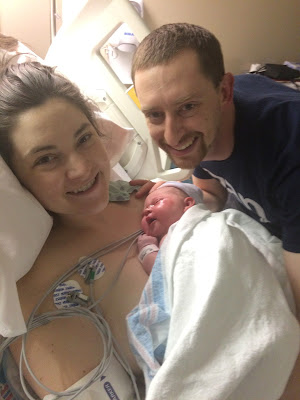
I am happily married to my beautiful, loving wife, Katherine. We were married when I was 26 and she was 24; our first child was born when I was 28 and she was 26. To us, that felt normal and just about the right timing; peculiarly, many people remarked that we were young, even though we didn’t feel like we were.

We have had and continue to have a strong relationship and have effectively practiced Natural Family Planning according to the Creighton Model, which has naturally spaced our pregnancies right in line with our mutually discerned intentions. Now, with a two-year-old daughter and the hope and desire for more children, we’re living the increasingly full rigors of family life -- weathering the lean, late nights and reveling in the joy-filled good times.

But all of this wouldn’t be considered normal by most people, and I don’t just mean by non-Catholics or non-believers but by many fellow Catholics, too. Married at 24? Just enjoy your 20s and “settle down” later after you figure more of this out. Using NFP? Why do that outdated, unscientific stuff when birth control is available. Kids before 30? Get some more time and money under your belt first. Maybe some people would jump into these adventures similarly to how we did, particularly if their situations were different, but we certainly feel more like oddballs then mainstreamers. Why do all of this?

I was eager to start a family. My heart told me that waiting until we had more money, less student debt, a bigger home, etc. was attractive but perhaps not all it’s cracked up to be. Having entered a career with minimal earning power, and knowing what Katherine’s earning power would be following her terminal degree, I knew it’d get better financially, but not earth-shatteringly so. To me, my (our) youth, health, and energy were the greatest assets, more than any house, minivan/second car, suburban forever house, or other thing could ever be. Let’s invest that into starting a family now.

I knew we could bootstrap it as needed through our kids’ childhood, be smart and tactful as they grew up, and do our best to save toward our home, our kids’ education costs, and our retirement as we could along the way. The latter invited fidelity and humility while the former path felt abstract and potentially indefinite or even endless; the goalposts for “readiness” just felt like they could be moved and adjusted over and over again forever. Meanwhile, I wanted to invest my late 20s and 30s into my kids’ early years. I knew I could crawl and climb and carry with greater ease and trade the liberty of twenty-something life for the potential of an empty nest and grown kids to visit in my 50s. And ironically, having to discern all this through the constant reevaluation of NFP rather than the less complex equation of artificial birth control only affirmed the ideas we considered; the process can be challenging, but the open, regular dialogue has been a backbone of our marriage.

At its core, I simply felt called to fatherhood -- and not in general, not later, not sometime. Part and parcel of my discernment of marriage to Katherine and with Katherine was having kids and raising them with her. We both knew that the fullest sense of who we were made to be was waiting in our family, where we felt the ways we loved each other would be drawn even more strongly outward from us through our children. In fact, one of the handful of reasons I liked the name Lucy for our first child was that Katherine thought -- and I agreed -- that she’d come into her own as she became a mother, and the name Lucy shares root words with light, i.e. she is the light that brings who Katherine (and me) more fully to who she was made to be.

On a wider scale, I’m very ok with a mess. I’m a minimalist, kind of anti-materialistic, and very ok with hodge-podge, beat-up, mismatched, used, repurposed, resourceful stuff. This comes from my not-quite-desert-ascetic but definitely Catholic spirituality. So when it comes to family life, I don’t need everything to be “ready.” Yes, I want a safe, secure, healthy family life. No, I do not need pristinely painted walls, matching new furniture, or frequent professional photo shoots, etc. (though, occasional photo shoots for sure). Give me Lucy’s used end table from the letgo app; give me wall art, pillows, and curtains handmade by Katherine and friends for the nursery/bedroom; give me my grandma’s old sitting chair from her living room.

Basically, give me a mess. I’m good with the mess. I enjoy the mess. Two kids will make it crazier? Let’s go. God wired me to be a multi-track thinker; it certainly makes contemplative spiritual life tricky, but it puts family management in my wheelhouse. I can think through the household chores as I wind Lucy down for a nap, so that I can get clothes to the washer, pay the bills, move clothes to the dryer, do some dinner prep, catch up on some writing and editing, retrieve and fold the laundry, and then get some milk and a snack for Lucy as she wakes up. Thank God I’m 30 as I take a bite out of this life. It’s uniquely tasty.

But when you zoom out on our social life, looking to our close proximity, most of our similar-aged friends and family are on different tracks. We have friends whose early adult lives were or are stacked up with graduate studies, medical school and residency, moves for career and school, moves for relationship discernment, assertive career pursuits and paths, and more. Looking at about our 15 closest friends and family members/couples in Chicago, two-thirds are married or engaged to be married soon, and only three have kids. The interesting thing is that almost all of these people are faithful, mass-going Catholics -- so this trend of delaying marriage and family (whether personally chosen or thrust upon them circumstantially) or not pursuing one or both at all isn’t just outside the Church but within it, too.

As a result, despite my personal vocational security, I often find myself frustrated. Why are we so often on an island with our daughter? Our friends are wonderfully loving and patient with her, but why don’t they have kids of their own yet so they can all play together? I don’t linger long on accusatory angst over differences of disposition; instead, reality pulls me back to earth with reminders of what people without kids may be facing or thinking -- infertility or trouble conceiving and sustaining a pregnancy, career challenges and discernment, personal issues with physical or mental health, interpersonal marital challenges, and Lord knows what else.

I always hope our marriage and attempt at parenthood is an accessible, realistic, gritty example for our friends and family. And most of all, I hope others would be comfortable inviting us to accompany them through any and all of their discernment, whether thick or thin. Ultimately, I try to live my marriage and family like I live my faith according to an old “garden analogy” -- if I tend to my faith and my family and my marriage with diligence, and if my garden blooms and grows in beautiful ways that others can witness, then I hope others would see it and ask me about it.

* * *

One of the realities any couple has to face is that falling completely in love with someone means both that they will love you profoundly and that they will hurt you profoundly. Deepest love can only be given and received with authentic vulnerability. By opening oneself wholly to another, one also becomes vulnerable to potential hurt.

Love perfects as a decision, and making the decision to love your significant other invites the possibility of serious hurt as well as amazing, joyful love. It’s a reality we embrace as we dig into the depth of marital love. I would offer that this same reality is true of having, raising, and loving children. It should be a decision integral to the marriage, and it should be a decision of love, which inevitably makes one vulnerable to both pain and joy. My daughter drives me up the gosh dang wall when she obstinately refuses things we ask, when she is selfish and won’t share, when she’s inconsolably awake in the middle of the night, and more; my daughter also brings my heart its greatest consolation when she spontaneously gives hugs and kisses, when she learns new words to express herself (current highlights: “thank you” and “ta-da!”), when I witness her learning in real time, and much more.

If you have the courage to say before God and the Church that you commit yourself to marriage, then that same love that binds you and your spouse can flow forth from you to your future children. The light of our faith shines through the Sacrament of Marriage on into our weary parental hearts and conveys the Love of God forward from parents on to kids.

Monday, April 1, 2019

TRH on Catholic Normalcy No. 2: Primary Priorities

by Tim Kirchoff

I’d like take a break from my colleagues’ discussions of family life and Christian vocation to talk about something far more worthwhile: politics. More specifically, the primary season is (already!) beginning, and candidates for every level of office are looking to build momentum.

If nothing else, the 2016 election proved how much primaries matter. The awful choice with which we were confronted in the voting booth in November was the result of a lengthy series of primaries in which candidates, party officials, media personalities, and voters all made decisions that contributed in some way to the result. Trump’s fixation on building a wall was not inevitable, nor was Trump’s nomination, or Clinton’s. If we are conscientious in the way we approach the 2020 primary season, we may be able to make a much more satisfying decision next November, or if we fail in 2020 as we did in 2016, at least we will have dared something different.

As Catholics, we are not politically unified. Many of us are more likely to argue with fellow Catholics over partisan politics than we are to argue with members of our respective parties about moral policies. We focus more on justifying our voting patterns and partisan affiliations than actually influencing our parties for the better. We are sycophants when we ought to be prophets, representing our respective parties within the Church more than the Church in our political parties.

What would happen if, for just one year, we reversed this dynamic? Instead of trying to change someone’s mind (or even just convince ourselves) about the merits of one party or candidate, let’s challenge our parties to be worthy of the support they demand of us.

I have in mind one issue for each major party—one subject on which the party orthodoxy is so willfully morally blind that even the slightest challenge to it would be noteworthy and ever-so-welcome.

Republicans

The administration’s family separation policy was, from the very start, a moral travesty, and the depth of this policy’s turpitude has only become more apparent with time. The administration, with other viable policy alternatives, decided to detain children separately from their parents before their asylum hearings. These children were traumatized and maltreated, apparently with few or even no considerations made as to how they might be reunited with their parents afterward. All of this was done, rather transparently, in order to try to scare people away from applying for asylum. That is, people who were trying to enter America legally were subjected to needless and deliberate cruelty in order to dissuade people from attempting to enter through this entirely legal method.

Catholics who lean Republican must not hide from this awful truth. The Republican Party needs to understand the intentions and effects of this policy. If you’re a Catholic who leans Republican, talk to your politically-active friends about the family separation policy. They should be willing to agree that any reasonable person would be entirely justified in regarding the administration’s policy as deliberately cruel, and that "never seeing your children again" is.


Democrats

The board members of Democrats for Life of America have been quite vocal lately. Charles Camosy recently suggested that there is room in the Democratic presidential primary field for a pro-life candidate. I confess I see a great deal of appeal in the idea of a pro-life democrat like the governor of Louisiana stepping forward and showing just how much of the Democratic Party is in fact open to a pro-life candidate, regardless of whether they end up winning the nomination.

Here, though, I want to focus on what the laity can accomplish on the ground, as opposed to actions that depend entirely on the decisions of politicians. Michael Wear’s recent essay in The Atlantic offers insights that are more immediately relevant.1
“There is no sense that anti-abortion Republicans are influenced by the stories of women like Dr. Jen Gunter or Erika Christensen. There is no sense that pro-choice Democrats are aware of sincere pro-life Americans, or take seriously the claim that abortion is an attack on the very human dignity Democrats rightly invoke (and, yes, many anti-abortion Republicans ignore) when discussing immigration, poverty, or human rights. Now our politics are only for the absolutists, those who deny any place for doubt or humility. 
[…] I have spoken with women who work at pro-life pregnancy clinics who condemn any language that shames women or increases the moral burden women feel. They work with pregnant women who are facing immense pressures and seemingly impossible situations every day, and approach the issue of abortion with compassion, not callousness.”
What I would like to see from the Democratic side is a repudiation of the talking points that denigrate pro-lifers, either by pretending that pro-life pregnancy clinics don’t exist, or by pretending that these clinics exist only to shame and coerce women into giving birth. The truth is that the people most involved in the pro-life cause are working not to deny women a choice, but to empower them and give them the necessary resources (financial and otherwise) to recognize that abortion is not their only option.

Speak to your Democratic friends about the good work done by pro-life activists. Praise pro-lifers, and let your friends in the Democratic Party know that the single best way for a presidential candidate to get your attention would be to acknowledge the pro-life movement in good faith.

* * *

The biggest obstacle, which I have thus far ignored, is that many Catholic Republicans will be inclined to think of the family separation issue as something that was fabricated or, at best, exaggerated by biased media, and many Catholic Democrats have a view of the pro-life movement that is colored by the worst elements of the movement. Catholic partisans will not be in a position to argue what I suggest above, because too few of them will even be prepared to believe the argument in the first place. Catholics on both sides are more prepared to believe partisan sources than members of their own Church.

The bishops, for all their faults in moral leadership, can at least offer us an example here. The bishops have different interests and areas of activism, but they fundamentally trust -- or at least do not eagerly contradict -- USCCB committees on other issues. The bishops trust each other on abortion, immigration, and the environment more than they trust partisan sources.

We in the laity, meanwhile, have very little trust in each other. In losing trust in each other, we lose the ability to witness to the whole of the Gospel. We have become too much part of our parties, too defined by the dominant political culture, rather than living out our vocations in the different parts of the political spectrum. Catholics on the right aren't sufficiently familiar with the Church's involvement in serving immigrants, much less engaging in solidarity with immigrants. Catholics on the Left repeat tired lines about abortion opponents as being merely "pro-birth," and in the worst cases issue barely a whimper in defense of the unborn,2 so far divorced are they from the realities of pro-life activism.We need to pursue at least some small ways that we can renew trust in each other.


1 Also the author of a book that helped radically change the way this long-time Republican thinks about politics and the Obama administration.


2 Michael Sean Winters makes this case rather well here.

Monday, March 25, 2019

TRH on Catholic Normalcy No. 1: Achievement and Success

by Laura Flanagan

The Restless Hearts have been reflecting a little on how “normal” a Catholic can and should be, and how countercultural our faith challenges us to be. I think it’s always a valuable start to look to Mary, model of the Church. In a homily from earlier this year, Fr. Hugh Barbour describes Mary as “a perfectly normal woman with perfectly normal human sensibilities and manners who also possesses the knowledge and the power of a hidden mystery that utterly outstrips any normal human expectations.”1

The lack of knowledge of this hidden mystery seems to me to be the saddest aspect of the recent bizarre (and yet unsurprising) college admissions scandal. Whatever the cost to their integrity, whatever the desires of their children, whatever the impact on other prospective admits - the only acceptable path forward for these people’s children was admission to a certain level of university.

This secret network of privilege brought to mind a fictional example; a few months ago I ended up reading Emily Giffin’s recent pop fiction contribution, All We Ever Wanted. Brace yourself for spoilers ahead.

At the beginning of the book, a photo surfaces of the wealthy main character’s son sexually assaulting a fellow student at their prestigious high school. The mother begins to wonders how they must have formed their son that he would choose to behave so despicably. The events of the book primarily spiral from that self-reflection.

Her husband and best friend (whose son was also involved), ostracize and undercut her when she doesn’t seem totally on board with doing everything possible to erase the crime. They both recognize her internal conflict and see it as dangerous to their “saving” the boys from the ramifications of their actions, which will no doubt echo through their lives. Meanwhile, she forms a motherly relationship with the girl victimized by her son. Eventually, she leaves her son to the consequences as a final act of re-formation, while letting him know that she still loves and always will love him. Several years later, the young man tells the young woman: “She saved me.”

The book is obviously meant to bring up the issue of privileged families using all their resources to protect their own from what would ordinarily change the entire course of a less privileged person’s life. If your god is prestige or wealth, as it seemed to be for the families caught up in this college admissions scandal, these are the lengths it makes sense to go to, if you can. This masquerades as “the best possible life for my child.”

The best possible life for your child is one in which they really know the hidden mystery that Mary knew: that God’s humility and love for us overflows, and He calls us to imitate him. When that mystery is the foundation of everything for which your child strives, and focuses how they respond to whatever may come - that’s when they’ve succeeded.

So what actions should set apart the Christian from the non-Christian? How are those of us still in the Church any different from the growing number of “nones” in the country, those with no religious affiliation at all?

People often take the same action with differing motivations. Why would someone support an abuse survivor and value justice for perpetrators, even when the victim is unknown to you and the offender is your own son?

Giffin’s protagonist was a sexual assault victim in college. She sees herself in the victim, and attempts to value this girl in the way that no one had helped her. Others, with no personal experience of that particular sin, see acknowledgement of and justice for assault as necessary in forming everyone - including the perpetrator - in valuing a humanist view of human dignity.

Each of those previous two people show a partial knowledge of the hidden mystery. Catholics take this action because of God’s complete revelation of the human person - created in the image of God, beloved by Him even unto death, not to be abused by the desire and power of the strong and the privileged. That’s a far stronger image than the humanist view. And then we have to say that’s why we did it, when asked.

Towards the end of her life, Dorothy Day said, "If I have accomplished anything in my life, it is because I wasn't embarrassed to talk about God." A Catholic mother in Giffin’s fictional situation might also choose to allow her son to meet the justice system. She might humbly admit her failure in formation (although perhaps not publicly, as that could harden him, and may be more virtue signaling than ongoing virtue formation). She might state her hope that these repercussions would correct the course of entitlement and self-involvement that led to this terrible sin. She would pray that her son would allow Christ into his heart to change it. Such sins are an opportunity for the spiritual work of mercy, “admonish the sinner” - and that work of mercy goes directly against the gospel of prestige and wealth.

What do you do with success if you do come by it honestly?

I enjoy hearing about the family of long-time NFL quarterback Philip Rivers. He lives fairly modestly with his wife and kids, of which there are nine on the outside as of last Wednesday. He did spend a chunk of his ample earnings on a custom SUV and driver so he can watch film on his commute... thus making the most of his drive time and fulfilling his obligations both to his work and his family.

The ultimate holiness of a family is not reducible to whether they put time with each other first, or whether they practice NFP. However, from the distance that I and many others “know” the Rivers family, they seem to be joyful and stable, while honoring their commitments. That witness can go a long way, and Philip Rivers seems to be “always ready to give a reason for his hope,” as the first letter of Peter advises.2

The peace of Christ, which surpasses all understanding, can be very starkly juxtaposed with the current parental and child levels of anxiety about achievement. One of the reasons people often give for not having more children is that they feel they won’t be able to dedicate the appropriate amount of time to their academic/social success. Meanwhile, parents of four or more children generally have lower stress levels than those of two or three.3 Parents of children with Down Syndrome also have less stress than most parents.4 What sounds most like the peace of Christ?

Some people will see what those with that peace are achieving, but honestly some of us might turn out to be a “waste” in the sight of the world. I’m certainly wasting the full earning potential of my college pedigree. Whether or not my parents are disappointed by that fact is based on why they thought I should go to college, and in particular Notre Dame.

St. Edmund Campion is a great example of this “waste.” He was a celebrity-level academic, and was primed for an illustrious career in Elizabeth I’s Protestant England. Instead, he stumbled across some cold hard truth while reading the Church Fathers, became Catholic, fled the country, was ordained a priest, returned to minister to England’s Catholics in secret, and was martyred for doing that. His promise and talent were never actualized… or were they?

If you want your kids to go to certain school because it will form them in truth and in mercy, go for it. I think my life and maybe my priorities would be a lot different if I hadn’t attended Notre Dame, but I can’t be sure about that. Obviously, though, you wouldn’t cheat to get them into that school. If your child wasn’t admitted, you would pray - perhaps together! - and take God’s redirection.

If your highest goal for yourself or your child is sanctity, and not money/the best college/the most experiences, you don't have to be so stressed over those things (or pay money to get your pretend-coxswain into USC). While sainthood is hard work, anyone can do it. That’s the hidden mystery Mary knew - even (and especially) the lowliest handmaiden could magnify the greatness of the Lord. The rest of our worldly success is gravy and gift.


1 Here's the link. The emphasis above is mine.


2 Here's a secular primer on the Rivers family, and an extended interview where he talks about his faith in real life.


3 See this story from today.com.


4 This article, too.

Featured Post

Having a Lucy

by Dan Masterton Every year, a group of my best friends all get together over a vacation. Inevitably, on the last night that we’re all toge...