I started this blog just over seven years ago. I wasn't sure where it would take me or how it would unfold. I just knew that because of who I am, because of my insistence on seeing ideas through to their actualization and completion (or at least perpetuation), that if I was going to try it that it would be an ongoing and long-lasting effort.
Going back to read my first post, it's clear that I've changed, grown, evolved, etc. over several years, starting as more of a curious, contemplative, seeker of a college theology student and traveling down a twisting path to become more thoroughly and actively the pastoral, catechetical minister I felt and feel called to be.
The original impetus to write came from the faith-sharing small-group to which I belonged in college. As we listened to the Scriptures for the upcoming Sunday and discussed what the readings meant to us, we would take some deep dives. We'd delve into the dynamic theology of the Scriptures, into the existential questions that spiritual investigation conjured, and even into the sillier and lighter things in life - our profound laughter at Maxwell from the Geico commercial led us to normalize the process of relishing tangents but then successfully bringing ourselves back to relevant discussion, which we dubbed "going to the pig and back." As we each had our moments of clarity and found the words to describe the big things that crossed our minds and hearts, my friends encouraged me to start writing down some of the stuff I was saying in our group. I took the plunge that fall, and seven years later, I'm still going.
There have been some mild stops and starts, but I've always come back to the blog and kept things going. There certainly is ego at play, especially since I'm writing about what I feel most passionate about and what I spent so much time and energy studying, practicing, and praying over; my most vain self relishes the pageviews, clicks, and traffic. However, what keeps me coming back aren't those numbers; it's the feedback I get.
I set out to blog as a way to externalize what I was thinking and see if it would resonate with others. Beyond clicks, I was hoping for reactions and dialogue. In dribs and drabs, I would get these wonderful pick-me-ups - a random text of affirmation, a thoughtful comment to a Facebook link post, an "oh by the way" sort of thank you at the end of a conversation, and even an unexpected reminder that people I haven't seen often or in a long time are still keeping up with me by checking in here. It's the wide and varied web of engagement with others that really fuels me to keep coming back to this platform to write.
As I've sought ways to be widely and excellently engaging, I've tried to be creative. I enjoyed curating "the72" series, in which I invited friends to share the ways in which they've lived out their ministry in their varied careers and jobs. Recruiting people, encouraging and affirming them to take a shot at it, and then working with their ideas and drafts to help them express their varied ministries - it was all such a treat. It showed the diverse ways that vocation manifests itself to people who are faithful and diligent in putting their gifts to action in our world. I'm especially grateful to Nick, Dave, and Sarah for batting lead off in that endeavor. All in all, 21 authors shared themselves in beautiful posts, and I love the tapestry of ministry they painted.
Most recently, I stepped out on to the speaking stage. As I moved through my Masters studies, I decided I wanted to be more proactive about finding additional avenues to practice and share my theology and ministry. After graduating in May, I lined up a few gigs this summer as a Theology on Tap speaker and started a series called #MoreThanRedAndBlue. My goal was to take an approach to the campaign and to election and voting discernment that was centrally focused on Catholic Social Teaching and share it consistently. It was obviously a difficult election year for everyone, but I hope some of what I shared in my talks, tweets, and posts was able to lend a helping hand to discerning voters.
Now, following the election, I am looking to a new way to extend the conversation. I want to continue widening and deepening the engagement that this blog is facilitating.
After a lot of discernment, I decided to expand this blog to include new permanent writers. I've been in conversations for the past few weeks with a few people, and on Monday, I will introduce you three new voices who will join me as Restless Hearts. They will also help administer the Facebook Page and share our work with all of you through their commentary and social media presence. My posts will now go up each Thursday, and our new writers will take turns publishing new work each Monday. There will be some minor changes to some of the titling, links, and banners, but I'll make sure you can still find your way here with ease.
I'm deeply grateful for their willingness to take this plunge, and I pray that you will all show them the same warm embrace and faithful engagement that you've blessed me with so far. Thank you all for sticking with me so diligently, and I am excited to give a regular platform to these three wonderful people.
Thursday, December 1, 2016


Monday, November 28, 2016
Thou Shall Not "Kill"
Recently, I haven't spent quite as much time on my tech devices as usual. As I watched the election counts move toward a decisive result, I sat down to process my thoughts at my blog. Then, the next day, I reviewed the world on social media. Usually one to wade fairly deep into the social commentaries to appreciate many sides of an issue, I started to get upset amid the unique but tired climate of this election's fallout. I was especially bothered by one comment that vilified voters whose consciences and voting decisions are formed by religion, and decided to take an indefinite Facebook fast, checking notifications and messages but not consuming my feed. I haven't come off my break yet, and I'm not sure when I will.
Then, this past week, enjoying Thanksgiving festivities with family, I spent most of my days in the house of some elderly relatives who don't have an internet connection, let alone WiFi, in their home. Aside from occasional browses through my Twitter feed using cellular data, I was hardly online. Instead, for better or worse, we were all simply together - from food prep to cleanup to down time - mostly detached from our devices. Now back from the holiday and seated on my couch in the warm bubble of my modem and WiFi router, I want to articulate a realization I've found: our technology must not become a time-killer.
You know how iPhones let us organize apps into groups, dragging several into the same little square to categorize them and give them a group name? I have a friend who has a set labeled "Wasting Time." While I know the label doesn't exactly match the reality, the kernel of truth there is telling - the way people consume their threads on Reddit, go down YouTube or Wikipedia black holes as one search leads to another, or allow Netflix's continuous viewing feature to keep them sucked in - our use of our technology makes us deeply susceptible to killing time, which we should only do in particular situations.
Killing time should be limited to those moments when we have indefinite down times, times that aren't meant for anything in particular, that could end in a moment or drag on for a while, times when we are captive to a particular constraining activity. I think of waiting rooms at doctors' and dentists' offices; I think of being parked at the curb, waiting to pickup a friend or family member; I think of sitting on an airplane, with nowhere to go while you travel to your destination; I think of standing on the platform waiting for the train or at the signpost waiting for your bus; I think of waiting for a table at a restaurant. These are the moments when you have little else to do, when killing time helps move us from what we were doing to what we're about to do. Even then, these times could be useful for different things, but I find it thoroughly understandable to resort to killing time.
However, time-killing cannot become our norm. We need to think about what a reasonable amount of time-killing might be and limit ourselves to it. Part of that is discerning what activities are empty-headed "time-killers" and which are enriching and engaging. I don't think it's about depriving ourselves of fun and leisure but about distinguishing the mindless from the mindful.
I think a key question to start from when evaluating an activity, an app, a show, a routine is Does this help me grow in some specific way? and to answer the question with authentic discernment - no kidding yourself about what's what. For some, Wikipedia black holes may be a way of procrastinating, of delaying spending time on something more substantial; for others, it may be a way of satisfying curiosity, of studying a new concept, or expanding one's knowledge. For some, watching sports may be a way to kick back and enjoy unbridled competition; for others, it's a way to be analytical, observant, and critical. For some, watching a TV series may be a mindless way to edify one's desire for drama, intrigue, and scandal; for others, it becomes an artistic review to study methods and techniques or digest literary implications.
And any of those could become a blend of the two.
Personally, I find myself mostly mixing the two, and veering away from that which is purely time-killing to keep it as a minority stake-holder of my time and attention. I read on Twitter and Facebook mainly to find and consume news, commentary, and other content that reflects the interests of friends and those who I follow as well as to inform me about important concerns in politics, news, sports, religion, and society. I watch sports partially for the pride of being a Chicagoan and loving athletics and team competition as well as to analyze the plays, the techniques, and the coaching strategies that comprise each game. I watch TV shows because of the mindlessness of kicking back and being a consumer as well as criticizing plot and characters, production, and acting.
For me, I am happiest and most engaged when I have a healthy mix of leisure and engagement. And then I protect myself from time-killing and technological obsession with extra guards: I have no red numbers on my phone apps; I get no notifications from any apps except phone calls, voicemails, and text messages; I don't watch shows with continuous viewing enabled; I only keep one game on my phone (7 Little Words).
And then, from time-to-time, I find ways to lighten my lean on social media. Recently, the election banter has prompted me to take a break from my Facebook feed. A few months ago, the allure of a good book led me to eschew my pre-bedtime Facebook and Twitter scrolling in favor of a hardbound book and a few minutes with its rapidly-turning pages. After my first year of full-time work, I found my morning momentum at the desk strengthened when I saved all leisure reading (news, sports, social media, etc.) for a big lump sum break at lunchtime rather than smaller breaks throughout the day.
The larger idea is that I want to try with steady and dynamic effort to avoid killing time. I know too well the value of being present in the moment. My Kairos retreats as a high school student and leader first showed me the profound love present when you live in the moment. My work as a pastoral minister has underlined the magnitude of an earnest ministry of presence. My relationships throughout life have taught me the power of attention. We must strive to always be good stewards of our technology, maintaining dominion over it so that it doesn't come to rule us.
I'll close with one story. For two years, I worked a job that involved a lengthy commute home through rush-hour traffic in Chicago. After a few months, I realized the drive home with its length, with the congested traffic, with the frustrating actions of other drivers, was driving me crazy. I was impatient, tired, and at wit's end when I got home. Sports-talk radio, long my favorite drive-time companion, wasn't the best way to spend that time. I went online, bought a headset/microphone for my phone, and resolved to use the commute to catch up with friends. It certainly wasn't something I could plan for every day, but about once a week, I connected with a friend and scheduled a call. Then, for the 45 or 60 or 75 or more minutes of the ride home, rather than subject myself solely to the rigmarole of the drive, I had a companion and an opportunity to sustain a relationship and catch up with a friend. The change was wonderfully positive. I was happier, calmer, and much more delighted upon making it home. No longer was I killing time; now, that time was alive.
Then, this past week, enjoying Thanksgiving festivities with family, I spent most of my days in the house of some elderly relatives who don't have an internet connection, let alone WiFi, in their home. Aside from occasional browses through my Twitter feed using cellular data, I was hardly online. Instead, for better or worse, we were all simply together - from food prep to cleanup to down time - mostly detached from our devices. Now back from the holiday and seated on my couch in the warm bubble of my modem and WiFi router, I want to articulate a realization I've found: our technology must not become a time-killer.
You know how iPhones let us organize apps into groups, dragging several into the same little square to categorize them and give them a group name? I have a friend who has a set labeled "Wasting Time." While I know the label doesn't exactly match the reality, the kernel of truth there is telling - the way people consume their threads on Reddit, go down YouTube or Wikipedia black holes as one search leads to another, or allow Netflix's continuous viewing feature to keep them sucked in - our use of our technology makes us deeply susceptible to killing time, which we should only do in particular situations.
Killing time should be limited to those moments when we have indefinite down times, times that aren't meant for anything in particular, that could end in a moment or drag on for a while, times when we are captive to a particular constraining activity. I think of waiting rooms at doctors' and dentists' offices; I think of being parked at the curb, waiting to pickup a friend or family member; I think of sitting on an airplane, with nowhere to go while you travel to your destination; I think of standing on the platform waiting for the train or at the signpost waiting for your bus; I think of waiting for a table at a restaurant. These are the moments when you have little else to do, when killing time helps move us from what we were doing to what we're about to do. Even then, these times could be useful for different things, but I find it thoroughly understandable to resort to killing time.
However, time-killing cannot become our norm. We need to think about what a reasonable amount of time-killing might be and limit ourselves to it. Part of that is discerning what activities are empty-headed "time-killers" and which are enriching and engaging. I don't think it's about depriving ourselves of fun and leisure but about distinguishing the mindless from the mindful.
I think a key question to start from when evaluating an activity, an app, a show, a routine is Does this help me grow in some specific way? and to answer the question with authentic discernment - no kidding yourself about what's what. For some, Wikipedia black holes may be a way of procrastinating, of delaying spending time on something more substantial; for others, it may be a way of satisfying curiosity, of studying a new concept, or expanding one's knowledge. For some, watching sports may be a way to kick back and enjoy unbridled competition; for others, it's a way to be analytical, observant, and critical. For some, watching a TV series may be a mindless way to edify one's desire for drama, intrigue, and scandal; for others, it becomes an artistic review to study methods and techniques or digest literary implications.
And any of those could become a blend of the two.
Personally, I find myself mostly mixing the two, and veering away from that which is purely time-killing to keep it as a minority stake-holder of my time and attention. I read on Twitter and Facebook mainly to find and consume news, commentary, and other content that reflects the interests of friends and those who I follow as well as to inform me about important concerns in politics, news, sports, religion, and society. I watch sports partially for the pride of being a Chicagoan and loving athletics and team competition as well as to analyze the plays, the techniques, and the coaching strategies that comprise each game. I watch TV shows because of the mindlessness of kicking back and being a consumer as well as criticizing plot and characters, production, and acting.
For me, I am happiest and most engaged when I have a healthy mix of leisure and engagement. And then I protect myself from time-killing and technological obsession with extra guards: I have no red numbers on my phone apps; I get no notifications from any apps except phone calls, voicemails, and text messages; I don't watch shows with continuous viewing enabled; I only keep one game on my phone (7 Little Words).
And then, from time-to-time, I find ways to lighten my lean on social media. Recently, the election banter has prompted me to take a break from my Facebook feed. A few months ago, the allure of a good book led me to eschew my pre-bedtime Facebook and Twitter scrolling in favor of a hardbound book and a few minutes with its rapidly-turning pages. After my first year of full-time work, I found my morning momentum at the desk strengthened when I saved all leisure reading (news, sports, social media, etc.) for a big lump sum break at lunchtime rather than smaller breaks throughout the day.
The larger idea is that I want to try with steady and dynamic effort to avoid killing time. I know too well the value of being present in the moment. My Kairos retreats as a high school student and leader first showed me the profound love present when you live in the moment. My work as a pastoral minister has underlined the magnitude of an earnest ministry of presence. My relationships throughout life have taught me the power of attention. We must strive to always be good stewards of our technology, maintaining dominion over it so that it doesn't come to rule us.
I'll close with one story. For two years, I worked a job that involved a lengthy commute home through rush-hour traffic in Chicago. After a few months, I realized the drive home with its length, with the congested traffic, with the frustrating actions of other drivers, was driving me crazy. I was impatient, tired, and at wit's end when I got home. Sports-talk radio, long my favorite drive-time companion, wasn't the best way to spend that time. I went online, bought a headset/microphone for my phone, and resolved to use the commute to catch up with friends. It certainly wasn't something I could plan for every day, but about once a week, I connected with a friend and scheduled a call. Then, for the 45 or 60 or 75 or more minutes of the ride home, rather than subject myself solely to the rigmarole of the drive, I had a companion and an opportunity to sustain a relationship and catch up with a friend. The change was wonderfully positive. I was happier, calmer, and much more delighted upon making it home. No longer was I killing time; now, that time was alive.
Wednesday, November 9, 2016
#MoreThanRedAndBlue: What's Next
In the early throes of tonight's saga, I was thumbing through my Twitter feed, as I've done every 15 minutes or so. I came across a Catholic writer who was wondering how people were doing. While the trends increasingly paved the way to an electoral college victory for Mr. Trump, I was trying to keep patient while checking out some down-ticket things.
The frustrations of this evening will spin around us with similar depth and comparable interminability as the euphoric joys of the Cubs World Series victory. For me, I abandoned any hope of a Trump appeal many weeks ago after he stubbornly and insistently refused to acknowledge the dignity and value of marginalized and vulnerable people. It has been chilling to see social media posts and TV commentators characterizing Mr. Trump's rhetoric as "connecting with working class Americans," which either insults the moral caliber of average Americans or else admits, acknowledges, and approves of attitudes that are nothing more than social sin in myriad forms. While I sympathize with the challenges of unemployment, economic hardships, and social frustrations, I am troubled by placing blame on those who are different and by placing one's salvific hopes in an ungrounded, exploitative, self-centered billionaire.
I've been saddened and gut-punched as I see people preemptively reaching out on social media to their Muslim, immigrant, refugee, and LGBTQ friends to reassure of their companionship and support. I'm hurt as evangelical Christians wonder what happened to their identity as they watch members of their traditions fall in step with Trump. I was most moved tonight by CNN's Van Jones, who riffed a thoughtful speech on the difficulty of parents' explaining the realities of this year to their children.
First of all, I think this is a profound reminder that the Gospel truth of Christ is countercultural. We will not find ourselves in a position of strong concurrence with the will of God until we reach our eternal life with Him. In the meantime, we are called to do God's will with maximum discernment and supreme diligence while living our lives of faith on earth, and when we are graced enough to enact God's will by our love, we glimpse the heaven that our Church prefigures eschatologically.
Next, on a practical level, we must become prophets for the Preferential Option for the Poor and Marginalized. In my theology classes, I often ask students to brainstorm groups of people who are marginalized in our society. Mr. Trump has openly derided several of those groups, from refugees to Muslims to women to disabled people and more. If half of our voting citizens have ratified a man of this character to be the leader of this nation, then we have an amazing opportunity and frankly an obligation of faith to evangelize the preferential option to everyone we encounter.
We need to actively, constantly, and loudly champion marginalized people in all of our decisions. When you spend your monthly income, make a line item for an organization that advocates or accompanies these people. My wife and I have done this, and it's my favorite part of settling our bills each month. When you budget your free time, choose a service organization through which you can encounter someone who is too often ignored. I have been meaning to get involved with our community shelter here in the city, and I think it's high time I get myself out there. As you identify and grow your talents and gifts, discern ways that you can use them to lift up those who are forgotten. I pray for further inspiration and courage to find ways to lead my students in active encounters.
Finally, concretely, reach out. Be a person of good will, an ambassador, a strong witness and representative of what you believe and the religion with which you identify. Find someone who you know could be targeted by the wave of populism that is sweeping the country and commit to actively accompanying them. Be proactive and active as you double down on the friendships you have with those who may be marginalized or further marginalized by the scary trends that loom.
In a few weeks, I'll start teaching my high school seniors again. As we learn about social justice and vocations, I ground the class in how Christ calls us to live out the Gospel in our relationships and society. I already love facilitating this formation for these teenagers as we learn Catholic Social Teaching, discern our vocations, and spend time with marginalized people. We will learn the Gospel calls. We will go out and encounter people who are marginalized. We will be prophets of outreach and companionship.
I was disappointed to find that Colorado had decided to approve physician-assisted suicide via popular vote. As the night wore on and Mr. Trump's progress continued, California had fallen short of banning the death penalty while Nebraska had repealed its ban to reinstate the punishment. Oklahoma also thickened up its laws. Continuing the spiral, marijuana laws - though a lesser evil for sure, and an arguably justifiable legalization when for medicinal reasons - won victories in some states..@kathrynlopez trying to be patient w/presidential results while mourning CO's poor choice to legalize physician-assisted suicide.— Dan Masterton (@jesusandchicago) November 9, 2016
The frustrations of this evening will spin around us with similar depth and comparable interminability as the euphoric joys of the Cubs World Series victory. For me, I abandoned any hope of a Trump appeal many weeks ago after he stubbornly and insistently refused to acknowledge the dignity and value of marginalized and vulnerable people. It has been chilling to see social media posts and TV commentators characterizing Mr. Trump's rhetoric as "connecting with working class Americans," which either insults the moral caliber of average Americans or else admits, acknowledges, and approves of attitudes that are nothing more than social sin in myriad forms. While I sympathize with the challenges of unemployment, economic hardships, and social frustrations, I am troubled by placing blame on those who are different and by placing one's salvific hopes in an ungrounded, exploitative, self-centered billionaire.
I've been saddened and gut-punched as I see people preemptively reaching out on social media to their Muslim, immigrant, refugee, and LGBTQ friends to reassure of their companionship and support. I'm hurt as evangelical Christians wonder what happened to their identity as they watch members of their traditions fall in step with Trump. I was most moved tonight by CNN's Van Jones, who riffed a thoughtful speech on the difficulty of parents' explaining the realities of this year to their children.
Muslim-Americans: I love and respect your place in this country. If Trump wins, I will fight as hard as I can to protect your rights.— Heather Lynn Weaver (@HeatherWeaverDC) November 9, 2016
I am afraid for my country but I recognize my Muslim friends are afraid for their lives and the lives of their children.— (((Wil Gafney))) (@WilGafney) November 9, 2016
Tomorrow morning, I will call my refugee friends and tell them: I'm sorry. I love you. We're going to be here with you.— Jessica Goudeau (@jessica_goudeau) November 9, 2016
And 80% of evangelicals choosing hate, misogyny, bigotry. It's devastating. https://t.co/fAztXqenBA— Rachel Held Evans (@rachelheldevans) November 9, 2016
All of this poses a new challenge to us as Catholics. What does our faith have to tell us in this situation?This. https://t.co/Gp7AJdvLiO— rossgoetz (@rossgoetz) November 9, 2016
First of all, I think this is a profound reminder that the Gospel truth of Christ is countercultural. We will not find ourselves in a position of strong concurrence with the will of God until we reach our eternal life with Him. In the meantime, we are called to do God's will with maximum discernment and supreme diligence while living our lives of faith on earth, and when we are graced enough to enact God's will by our love, we glimpse the heaven that our Church prefigures eschatologically.
Next, on a practical level, we must become prophets for the Preferential Option for the Poor and Marginalized. In my theology classes, I often ask students to brainstorm groups of people who are marginalized in our society. Mr. Trump has openly derided several of those groups, from refugees to Muslims to women to disabled people and more. If half of our voting citizens have ratified a man of this character to be the leader of this nation, then we have an amazing opportunity and frankly an obligation of faith to evangelize the preferential option to everyone we encounter.
We need to actively, constantly, and loudly champion marginalized people in all of our decisions. When you spend your monthly income, make a line item for an organization that advocates or accompanies these people. My wife and I have done this, and it's my favorite part of settling our bills each month. When you budget your free time, choose a service organization through which you can encounter someone who is too often ignored. I have been meaning to get involved with our community shelter here in the city, and I think it's high time I get myself out there. As you identify and grow your talents and gifts, discern ways that you can use them to lift up those who are forgotten. I pray for further inspiration and courage to find ways to lead my students in active encounters.
Finally, concretely, reach out. Be a person of good will, an ambassador, a strong witness and representative of what you believe and the religion with which you identify. Find someone who you know could be targeted by the wave of populism that is sweeping the country and commit to actively accompanying them. Be proactive and active as you double down on the friendships you have with those who may be marginalized or further marginalized by the scary trends that loom.
In a few weeks, I'll start teaching my high school seniors again. As we learn about social justice and vocations, I ground the class in how Christ calls us to live out the Gospel in our relationships and society. I already love facilitating this formation for these teenagers as we learn Catholic Social Teaching, discern our vocations, and spend time with marginalized people. We will learn the Gospel calls. We will go out and encounter people who are marginalized. We will be prophets of outreach and companionship.
Friday, November 4, 2016
The Love from Faith Realized and Hope Fulfilled
No matter how much adulting has pulled me away from the intensity of my sports obsessions, I've continued to follow the Cubs, maybe even more than I ever have. Following the fall from back-to-back division championships, down into the doldrums, and back out again, I never scaled back on the Cubs. I even bought MLB.TV subscriptions, despite being a huge cheapskate, to watch the Cubs with a ridiculous time difference while living abroad in 2010 and 2011-12. I remained obsessed with minor league prospects, with trade deadline dumps and adds, and with the ever so warm-and-cozy Hot Stove of baseball's offseason.
From the first games at Wrigley, to my 15 straight summers of park district tee-ball and baseball, to the semi-daily phone calls from my late grandpa checking which station the Cubs were on that day, to the 18 years growing up in the northwest suburbs and my 4 years back here as a north-side city-dweller, the Cubs have always captivated me in a different way.
I believe that sports are amazingly formative because of how deeply and broadly they go. While competition and triumph are thrilling, addicting, and tantalizing, it's the constants of sports that underpin those things that make sports most compelling. No matter your team's success or lack thereof in wins and losses, sports demand great character, expose deficits in it, and compel one to constant attention and improvement.
Teamwork. Accountability. Responsibility. Effort. Goals. Dedication. Hope. Hope.
Hope. No matter what your talent level or your team's talent level is, you have to believe that your guys can overcome any deficit by determination and teamwork. Otherwise, your lack of will alone could lose you the game and make your season's struggles interminable. A player on a freshmen basketball team I coached once told his teammates, when he thought coaches weren't listening, that they would lose 100-10 against what was sure to be a tough opponent; you bet we got blown out that day.
Hope. As a kid playing baseball, I was on some BAD teams. In 3rd grade, we went 2-11; in 4th grade, we were 1-12; in 6th grade, we were 0-13. (How do you remember that, Dan?! Easy, I love sports.) The crazy thing with all of those teams was that, even though our regular season record labeled us as an easy win and a beatable team, all three of those teams won their first playoff game in the city tournament. Eventually, I was on better teams and experienced wider success, but those teams showed me that you play hard, take advantage of every opportunity, and try to play your best when it matters most.
Talk about transferable skills. Hope.
As a kid growing up as a Cubs fan, 1998 was just exciting for me. All I knew was that the funny old man who called the games on TV had died and was helping us win the Wild Card from up in the sky; the sweep by Atlanta didn't phase me much. By 2003, I had reached the age of baseball reason. I knew our roster inside out, their strengths and weaknesses, why we acquired each player, and how they fit together on our 25-man roster. I knew that Alex Gonzalez was brought in to hit homers and turn slick double plays, so it crushed me when his error and our starting pitchers' slump did us in. By 2007 and 2008, I was all but an expert. I knew the team like my own family, and could not process how such a collection of elite hitters could slump so profoundly when it mattered most. But hope springs eternal.
Hope. I'm not afraid of bad teams. Being the anti-trend person I am, I even became a bigger Bulls fan after Jordan retired and the early 2000s rosters filled up with no-names who couldn't win games. So I easily embraced the first teams Theo Epstein and Jed Hoyer cobbled together because I knew it was intentional, contrived sucking - "sucking with a purpose" as I called it. I knew what we were doing as we dumped over-the-hill veterans and one-year signees for upside talent and winning pieces - Feldman for Strop and Arrieta, Samardzija (and Hammel) for Russell, Dempster for Hendricks, Garza for Edwards and Grimm, Valbuena for Fowler, and more. I knew these deals were different than the overblown, much-hyped deals of the past, like the ones that sold high on Mark DeRosa (which netted us Chris Archer) or overpaid for Matt Garza (when we shipped Archer southeast).
Hope. It turned the corner as I sat in Wrigley on a warm summer night in 2014. Arismendy Alcantara had come up to the bigs. Kyle Hendricks took the mound. The former drove in a big run and had an impressive night, and the latter earned one of his first wins. I told my friends that this was the beginning of the turn. Baez and Soler would debut later that season. And a few months later, signing Jon Lester and Joe Maddon ratified the transition.
Hope. It longs for what is surely in the future without knowing when it's coming.
My hope was cautious. It was calm and comfortable. But it was giddy. As the 2015 Cubs got hot at just the right time, even as they passed on making splashy deadline moves, I could see the light at the end of the hope tunnel. Hope wouldn't be fulfilled that year, but I wasn't expecting it to be. I was just happy to be looking toward the light at the end of that tunnel and knowing that it was getting definitely closer.
Dispatching the Pirates confirmed the feelings, and beating the Cardinals tempted my hope to get ahead of itself. Instead, I just smiled and sat back while we took our lumps against the Mets. It wasn't time, but that time was coming. The whole point of this curve for the Cubs was to put ourselves in position for a handful of really good shots to fulfill this hope. And 2015 wasn't even good shot #1. Hope.
Hope took it easy in 2016. The Cubs led wire to wire with only one worrying lull, and even then, my hope didn't even take its feet down off the chaise. The regular season would be light and breezy; then as stories of 2003, 1984, and all the rest flooded in, hope started to shift into that uneasy position. The clinch parties passed; the playoff roster was set; the matchup came into focus.
The Giants were the first threat to hope. Could this weird believen stuff be our undoing? My hope sat up at attention but remained relaxed. Even after losing Game 3, even going late into Game 4 with bleak prospects, the pit never knotted up in the hopeful narrows of my stomach. There came the Cubs back to move us ever closer.
Next came the Dodgers, and my hope felt like all their Hollywood money couldn't stop us from doing our thing. Even at Wrigley Field, watching us lose 1-0 in an agonizingly fast Game 2, it didn't feel like it'd be our undoing.
Hope. Even as the Indians won Game 1 of the World Series, they won because they had to win it. Even as the Indians stole Game 3 and put us on the ropes in Game 4, my hope remained calm. I don't know how I never freaked out until I started to say my rationale out loud again and again. This team is different. This team is different. As I left a deflated bar, I didn't even bemoan my $20 cover charge. This team is different.
Down 3-1 in the World Series, I just felt this team is different. They don't carry the weight of 108 years in their batbags. They acknowledge it, set it aside, and play baseball the way they always have. That is how you win Game 5, 6, and 7 in the World Series. That is how you get to the do-or-die, elimination game for both teams, give up a lead late, and get it back to protect for good anyway.
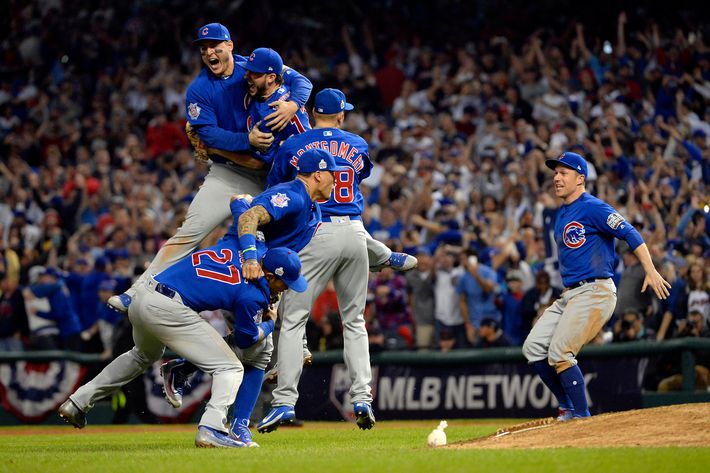
Hope was fulfilled. It neared its completion as a dribbling ground ball reached the glove of a grinning third-baseman. It approached culmination as it sailed across the diamond with the ball into the glove of a first-baseman who, just minutes earlier, had stood on third base screaming with hands on head and scored the final, decisive run. It poured out as a reality in sputtery and unbridled emotions.
It was accomplished by a front office, an owner, a manager, and players who strive to always move forward and do their best in the task at hand. "Try not to suck" is the cheeky way to tell people to do their best. "Embrace the target" and "don't let the pressure exceed the pleasure" are the t-shirt slogans that make sure we have fun even when circumstances lean heavily on us.
Rather than being weighed down by the stress and pressure of all of this longing and angst and unfulfilled hope, these Cubs just played as the 2016 Cubs. And instead of turning anxiously toward the ramifications vis-a-vis their historical predecessors, they just honored them with present excellence.
Many pointed out how the Cubs' World Series win came on All Souls Day. This is the day when the Catholic Church honors the dead. We ritually and prayerfully acknowledge the lives and memories of all those who have gone before us. The day after we honor the saints - those people we believe to be already in heaven - we honor also the hopeful legacy of love that our dearly departed loved ones have left to us.Can we talk about the poetry of the Cubs finally winning the World Series on All Souls' Day?— Rob Goodale (@rgoody33) November 3, 2016
This is the hope that is fulfilled. In our Christian faith, we have faith in the Paschal Mystery of Christ and hope for the eternal life that awaits with Him. When we reach our eternal reward, our faith is realized, and our hope is fulfilled. All that awaits is love. And that is heaven.
The 2016 World Series Champion Chicago Cubs played in this vein. Rather than grieve the loss of many a game, many a season, many a snake-bitten playoff series, these Cubs simply played this season. That added up to 103 wins (though sabermetrics say they were actually unlucky! and should have won about 107!), three playoff series victories, and a championship. What better way to honor the legacy of 108 years' worth of players - players who tried hard, who succeeded in various ways, who loved this city - than to just play a season with faith and hope for its own sake and dedicate that success to them.
The sweetness of victory will endure with profound strength because it occurred in this way. Sports teach us hope when we play, when we coach, when we root. The faith we sustained has been fulfilled, and the hope to which we clung has been realized. All that remains is love.
You could see it in the players, coaches, and organizational members as they celebrated. You could see it in the live feeds of the bars and streets. You could see it at the parade and rally. You could see it as you walked the streets. And I'll bet you could feel it flowing in your celebration, and see it in the wild gestures and reactions of those who joined you.
I saw it as my wife and I visited Wrigley Field to take pictures at the marquee and statues - strangers offered to take pictures for strangers; people stopped moving to stay out of the shot; chalk messages of love and memories covered the walls; humans loved one another.

None of us have died and gone to heaven. But on the day when we honored those who have gone before us, we began an indefinite celebration inspired by a team whose success came not from grieving loss or being overshadowed in its weight but by living in the moment in a way that would make those people proud. Some of my students asked, "How long will this celebration last?" I told them that the win, the parade, and the rally where only the start of something that won't stop.Would a world series win be like "not dying and going to heaven?" #FlyTheW https://t.co/6D6WdmXp55— Dan Masterton (@jesusandchicago) October 28, 2016
As we get a taste of the love that follows when faith is realized and hope is fulfilled, I will use those palpitating moments, those euphoric celebrations, and the impeccable video and audio of that final out as my reset button. That reset button will remind me that faith and hope are never in vein because they long for something which surely awaits.
We haven't yet died. We haven't yet gone to heaven. But man, did we gain a profound taste of the love that we glimpse in potent moments now and the love that surely awaits.
Sunday, October 30, 2016
#morethanredandblue: Time to Vote
Here we are at the end of this long, winding road we call a presidential campaign. If marathon runners get a 26.2 sticker for their car's bumper, shouldn't we get something too? Maybe we can get giant marathon-sticker-style versions of the "I Voted!" stickers to commemorate our slog.
 So now it's time to vote.
As I explained before, Mr. Trump's total aversion to acknowledging marginalized people turned my 99%, want-to-wait-and-see-on-his-pro-life-stances to a 100% can't-vote-for-him. Given his utter lack of integrity, I didn't see any prospects in holding out that his promise to appoint judges that might overturn Roe v. Wade as being worth considering a vote for him.
So that left me with Mrs. Clinton, Mr. Johnson, and abstaining from voting for president. With all due respect to Dr. Stein and the Green Party, I didn't find her platform or nomination acceptance speech compelling. On the other hand, I tried to hang in with Mr. Johnson as long as I could.
I followed him on social media and signed his online petition with the goal of helping get him into the debates. Given two candidates who were unsatisfactory in so many regards, I thought his presence in the debate could at least force a different dynamic and bring attention to issues in different ways. As someone who enjoys finding new, fresh way to reframe difficult issues, I thought a different format could force better dialogue (tri-a-logue?). Rather than have Trump and Clinton spar directly at each other in the usual ways, I thought a three-way debate would bring a variable to the usual dynamics and pull the conversation in ways that would force candidates to re-frame their positions and re-explain them in new ways. Unfortunately, despite cracking double digits for a bit, Mr. Johnson never reached the 15% polling average he needed to earn a podium on the debates stages.
I was drawn to Mr. Johnson for his combination of experience as a Republican governor in a typically blue state; I enjoy people who can find comfort in the middle and/or reaching across to the other side (such as the increasingly endangered conservative Dems and liberal Republicans). Also, Mr. Johnson campaigned from a platform that was less finely honed, less pre-fabricated, and less predictable. He was a little rough around the edges - too rough at times, even if a bit entertaining and declaratory - which seemed a little troubling but a little refreshing.
My intrigue was similar to that which I felt when voting for Bruce Rauner for governor in our last state election here in Illinois. Given the horrible state of Illinois' budget and spending, I thought Rauner's business background and conservative financial positions could help our state right its ship. We needed fiscal discipline to rein in an enormous deficit and move toward a balanced budget. Unfortunately here, Rauner is not politically skilled enough to work effectively with our Democratic State Assembly machine and its insular politics, and that stalemate is hurting everything. (Please, give Illinois term limits.)
I was intrigued about how Johnson could bring his experience into this equation of massive national debt, an indefinitely rising debt ceiling, and economic recovery that's on its way but not sustaining strongly. Cutting budget and finding more responsible, sparse ways to handle revenue raising and federal spending could help us recalibrate the way we use our national revenue to sustain our social stability and help marginalized people. Conservative financial positions can keep more money in the hands of private citizens who can then better support programs for marginalized people by their personal decisions. Each party's basic principle can help or hurt this situation, but I thought this corrective could be welcome.
The Chicago Tribune's endorsement of Mr. Johnson was appealing, and I agreed with some of their points. I even enjoyed Mr. Johnson's slight unpredictability and candor, even amid some gaffes, but some of his issue stances were just too much to handle without a fuller chance to hear him out in mainstream media coverage and presidential debates. I was attracted to his support of term limits, religious freedom, and the environment. However, I was most averse to his abstention on abortion and tacit affirmation of choice as well as his desire to legalize marijuana and pull federal support from drug enforcement agencies.
While I wish I had a fuller chance to hear him out in the brighter spotlight of the debate stage, I just don't think I can vote for him - not because I feel a third-party vote is a vote wasted, but because I don't believe in him strongly enough as a candidate. Thanks, Mr. Johnson, for everything you did to stimulate new and different conversation by your campaigning and for drawing attention to non-Republicans and non-Democrats. I hope you beat the 5% threshold and earn federal funding for the party's future.
So that leaves me with Mrs. Clinton, who has been a source of great personal conflict as I've followed her campaign.
Thing started on an interesting note when she named Sen. Tim Kaine (D-VA) as her running-mate. Immediately, Mr. Kaine's Catholic faith came out, in his comments and in many well-done biographical sketches. However, Mr. Kaine and Mrs. Clinton tripped over each other right away with their disagreement over the Hyde Amendment. Having just strengthened the party platform to be more extreme in supporting abortion rights than ever, Mrs. Clinton seemed poised to take down the Hyde Amendment, too. This compromise restricts federal funding from going toward most abortions. Mr. Kaine waffled a bit, but eventually came out in continued support of it, which he admitted was at odds with the top of his ticket.
I loved it. As a I live-tweeted, I rejoiced each time I could cite her advocacy for marginalized people. Even if Methodists don't use the terms as much, I could feel preferential option for marginalized people in her policies - for refugees, for parents under stress, for the poor, for un(der)insured people, and more. It was thoroughly heartening.
However, the debates steered clear of the profound moral implications of her increasingly liberal stance on abortion. By the meat of the third debate, she was forced to confront it. To be honest, the Hyde Amendment stalemate frustrated me pretty bad, but it didn't make me rule her out. I just wanted something to show that she gave the unborn some significant value in the tragic and challenging calculus of abortion. What followed disappointed me immensely.
Given no kernel of affirmation here, I found it harder to navigate the cloudiness of Mrs. Clinton's political indiscretions. Given a candidate who is so in favor of abortion, I would be looking for a pretty sterling resume and platform across the rest of her campaign. While we may never have all the facts with the Benghazi situation, with her use of a private server for State emails and her deletion of many of them, and with the transparencies of her impressive foundation, the haziness of these things cast too much doubt on her integrity for me. I find Mr. Kaine to be a person of great integrity but was troubled by his vociferous dissent toward our Church.
All these things together made me conclude that I cannot vote for Mr. Clinton and her ticket either.
She is clearly a faithful, grounded human being. She values her Methodist Christian faith. She seems to genuinely have a passion for public service, which preceded her high public profile, and for using her platform to advocate for marginalized people. And she does have the integrity to specifically and publicly apologize for her mishandling of emails while Secretary of State, a job during which he made excellent international accomplishments in rebuilding the American image and our international relationships.
While I have decided I cannot vote for her, I will be comfortable supporting her as my president, even if critically and skeptically. I know that she brings thorough competence and professionalism. I know that her penchant for policy has the potential to make excellent laws. I will be proud to have seen a black man and now a woman ascend to the office of president. And I hope and pray her humility will lead her to work with both parties and all cross-sections to build unity and discover consensus around the value and dignity of life in all forms in all people.

As I explained before, Mr. Trump's total aversion to acknowledging marginalized people turned my 99%, want-to-wait-and-see-on-his-pro-life-stances to a 100% can't-vote-for-him. Given his utter lack of integrity, I didn't see any prospects in holding out that his promise to appoint judges that might overturn Roe v. Wade as being worth considering a vote for him.
So that left me with Mrs. Clinton, Mr. Johnson, and abstaining from voting for president. With all due respect to Dr. Stein and the Green Party, I didn't find her platform or nomination acceptance speech compelling. On the other hand, I tried to hang in with Mr. Johnson as long as I could.
I followed him on social media and signed his online petition with the goal of helping get him into the debates. Given two candidates who were unsatisfactory in so many regards, I thought his presence in the debate could at least force a different dynamic and bring attention to issues in different ways. As someone who enjoys finding new, fresh way to reframe difficult issues, I thought a different format could force better dialogue (tri-a-logue?). Rather than have Trump and Clinton spar directly at each other in the usual ways, I thought a three-way debate would bring a variable to the usual dynamics and pull the conversation in ways that would force candidates to re-frame their positions and re-explain them in new ways. Unfortunately, despite cracking double digits for a bit, Mr. Johnson never reached the 15% polling average he needed to earn a podium on the debates stages.
I was drawn to Mr. Johnson for his combination of experience as a Republican governor in a typically blue state; I enjoy people who can find comfort in the middle and/or reaching across to the other side (such as the increasingly endangered conservative Dems and liberal Republicans). Also, Mr. Johnson campaigned from a platform that was less finely honed, less pre-fabricated, and less predictable. He was a little rough around the edges - too rough at times, even if a bit entertaining and declaratory - which seemed a little troubling but a little refreshing.
My intrigue was similar to that which I felt when voting for Bruce Rauner for governor in our last state election here in Illinois. Given the horrible state of Illinois' budget and spending, I thought Rauner's business background and conservative financial positions could help our state right its ship. We needed fiscal discipline to rein in an enormous deficit and move toward a balanced budget. Unfortunately here, Rauner is not politically skilled enough to work effectively with our Democratic State Assembly machine and its insular politics, and that stalemate is hurting everything. (Please, give Illinois term limits.)
I was intrigued about how Johnson could bring his experience into this equation of massive national debt, an indefinitely rising debt ceiling, and economic recovery that's on its way but not sustaining strongly. Cutting budget and finding more responsible, sparse ways to handle revenue raising and federal spending could help us recalibrate the way we use our national revenue to sustain our social stability and help marginalized people. Conservative financial positions can keep more money in the hands of private citizens who can then better support programs for marginalized people by their personal decisions. Each party's basic principle can help or hurt this situation, but I thought this corrective could be welcome.
The Chicago Tribune's endorsement of Mr. Johnson was appealing, and I agreed with some of their points. I even enjoyed Mr. Johnson's slight unpredictability and candor, even amid some gaffes, but some of his issue stances were just too much to handle without a fuller chance to hear him out in mainstream media coverage and presidential debates. I was attracted to his support of term limits, religious freedom, and the environment. However, I was most averse to his abstention on abortion and tacit affirmation of choice as well as his desire to legalize marijuana and pull federal support from drug enforcement agencies.
While I wish I had a fuller chance to hear him out in the brighter spotlight of the debate stage, I just don't think I can vote for him - not because I feel a third-party vote is a vote wasted, but because I don't believe in him strongly enough as a candidate. Thanks, Mr. Johnson, for everything you did to stimulate new and different conversation by your campaigning and for drawing attention to non-Republicans and non-Democrats. I hope you beat the 5% threshold and earn federal funding for the party's future.
So that leaves me with Mrs. Clinton, who has been a source of great personal conflict as I've followed her campaign.
Thing started on an interesting note when she named Sen. Tim Kaine (D-VA) as her running-mate. Immediately, Mr. Kaine's Catholic faith came out, in his comments and in many well-done biographical sketches. However, Mr. Kaine and Mrs. Clinton tripped over each other right away with their disagreement over the Hyde Amendment. Having just strengthened the party platform to be more extreme in supporting abortion rights than ever, Mrs. Clinton seemed poised to take down the Hyde Amendment, too. This compromise restricts federal funding from going toward most abortions. Mr. Kaine waffled a bit, but eventually came out in continued support of it, which he admitted was at odds with the top of his ticket.
Further discussion on Kaine/Hyde - could stop talking faith but his faith is big appeal for Dems #morethanredandblue https://t.co/x4hFtWX6jC— Dan Masterton (@jesusandchicago) July 29, 2016
Mr. Kaine took the lead in talking about his faith, though Mrs. Clinton's Methodist roots became clear as more stories came out about her faith background as well. I respect and enjoy the way she has shared bits of her Methodist upbringing, though some of the influence of this tradition seems to be permissive toward her pro-abortion stance.More on Kaine and pro-life/Hyde Amendment #morethanredandblue https://t.co/zojOEB2Hzo— Dan Masterton (@jesusandchicago) July 29, 2016
Mr. Kaine has spoken about his Jesuit formation, Catholic education, and commitment to his faith. Sometimes though, Mr. Kaine spoke at such great length that he went too far for me, and probably too far for many bishops. On multiple occasions, Mr. Kaine went beyond simply sharing his opinions with candor to even suggest the Church can and should change its position, specifically on gay marriage and women's ordination. While I respect one's right to honest self-expression, I also expect my fellow Catholics to proceed with humility and care when speaking publicly. Mr. Kaine, while clearly a committed and faithful Catholic, overstepped his bounds and disappointed me. I appreciate the way he has brought Catholicism into the mainstream throughout this campaign, but his words and positions have on the whole been a net-negative to me.Deep dive @TheAtlantic into Hill's abortion stance(s): a bit hesitant but thoroughly for choice #MoreThanRedAndBlue https://t.co/KXWvMYXfaG— Dan Masterton (@jesusandchicago) October 7, 2016
Such fine line Kaine toes and often steps all over. Conscience is good, but loud public dissent is too much. #MoreThanRedAndBlue https://t.co/nbeBSXqzZJ— Dan Masterton (@jesusandchicago) October 5, 2016
But I needed to decide especially where I landed on Mrs. Clinton, the lead of this ticket. I was very attracted to her candidacy in the early weeks following the conventions and up and through the first two debates. When it came to marginalized people, Mrs. Clinton consistently brought the goods while Mr. Trump never did.Gathering thoughts on a Sun. night: Biden/Kaine's Irresponsible Dissent #morethandredandblue https://t.co/OWQq2HOUQw pic.twitter.com/0y3mYoduNb— Dan Masterton (@jesusandchicago) September 12, 2016
Overall, Trump continues focus on power/wealth; Clinton covers lot of good CST (but remains abortion advocate) #Debates #MoreThanRedAndBlue— Dan Masterton (@jesusandchicago) September 27, 2016
Easily teed up but good to see Hill not just attack heavily but uphold goodness of people and connections #MoreThanRedAndBlue #Debate— Dan Masterton (@jesusandchicago) October 10, 2016
Good to hear Hillary review positives of ACA to remind us of growth: 26 y/o's, nutrition facts, etc. #MoreThanRedAndBlue #Debate— Dan Masterton (@jesusandchicago) October 10, 2016
Glad to hear Hillary stumping for 20M+ ppl who'd lose health-care in a repeal situation. What happens to them?! #MoreThanRedAndBlue #Debate— Dan Masterton (@jesusandchicago) October 10, 2016
Hillary calls a spade a spade - Trump's policy is religious discrimination and wrong #MoreThanRedAndBlue #Debate— Dan Masterton (@jesusandchicago) October 10, 2016
Trump: "I would be a president for all people" ... Who are rich, powerful, or influential. So actually very few. #MoreThanRedAndBlue #Debate— Dan Masterton (@jesusandchicago) October 10, 2016
Appreciate Hillary depicting the inhumanity of rounding up + deporting all undocumented ppl - brutal, inhumane #MoreThanRedAndBlue #Debate— Dan Masterton (@jesusandchicago) October 20, 2016
So frustrating how Trump makes everything about money/power it involves. Never about people or humanity. Ever. #MoreThanRedAndBlue #Debate https://t.co/QtJhmOdJDA— Dan Masterton (@jesusandchicago) October 20, 2016
Hey we're back - Hillary is pro-vetting and anti-shutting-the-door on refugee inflows. Yay human dignity! #MoreThanRedAndBlue #Debate— Dan Masterton (@jesusandchicago) October 20, 2016
Sad that even at the end, Trump can't speak positively about self or about humanity and its dignity at all. #MoreThanRedAndBlue #Debate— Dan Masterton (@jesusandchicago) October 20, 2016
I loved it. As a I live-tweeted, I rejoiced each time I could cite her advocacy for marginalized people. Even if Methodists don't use the terms as much, I could feel preferential option for marginalized people in her policies - for refugees, for parents under stress, for the poor, for un(der)insured people, and more. It was thoroughly heartening.
However, the debates steered clear of the profound moral implications of her increasingly liberal stance on abortion. By the meat of the third debate, she was forced to confront it. To be honest, the Hyde Amendment stalemate frustrated me pretty bad, but it didn't make me rule her out. I just wanted something to show that she gave the unborn some significant value in the tragic and challenging calculus of abortion. What followed disappointed me immensely.
Hillary upholding choice as paramount and soapboxing for Planned Parenthood and Roe. 😑 #MoreThanRedAndBlue #Debate— Dan Masterton (@jesusandchicago) October 20, 2016
Hillary says partial birth abortion bill she opposed didn't consider health of mother #MoreThanRedAndBlue #Debate— Dan Masterton (@jesusandchicago) October 20, 2016
.@HillaryClinton wants everyone- could've got me by expanding her great care for marginalized ppl to address the unborn #MoreThanRedAndBlue— Dan Masterton (@jesusandchicago) October 20, 2016
From the liberalization of the platform - where her husband popularized safe, legal, and rare, a phrase from which she then helped to remove the final word - to the rejection of the Hyde Amendment to the defense of partial-birth abortions, I was too frustrated. I am not opposed to voting for pro-choice candidates, but I want to see something significant in support of life as part of their approach - opposition to partial-birth at minimum, if not requirements of parental consent for minors, prohibition of post-viability abortions, restrictions against morning-after pill access for minors, etc. With Mrs. Clinton, she gave those of us who uphold a complete, consistent ethic of life nothing.The tilt here is heavy, but good rundown of quotes from each candidate in abortion from last #debate #MoreThanRedAndBlue https://t.co/5lyRi3N4E1— Dan Masterton (@jesusandchicago) October 21, 2016
Given no kernel of affirmation here, I found it harder to navigate the cloudiness of Mrs. Clinton's political indiscretions. Given a candidate who is so in favor of abortion, I would be looking for a pretty sterling resume and platform across the rest of her campaign. While we may never have all the facts with the Benghazi situation, with her use of a private server for State emails and her deletion of many of them, and with the transparencies of her impressive foundation, the haziness of these things cast too much doubt on her integrity for me. I find Mr. Kaine to be a person of great integrity but was troubled by his vociferous dissent toward our Church.
All these things together made me conclude that I cannot vote for Mr. Clinton and her ticket either.
She is clearly a faithful, grounded human being. She values her Methodist Christian faith. She seems to genuinely have a passion for public service, which preceded her high public profile, and for using her platform to advocate for marginalized people. And she does have the integrity to specifically and publicly apologize for her mishandling of emails while Secretary of State, a job during which he made excellent international accomplishments in rebuilding the American image and our international relationships.
While I have decided I cannot vote for her, I will be comfortable supporting her as my president, even if critically and skeptically. I know that she brings thorough competence and professionalism. I know that her penchant for policy has the potential to make excellent laws. I will be proud to have seen a black man and now a woman ascend to the office of president. And I hope and pray her humility will lead her to work with both parties and all cross-sections to build unity and discover consensus around the value and dignity of life in all forms in all people.
* * *
When I dug into this campaign in deeper earnestness, shifting from the horse-race of the primaries to the voting discernment of the general election, I initially never thought of abstaining. I have always felt that eventually one needs to take a stand and support a candidate. I discerned my way to voting for Mr. Obama in 2008 and Mr. Romney in 2012, and I imagined I'd find a conclusion this time as well. But a conversation with a dear friend, in which he told me, "There is nothing holy about the disintegrated life," reaffirmed to me that an active, thorough process could result in abstention and have been still valuable and worthwhile.
This election has helped me to retain my idealism. Given two candidates that are so frustrating, I've looked more deeply into third parties, most specifically the Libertarian Party and American Solidarity Party, than ever before. I've held the candidates to a higher standard than ever before. And I've learned more about the truth and necessity of Catholic Social Teaching than ever before.
Working with teenagers to match the excellent insight of the Catholic vocabulary to the hard-to-describe experiences of life, and especially encounters with people who are marginalized, has reinforced to me the necessity of our faith. Catholicism is so coherent and cohesive that it can readily respond to any and all issues of humanity and society. In this case, I don't feel that my abstention from voting for president (I will still vote and likely check a box for many other races) is at all a failure. CST and the wealth of our Church teaching has done more for me in this process than I had imagined it could.
Let us all continue to engage in social justice with solidarity and an earnest preferential option for the people we marginalize.
Saturday, October 8, 2016
#morethanredandblue: Toward A Final Vote: Getting Closer
In college political science class, I learned about "the myth of the independent." While around one-third of voters identify as independent, many of their voting patterns remain fairly predictable. Most independents who admit a leaning toward one party or another tend to vote almost as predictably as voters who explicitly identify with that party. Only about one-third of independents are "true independents," in the sense that they don't lean either way consistently and thus their voting behavior is less predictable because their decisions differ from election to election, candidate to candidate, office to office.
I am a true independent. I voted for President Obama in '08 and Governor Romney in '12. I voted in Illinois Senate seat races to reelect Senator Durbin (D-IL) and to promote Mark Kirk (R-IL) to the Senate to succeed Obama. While a resident of southern California, I helped oust Rep. Mary Bono Mack (R) in favor of immigrant and self-made doctor Rep. Raul Ruiz (D-CA). And in Spring of this year, I utilized the open primary system in Illinois to pull a Republican ballot and support the only reasonable, pragmatic, and thoroughly well-rounded candidate in the race from either party, Governor John Kasich (R-OH).
My approach and my voting record would drive pollsters and political scientists crazy. Some feel that if you don't know who you're voting for soon after the nominating conventions, then you're not paying close enough attention. I disagree.
Whereas lifelong Democrats might not ever entertain the ideas of a Republican candidate or vice-versa, I rarely disqualify any candidate for any basic reason. Unless the person is a known racist or white supremacist or a dictatorial fascist or something crazily extreme, I'm happy to hear the arguments and proposals of any candidate before I entertain opposition or support.
So maybe for people whose opinions and ideologies match more closely with a particular party, the decision can be simpler and easier to conclude more quickly. However, for me as an independent, a moderate, and a Catholic, I want to take in as much information as I can. On the one hand, 24-hour-news has skewed the quality and shallowed the depth of news, but the technology and social media age gives us huge amounts of news, reporting, analysis, and commentary that can inform us. And if we can responsibly curate the data - for me, via (most of) my Facebook friends and my Twitter follows - there's lots of good sources out there to look to for information.
I look especially to Catholic media like America Magazine, Crux, Catholic News Agency, Millennial Journal, and more as well as various secular media for political coverage like NPR, New York Times, Washington Post, The Atlantic, and more.
In the case of this election, I knew from the moments Trump began to rise in the polls, through his insurgence in the primaries, and his winning of the delegate majority, that I could probably not vote for him. Even with the primacy of opposing abortion and upholding the consistent ethic of life that is usually found in the candidates of the Republican Party, I just felt his demeanor and brutishness did not translate to presidential leadership. Each time he opened his mouth, this was confirmed more and more, but it was from sifting through the reporting and reaction that I first found the incisive language to match my discomfort with Trump as a candidate:
So as the summer rolled on into convention season, I wanted to hear the RNC's speakers, vet the acceptance speeches, and see what the campaign would talk about. I especially wanted to see how, without the crutch of a hand-picked crowd and control over how the event would unfold, Trump would avail himself in a one-on-one conversation with Hillary Clinton. Here's my thoughts on Trump as I watched him in the debate (see all my tweets in the homepage sidebar or by visiting my profile or clicking through to my hashtag):
Trump's running-mate Governor Mike Pence (R-IN) had some promising language in the tail-end of the Vice Presidential debate, but the whole of his comments in debating Senator Tim Kaine (D-VA) showed that Trump and Pence are not on the same page with each other or with earlier comments they've made in the campaign versus their current stances. Pence's pro-life influence appears solid, but his influence is suspect; plus, he has his own issues in rejecting refugees and losing a showdown with the Archbishop of Indianapolis over admitting Syrians to Indiana.

So that leaves me with three options remaining:
1. abstain, which I feel if done actively can be a responsible use of one's right to vote (or not)
2. vote for Gary Johnson, the Libertarian Party candidate for President
3. vote for Hillary Clinton, whose addressing of poor and marginalized people has been strong and sturdy but whose ticket's platform on abortion is awful
One month to go. Stay tuned.
I am a true independent. I voted for President Obama in '08 and Governor Romney in '12. I voted in Illinois Senate seat races to reelect Senator Durbin (D-IL) and to promote Mark Kirk (R-IL) to the Senate to succeed Obama. While a resident of southern California, I helped oust Rep. Mary Bono Mack (R) in favor of immigrant and self-made doctor Rep. Raul Ruiz (D-CA). And in Spring of this year, I utilized the open primary system in Illinois to pull a Republican ballot and support the only reasonable, pragmatic, and thoroughly well-rounded candidate in the race from either party, Governor John Kasich (R-OH).
My approach and my voting record would drive pollsters and political scientists crazy. Some feel that if you don't know who you're voting for soon after the nominating conventions, then you're not paying close enough attention. I disagree.
Whereas lifelong Democrats might not ever entertain the ideas of a Republican candidate or vice-versa, I rarely disqualify any candidate for any basic reason. Unless the person is a known racist or white supremacist or a dictatorial fascist or something crazily extreme, I'm happy to hear the arguments and proposals of any candidate before I entertain opposition or support.
So maybe for people whose opinions and ideologies match more closely with a particular party, the decision can be simpler and easier to conclude more quickly. However, for me as an independent, a moderate, and a Catholic, I want to take in as much information as I can. On the one hand, 24-hour-news has skewed the quality and shallowed the depth of news, but the technology and social media age gives us huge amounts of news, reporting, analysis, and commentary that can inform us. And if we can responsibly curate the data - for me, via (most of) my Facebook friends and my Twitter follows - there's lots of good sources out there to look to for information.
I look especially to Catholic media like America Magazine, Crux, Catholic News Agency, Millennial Journal, and more as well as various secular media for political coverage like NPR, New York Times, Washington Post, The Atlantic, and more.
In the case of this election, I knew from the moments Trump began to rise in the polls, through his insurgence in the primaries, and his winning of the delegate majority, that I could probably not vote for him. Even with the primacy of opposing abortion and upholding the consistent ethic of life that is usually found in the candidates of the Republican Party, I just felt his demeanor and brutishness did not translate to presidential leadership. Each time he opened his mouth, this was confirmed more and more, but it was from sifting through the reporting and reaction that I first found the incisive language to match my discomfort with Trump as a candidate:
It was from this well-written opinion piece that I was able to grasp exactly what bothered me most about Trump the candidate: he values power more than anything, and ignores or even belittles marginalized people. Trump's pomposity as a reality TV star and egotistical personality are galling, but it was by reading this story and connecting the dots that I found why I could likely never vote for him for president. I set the likelihood at 1%, knowing the DNC was toughening their stance on abortion in the platform and fussing over the reasonable compromise of the Hyde Amendment, thinking that I might yet want recourse to the ticket with a more moral stance on abortion."Time and again Mr. Trump has shown contempt for those he perceives as weak and vulnerable" https://t.co/ZmI3TQ3rtx via @nytopinion— The New York Times (@nytimes) July 5, 2016
So as the summer rolled on into convention season, I wanted to hear the RNC's speakers, vet the acceptance speeches, and see what the campaign would talk about. I especially wanted to see how, without the crutch of a hand-picked crowd and control over how the event would unfold, Trump would avail himself in a one-on-one conversation with Hillary Clinton. Here's my thoughts on Trump as I watched him in the debate (see all my tweets in the homepage sidebar or by visiting my profile or clicking through to my hashtag):
Deregulated business can = subsidiarity but must be done carefully so doesn't cause exploitation & greater rich/poor gap #MoreThanRedAndBlue— Dan Masterton (@jesusandchicago) September 27, 2016
Trump's tax cuts can free $$ for family stability, care for marginalized but he wants it mainly for personal wealth #MoreThanRedAndBlue— Dan Masterton (@jesusandchicago) September 27, 2016
Trump's rant on "third-world" US airports underscores how his entire focus is prestige, wealth, power, but never dignity #MoreThanRedAndBlue— Dan Masterton (@jesusandchicago) September 27, 2016
Trump on race relations: law-and-order driven; says it's hell for minorities but only suggests more stop&frisk, etc #MoreThanRedAndBlue— Dan Masterton (@jesusandchicago) September 27, 2016
Aside: Chi. has massive gun/violence issues but Trump needs better #'s + greater concern than "I have properties there" #MoreThanRedAndBlue— Dan Masterton (@jesusandchicago) September 27, 2016
Trump supports 2nd amendment, which bishops generally affirm, but needs to come with reasonable gun controls/limits too #MoreThanRedAndBlue— Dan Masterton (@jesusandchicago) September 27, 2016
Global solidarity is about bonds of humanity, not ability to pay. Donald always motivated by money, power, prestige. #MoreThanRedAndBlue— Dan Masterton (@jesusandchicago) September 27, 2016
The debate just confirmed that Trump's ego and personality preclude him from paying any attention or giving any due justice to people who we have marginalized in our society. He solely values power and wealth. And any time he explains a policy or position, those motivations are clear while any attention to marginalized people is missing.Overall, Trump continues focus on power/wealth; Clinton covers lot of good CST (but remains abortion advocate) #Debates #MoreThanRedAndBlue— Dan Masterton (@jesusandchicago) September 27, 2016
Trump's running-mate Governor Mike Pence (R-IN) had some promising language in the tail-end of the Vice Presidential debate, but the whole of his comments in debating Senator Tim Kaine (D-VA) showed that Trump and Pence are not on the same page with each other or with earlier comments they've made in the campaign versus their current stances. Pence's pro-life influence appears solid, but his influence is suspect; plus, he has his own issues in rejecting refugees and losing a showdown with the Archbishop of Indianapolis over admitting Syrians to Indiana.
Mike Pence wants more pro-adoption policies that could help end abortion, he said last night https://t.co/PJYabgfcgg— Michael J O'Loughlin (@MikeOLoughlin) October 5, 2016
Pence says Trump's career all about "building" - but wealth and power not solidarity and dignity of life 😐 #MoreThanRedAndBlue— Dan Masterton (@jesusandchicago) October 5, 2016
I abhor the recourse to abortion that our law protects, but I am now certain that the vague chance (because why would we believe this one thing when so much of the other things he says are lies) that a Trump administration would appoint judges to overturn Roe v. Wade or reform laws to protect the unborn is not worth a vote for him in any scenario. (Note: this was drafted even before the 2005 video was released!)Proud of bishop for that advocacy and commitment to welcoming the stranger! #MoreThanRedAndBlue https://t.co/RHwbp6ja7E— Dan Masterton (@jesusandchicago) October 5, 2016
So that leaves me with three options remaining:
1. abstain, which I feel if done actively can be a responsible use of one's right to vote (or not)
2. vote for Gary Johnson, the Libertarian Party candidate for President
3. vote for Hillary Clinton, whose addressing of poor and marginalized people has been strong and sturdy but whose ticket's platform on abortion is awful
One month to go. Stay tuned.
Sunday, September 11, 2016
#morethanredandblue: Mr. Biden, Mr. Kaine, and Irresponsible Dissent
The past few years have been intriguing and engaging for Catholicism and politics. Reaching back to 2012 when Catholic politician Rep. Paul Ryan (R-WI) was tapped to run with Mitt Romney on the Republican presidential ticket, opposite the sitting Vice President Joe Biden, also a Catholic, we're now in a campaign season where Ryan has ascended to Speaker of the House, the Democrats have tapped a Catholic for their VP slot on the ticket, and the bishops have been active and outspoken in confronting issues like religious liberty, contraceptive and abortion access, and gun control.
I think a lot of us, myself included, are excited whenever new Late Show host Stephen Colbert wears his Catholicism on his sleeve. I especially enjoyed the candor that Colbert and Biden shared early in the new Late Show's run, which brought the centrality of their faith to the forefront as they discussed tragedy and hope acutely (below).
All along this route, I've been excited. I think the best way to confront issues is to get them out into the open, into the mainstream, and foster activity - get people talking, making suggestions, trying to articulate positions, and work toward deeper, clearer understandings of what is right. I am an agitator at my core, so I love the opportunity to recognize frictions and find ways to respond in faith.
Unfortunately, some of the activity hasn't been positive. As we seek to find better, stronger, clearer ways to live out our faith, some of our leaders have faltered in ways that are significantly damaging and regrettable for the public image of our faith, which needs all the help it can get.
Earlier this year, Vice President Biden openly and publicly officiated a gay marriage. While it's maybe a little debatable whether or not it's ok for a Catholic to officiate at a non-religious marriage ceremony (though I'd discourage Catholics from doing so), it's not really debatable whether or not a Catholic can officiate a same-sex marriage. We believe marriage to be a lifelong bond between a man and a woman for the procreative and unitive creation of a family.
Then a few days ago, Senator Kaine, who has already publicly come out in favor of same-sex marriage, went even further by addressing the Church directly. As reported by America Magazine, Kaine elaborated on his position:
I'm not here to call for Mr. Biden, Mr. Kaine, or other public figures to be denied Eucharist. That is the decision of the Church's local leaders according to their application of Church norms and the discernment of their leadership.
I'm not here to claim that Mr. Biden, Mr. Kaine, or other public figures are not "really Catholic" for acting like this. We are Catholic by our baptism, our membership in the Church and in Christ, and our reception of the Word and Sacraments as celebrated by our Church.
I'm not here to judge the souls of Mr. Biden, Mr. Kaine, or other public figures. I don't know the content of these people's internal character. I do know that discerning a call in complicated, and I hope that these people are in consistent prayer and discernment over how to do what God calls us to do, just as all of us should be as we live out our vocations.
Here's what I am out do to in my writing: make some suggestions on how to dissent responsibly.
For starters, every Catholic - and really even non-Catholics - should presume the good will of the magisterium as teachers. The bishops and priests do not set out to hamper or constrain people. Their intentions and aims are to empower us in our moral lives to live out the faith according to the Gospel of Christ.
There is some extent to which it is awkward for older celibate men to tell us how to live out our sexuality, for example, but their vows and spiritual commitments, in collegiality with their brothers throughout the Church, as well as the authority vested in the bishops from Christ and apostolic succession, give framework and context for the teachings they unpack.
Moreover, I don't know that Mr. Biden or Mr. Kaine is guilty of this but other critics and some Catholics often are - learn the Church teaching thoroughly. Study what the Church actually teaches. I would also add that it's important to distinguish principle from practice.
For example here, the Church does not hate or exclude gays; it teaches that we must be warmly hospitable toward homosexual people with compassion, respect, and sensitivity. However, some communities may ignore this principle and practice inappropriate discriminations or mistreatment of LGBTQ people. We need to be sure to chastise wrongly practiced teachings as deviations from the teaching rather than excoriating the whole Church for those few who ignore her teachings.
Now, when it comes to dissenting actions and public comments, one needs to first evaluate their motivations. What are the sources of your dissent? What leads you to disagree with the Church's positions? One needs to first make sure they are not out to smear the Church for their own gain or satisfaction. It can't be about attention or arrogance for oneself with the Church as the easy target.
Next, dissenting people need to examine one's qualifications for disagreement. Does one have the breadth and depth of formation and study to lodge legitimate criticisms? If your dissent comes from first-hand experience, have you carefully reflected upon it and sought to filter it through natural law and grounded, humble reason?
We need to be careful at claiming personal expertise or overselling experiences; all of our process of reflection must be grounded in the ecclesiology of the Church and its leadership and authority.
Finally, dissenting Catholics need to proceed with humility. I'm not sure how Mr. Biden and Mr. Kaine fared with those previous pieces, but their public actions went quite astray with this last part. One should ask will my public comments hurt the Church? What is the fairest, most compassionate way for me to investigate and share my dissent in dialogue with others and with Church leaders? Dissenting Catholics need to be careful that their actions and comments do not call undue attention to themselves, compel others to dissent, or highlight divergences between themselves and the Church to which they belong.
There's not really a way to square Mr. Biden's and Mr. Kaine's public actions with this last but far-from-least piece of dissent framework.
Mr. Biden's publicly officiating a same-sex marriage might be motivated by humble service of others and their love, but it flies in the face being a humble believer. It actively disrespects the Church teaching. His action made him a personal agent in an action that breaks Church belief in marriage. And his action took place in the most public way possible - in a public building, with certification from a public agency, and broadcast widely on media. I was disappointed to see Joe do this.
Then Mr. Kaine's comments - he is already on record supporting gay marriage - went even further as to publicly put call out Church leadership by predicting that a change in Church teaching was coming. He does his own interpretation of Genesis 1 and then cites the disposition of Francis - including an oft-quoted and misconstrued quote of Francis on gay clergy - as evidence that the teaching will evolve.
Not only is this not humble, but it becomes deeply presumptuous. Mr. Kaine's usage of Genesis 1 does not match that of our Tradition, which upholds it as a bedrock of our marital theology. Then, he presumes a trajectory and agenda for Pope Francis that is reductive and self-serving. Francis is reform-oriented and has worked to reshape the curial offices, streamline bureaucracies like annulment tribunals, and renew Church teachings on issues like ecology and perhaps the diaconate. However, Francis has not and will likely not change any core teachings of the Church, as he is simply the lead bishop steering the magisterium as it discerns the deposit of faith.
I will say that I am sympathetic to those who feel strongly to advocate for LGBTQ people. I have learned a lot as society and culture have grown in the past decade, and I am looking for ways that the Church can respond better.
I think inclusion is key, inviting LGBTQ to engage in Church life Eucharistically. That includes making sure we do not hold LGBTQ people to higher moral standards than we do straight single people or married people; for example, we should not target LGBTQ people by placing tighter scrutiny on their sexual behavior (they may have homosexual activity) than we do single people (who may have premarital sex) or married people (who may use artificial birth control, IVF, or other immoral behaviors). I also wonder if there's a way for us to provide a communal support, perhaps even a blessing or commissioning, for LGBTQ people who may never marry but wish to consecrate themselves to the service of the communion of the Church. On a secular level, too, I support non-discrimination clauses, equality before the law and in hiring, benefits for same-sex partners with hospital visits, information services, and taxes and estates, and more.
However, I cannot fathom taking such public actions, that overtly contradict the Church, as performing a same-sex marriage or calling out the Church to change its teaching. I pray for Catholics to find courage in answering calls to public and civil service. But I cannot celebrate such dissenting actions by these people of faith.
I will continue to admire their courage in tackling the dilemma-laden seas of American politics, but I will also hope that they can act and speak with greater nuance and fidelity, that they can stay grounded in the faith that has sustained them to this point, and that they can choose their words and actions with greater humility.
I think a lot of us, myself included, are excited whenever new Late Show host Stephen Colbert wears his Catholicism on his sleeve. I especially enjoyed the candor that Colbert and Biden shared early in the new Late Show's run, which brought the centrality of their faith to the forefront as they discussed tragedy and hope acutely (below).
All along this route, I've been excited. I think the best way to confront issues is to get them out into the open, into the mainstream, and foster activity - get people talking, making suggestions, trying to articulate positions, and work toward deeper, clearer understandings of what is right. I am an agitator at my core, so I love the opportunity to recognize frictions and find ways to respond in faith.
Unfortunately, some of the activity hasn't been positive. As we seek to find better, stronger, clearer ways to live out our faith, some of our leaders have faltered in ways that are significantly damaging and regrettable for the public image of our faith, which needs all the help it can get.
Earlier this year, Vice President Biden openly and publicly officiated a gay marriage. While it's maybe a little debatable whether or not it's ok for a Catholic to officiate at a non-religious marriage ceremony (though I'd discourage Catholics from doing so), it's not really debatable whether or not a Catholic can officiate a same-sex marriage. We believe marriage to be a lifelong bond between a man and a woman for the procreative and unitive creation of a family.
Then a few days ago, Senator Kaine, who has already publicly come out in favor of same-sex marriage, went even further by addressing the Church directly. As reported by America Magazine, Kaine elaborated on his position:
“I think [the Church's position on marriage is] going to change, too,” he said to applause, invoking both the Bible and Pope Francis as reasons why he thinks the church could alter its doctrine on marriage.
“I think it’s going to change because my church also teaches me about a creator in the first chapter of Genesis who surveys the entire world including mankind and said it is very good, it is very good,” he said.
“Pope Francis famously said, ‘Who am I to judge?’” Kaine continued, referencing the pope’s 2013 comment when asked about gay priests in the church.
“To that I want to add, who am I to challenge God for the beautiful diversity of the human family?” Kaine asked. “I think we’re supposed to celebrate it, not challenge it.”
Here's a few things I'm not out to do in my writing:Sometimes Sen. Kaine, though I like him a lot, says things that make me feel squishy #morethanredandblue https://t.co/gpqVbrzdrp— Dan Masterton (@jesusandchicago) September 11, 2016
I'm not here to call for Mr. Biden, Mr. Kaine, or other public figures to be denied Eucharist. That is the decision of the Church's local leaders according to their application of Church norms and the discernment of their leadership.
I'm not here to claim that Mr. Biden, Mr. Kaine, or other public figures are not "really Catholic" for acting like this. We are Catholic by our baptism, our membership in the Church and in Christ, and our reception of the Word and Sacraments as celebrated by our Church.
I'm not here to judge the souls of Mr. Biden, Mr. Kaine, or other public figures. I don't know the content of these people's internal character. I do know that discerning a call in complicated, and I hope that these people are in consistent prayer and discernment over how to do what God calls us to do, just as all of us should be as we live out our vocations.
Here's what I am out do to in my writing: make some suggestions on how to dissent responsibly.
For starters, every Catholic - and really even non-Catholics - should presume the good will of the magisterium as teachers. The bishops and priests do not set out to hamper or constrain people. Their intentions and aims are to empower us in our moral lives to live out the faith according to the Gospel of Christ.
There is some extent to which it is awkward for older celibate men to tell us how to live out our sexuality, for example, but their vows and spiritual commitments, in collegiality with their brothers throughout the Church, as well as the authority vested in the bishops from Christ and apostolic succession, give framework and context for the teachings they unpack.
Moreover, I don't know that Mr. Biden or Mr. Kaine is guilty of this but other critics and some Catholics often are - learn the Church teaching thoroughly. Study what the Church actually teaches. I would also add that it's important to distinguish principle from practice.
For example here, the Church does not hate or exclude gays; it teaches that we must be warmly hospitable toward homosexual people with compassion, respect, and sensitivity. However, some communities may ignore this principle and practice inappropriate discriminations or mistreatment of LGBTQ people. We need to be sure to chastise wrongly practiced teachings as deviations from the teaching rather than excoriating the whole Church for those few who ignore her teachings.
Now, when it comes to dissenting actions and public comments, one needs to first evaluate their motivations. What are the sources of your dissent? What leads you to disagree with the Church's positions? One needs to first make sure they are not out to smear the Church for their own gain or satisfaction. It can't be about attention or arrogance for oneself with the Church as the easy target.
Next, dissenting people need to examine one's qualifications for disagreement. Does one have the breadth and depth of formation and study to lodge legitimate criticisms? If your dissent comes from first-hand experience, have you carefully reflected upon it and sought to filter it through natural law and grounded, humble reason?
We need to be careful at claiming personal expertise or overselling experiences; all of our process of reflection must be grounded in the ecclesiology of the Church and its leadership and authority.
Finally, dissenting Catholics need to proceed with humility. I'm not sure how Mr. Biden and Mr. Kaine fared with those previous pieces, but their public actions went quite astray with this last part. One should ask will my public comments hurt the Church? What is the fairest, most compassionate way for me to investigate and share my dissent in dialogue with others and with Church leaders? Dissenting Catholics need to be careful that their actions and comments do not call undue attention to themselves, compel others to dissent, or highlight divergences between themselves and the Church to which they belong.
There's not really a way to square Mr. Biden's and Mr. Kaine's public actions with this last but far-from-least piece of dissent framework.
Mr. Biden's publicly officiating a same-sex marriage might be motivated by humble service of others and their love, but it flies in the face being a humble believer. It actively disrespects the Church teaching. His action made him a personal agent in an action that breaks Church belief in marriage. And his action took place in the most public way possible - in a public building, with certification from a public agency, and broadcast widely on media. I was disappointed to see Joe do this.
Then Mr. Kaine's comments - he is already on record supporting gay marriage - went even further as to publicly put call out Church leadership by predicting that a change in Church teaching was coming. He does his own interpretation of Genesis 1 and then cites the disposition of Francis - including an oft-quoted and misconstrued quote of Francis on gay clergy - as evidence that the teaching will evolve.
Not only is this not humble, but it becomes deeply presumptuous. Mr. Kaine's usage of Genesis 1 does not match that of our Tradition, which upholds it as a bedrock of our marital theology. Then, he presumes a trajectory and agenda for Pope Francis that is reductive and self-serving. Francis is reform-oriented and has worked to reshape the curial offices, streamline bureaucracies like annulment tribunals, and renew Church teachings on issues like ecology and perhaps the diaconate. However, Francis has not and will likely not change any core teachings of the Church, as he is simply the lead bishop steering the magisterium as it discerns the deposit of faith.
I will say that I am sympathetic to those who feel strongly to advocate for LGBTQ people. I have learned a lot as society and culture have grown in the past decade, and I am looking for ways that the Church can respond better.
I think inclusion is key, inviting LGBTQ to engage in Church life Eucharistically. That includes making sure we do not hold LGBTQ people to higher moral standards than we do straight single people or married people; for example, we should not target LGBTQ people by placing tighter scrutiny on their sexual behavior (they may have homosexual activity) than we do single people (who may have premarital sex) or married people (who may use artificial birth control, IVF, or other immoral behaviors). I also wonder if there's a way for us to provide a communal support, perhaps even a blessing or commissioning, for LGBTQ people who may never marry but wish to consecrate themselves to the service of the communion of the Church. On a secular level, too, I support non-discrimination clauses, equality before the law and in hiring, benefits for same-sex partners with hospital visits, information services, and taxes and estates, and more.
However, I cannot fathom taking such public actions, that overtly contradict the Church, as performing a same-sex marriage or calling out the Church to change its teaching. I pray for Catholics to find courage in answering calls to public and civil service. But I cannot celebrate such dissenting actions by these people of faith.
I will continue to admire their courage in tackling the dilemma-laden seas of American politics, but I will also hope that they can act and speak with greater nuance and fidelity, that they can stay grounded in the faith that has sustained them to this point, and that they can choose their words and actions with greater humility.
Subscribe to:
Posts (Atom)
Featured Post
Having a Lucy
by Dan Masterton Every year, a group of my best friends all get together over a vacation. Inevitably, on the last night that we’re all toge...
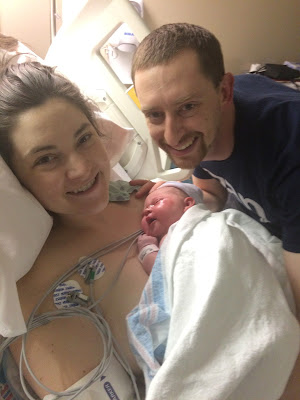
-
by Dan Masterton Picking up my periodic thread on The Simpsons ( click back here to read my series intro and first post ), today I'm ...
-
5 years ago, I interviewed with members of the campus ministry department at a Catholic university. I had been accepted for graduate school,...
-
 by Dan Masterton Over the ten years of our relationship, my wife has had cause to poke fun at me for plenty of reasons. Chief among them ma...
