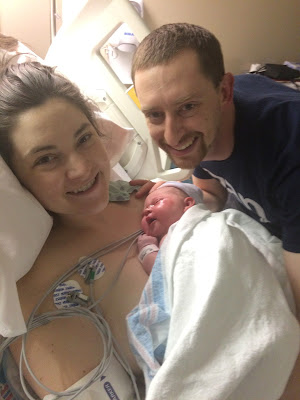
Wednesday, September 25, 2019

Published at Jesuits.org: How Ignatian Indifference Helped Me Realize I Had to Leave a Dream Job

by Dan Masterton

Today, Jesuits.org published a piece I wrote about how some elements of Ignatian spirituality ironically helped me discern to leave a dream job at a Jesuit institution. This is a testament to the Jesuit charism and how it animates the institutions and communities where it flows.
For many years, I dreamed about working in a Cristo Rey Network school. Then, last summer, the right job came open at the right time. I applied, interviewed, and was invited to work in campus ministry at Cristo Rey Jesuit High School in Chicago. The job was a dream come true, with one caveat. I’m a (mostly) stay-at-home dad who works part-time to make a little extra money but I’m focused primarily on my daughters, Lucy and Cecilia, and our family home life. 
After Lucy was born, I returned to the same job with the same students, just in reduced hours; here, I’d be starting in a part-time role at a new school. This is a difference I underestimated.
This is a testament to the folks I worked with for my brief time at Cristo Rey and a hearken back to fine friends who first subsumed me into Jesuit spirituality, especially Jimmy, Steph, Dave, and Erin.

Read the full piece at Jesuits.org!

Thursday, September 19, 2019

Decided Love Grows Naturally

by Dan Masterton

I'm not sure exactly when it happened, but I know that my outlook toward falling in love changed when I realized that love perfects as a decision. It's something you hear (hopefully) from friends or older family members. It's not something you quickly understand or immediately make much sense of. But when you get it, it transforms the superficial romance and movie-narrative conceptions you might have otherwise carried.

To put it simply, I'd say love perfects as a decision when you realize what unconditional love actually means and what it really is. You know it means loving someone without putting any criteria to that love. You need to learn and realize the meaning of that and how to do it. Generally speaking, love is deciding to care for and accompany someone all the time no matter what. It means that you don't depend on positive emotions and the times when you feel affectionate toward someone to treat them lovingly. Even if you don't have butterflies in your stomach about someone, and especially when you're feeling actively frustrated with them, real, full, true love cares for that person nonetheless. It doesn't mean that love is emotionless and cold -- just the opposite: it means that the power of the heart's feelings is coupled with the strength of its decision.

In order to enter into a serious romantic relationship that has the potential for marriage and family, you really have to dig into this distinction. You have to know and believe that this is true love and that you can and will decide to love your spouse in this manner for as long as you both will live.

One way my wife, Katherine, and I talked about it during the earlier days of our relationship -- and a way we know is true still now -- is that this level of love means that you will give and receive the greatest love either of you will ever experience as well as give and receive the greatest level of hurt you may ever experience. The reason this is possible and true is that this sort of complete love means a level of vulnerability with one another that is deeper and fuller and steadier than anywhere else in your life. By deciding to love each other in this way, you cultivate a relationship that becomes the exemplar for all other areas of relationship in your life, including your relationship with God.

Though it may seem dark, acknowledging the capacity to hurt as well as to love brings clarity to the marriage. And it actually strengthens our ability and desire to maximize love and minimize hurt. We mutually dedicate great attentiveness to one another, and strive to be as sensitive as possible to each other's needs and desires. That sort of reality and dedication gives our marriage and family life the backbone it needs. It doesn't mean we're perfect, but it does make us more steadily faithful to loving well.

8 years later, not much has changed.
Oh, well, kids. We have kids now.
I think it's this foundation that made our desire to have kids and grow our family simpler and sort of easier. Certainly, we both felt called to parenthood, and I discerned marriage to Katherine in part because I saw the God-given gifts of an extraordinary mother present in her. Even more, though, I think our approach toward love and relationship predisposed me to have space already made for kids in my heart and in my outlook.

My heart already learned to love -- largely from Katherine, from my mom, and from my dad and wider family -- in a way that acknowledges the capacity for (hopefully minimal) hurt as well as (hopefully great) love. I know that if I'm doing this right, my life will overflow with love. If I am vulnerable to God in my prayer and my living, if I am vulnerable to Katherine in our married life, then my relationships should all flow out in this same fashion of good and complete love.

So, when it came to taking the plunge into trying to start a family, it didn't feel like new space had to be made. It didn't feel like drastic change was necessary. It just felt like this capacity to love (and to hurt) would gain a new primary relationship. And since love is not a zero sum idea, it didn't mean any love was lost in my life, or that something extraordinary was required to restructure my heart. It meant that the way my relationship with God and Katherine continued would now envelop a new little one. It just felt like a simple and natural reshaping of this sturdy circle of love.

Waiting for a fourth holy handprint
to join our family canvas.
Surely, some people would read this and easily criticize the lack of practicality. What about diapers, cribs, clothes, bottles, health-care bills, room in your home, etc.!? All fair. But I believed before our first daughter, Lucy, was born, and I believe now as our second daughter is about to arrive, that this wide, deep, strong foundation of love disposes the heart, mind, and soul to attend to all of those logistics faithfully. You may not anticipate them all as well as you'd hope; you may not handle them all as smoothly as you'd like; you will triage and discern and act effectively if you keep focused on this foundation of love and fidelity.

A few weeks from now, I will hopefully be piss-ass exhausted from several consecutive nights of taking the middle-of-the-night feed with this little girl -- and God knows my wife will have traded full-time work for maternity leave at home yet be even more tired than when working -- and from the daily life of a family of four. And I will be happy. I will be tired and aching and bleary, and I will be loved and loving.

Monday, August 5, 2019

Encounter, Witness, Pilgrimage: Part 3 (Theology on Tap 2019)

by Dan Masterton

Click back to Part 1 here | Click back to Part 2 here | Read Part 3 below:

Finally, let’s talk about pilgrimage. Most specifically, a pilgrimage is a physical trip one makes to a particular location of spiritual relevance, inviting special reflection as part of the journey. More broadly, though, pilgrimage is a mindset we can carry with us in daily life. This mindset embraces life as a winding path of discernment with various calls from God and special moments of grace unfolding on this journey toward our fullness in salvation with God. It helps ground our thoughts and decisions in everyday life in a way that helps us better remember that we are made from Love, in Love, and to love, and, ultimately, to return to Love.


Let’s think about this first with respect to travel. When we are coming up with ideas for travel plans, we’re often looking for what’s most exciting, most sought-after, most photogenic. And this can often lead to crowded itineraries with lots of extra travel time, jam-packed scheduling, extra costs, and perhaps a vacation that barely gives us any chance to relax and recharge. I know when I finished my year of service abroad and my best friend came to visit and travel with me, we were way too overzealous about jam-packing our schedule. We traveled multiple hours almost every day and almost never spent two straight nights in the same place over a ten-day trip. We had a lot of fun and saw a lot of unique things in a lot of new places, but it certainly would not qualify as a relaxing and recharging sort of trip. Now I’m not saying that you can’t travel with ambitious plans and a desire to see and learn about new places; in fact, some travel hopes just require a bit of ragged journeying and tight scheduling to get where you’re dying to go. Let’s focus on the mindset.

On the one hand, we can approach travel by sort of demanding that people, places, and things show us something we’re insisting upon -- I am going to go to Paris, and Paris is going to show me the Eiffel Tower, the Mona Lisa, and Arc d’Triumph. Are those even that cool of things? Do they warrant more than a brief pause to look on, admire them briefly, and leave space for other things? Maybe. On the other hand, we could instead approach travel by choosing a destination and inviting those people, places, and things to teach and show us something, with an open mind and humble heart. My brother once told me, “A tourist demands; a pilgrim receives.” It can be hard to let go of list-making and box-checking, especially when you go somewhere far away that you might not get to see again soon. However, it helped me feel more at ease when traveling to make that list, shorten it significantly, and do about half as much as I might have originally have intended, leaving greater space for the people and place to impact me.

I credit my best friend, Kurt, with setting me straight on this one. Kurt’s travels are almost exclusively motivated by relationship. Rather than choosing places to sight-see, Kurt chooses places where he can people-see. Most of his travels are trips made to see friends and family, stay with them in their homes, and see their local world. Then, if there’s a bit of sight-seeing to be done, it’s done in the company of family and friends and shared with them in a way they can host and curate as the locals. The whole attitude is one of humility, receptiveness, and gift. When the focus of your travels is seeing people and catching up with them, the whole equation is reset to get away from demands and toward open reception. This is a good mindset to remix your travel intentions, but it can also help us in daily life. Are we too frequently obsessing over making lists and checking boxes? Are we putting productivity and multi-tasking on a pedestal? Are we so obsessed with going out to trendy or photogenic places that we aren’t attentive to our friends and relationships? Maybe. The intention isn’t to discard your whole social attitude but to reflavor it with an attitude of pilgrimage.

To help illustrate the point, I’d like to talk about one of the most well-known pilgrimages in the world, El Camino de Santiago de Compostela. I’ve gotten to do the five-day version twice, and the lessons of this pilgrimage have stuck with me. Quick facts on the Camino: it’s a system of trails through towns, woods, and countryside that winds through forests, along roads, and right through cities; the traditional Camino is about 35-40 days and 800km of walking, starting just over the Pyrenees in France, but many pilgrims start in Sarria in the northwest of Spain and hike just the final 110km; the route concludes in a medieval plaza in Santiago de Compostela, where a 1000-year-old cathedral sits on the tomb of St. James the Apostle and his companions; pilgrims carry a pilgrim’s passport that needs stamps along the path, ensures you discounted lodging in pilgrims’ hostels, and earns you the compostela certificate in Santiago.

So, along the way, you are living out of the pack on your back, relying on simple means, simple clothing, and simple meals and lodging. This typically means walking 20-30km a day, usually from dawn until late afternoon, eating a bocadillo for lunch, and finding some grocery staples to cook a simple dinner at your hostel kitchen. This means having lowered, basic expectations of the food you’ll happen upon along your way, being less picky and more patient, and waiting your turn to cook and eat at your hostel kitchen. It also means you may be able to offer extra portions to fellow pilgrims or be the beneficiary of others’ generosity if they prepare extra that they wish to share with you. One morning, my friend was making tea with some Irish teabags he had packed, and a French man saw and asked if he could share. My friend gave him some tea, and the man shared his French jelly with my friend in kind. This exchange happened because our hostel that night was a simple 12-bed room with a small yard, a kitchenette, and a simple common living space. Our close proximity fostered respectful treatment and natural sharing.

You might ask, “How do you travel hundreds of kilometers and know the right path?” Well, the Camino is marked with a seemingly endless string of yellow arrows. At times, they are carefully done on official road signs or displayed in intricate stone mosaics or carved markers; other times, they are just spray painted on to lightposts, slathered on to the walls of buildings, or tucked on to the bottom of a signpost. First, this invites trust. You have to simply accept the premise the a haphazard series of yellow arrows can guide you all that way to your intended destination and accept that the path they lay out for you is the right one. It can be a real test of faith, as you’re already roughing it in a foreign country and may find some frustrations as you go. Moreover, it’s a test of attentiveness. Are you keeping an eye out for the signs that you’re on the right path? In an age when we frequently eschew looking up directions ahead of time or even taking directions from friends or family -- in lieu of our phones’ ability to navigate for us -- the Camino invites you to walk with heads up and eyes open to ensure you see the signs placed there to help you. The call to trust and attentiveness helps sustain a pilgrim attitude as you journey westward and endeavor to reach St. James.

Finally, the dialogue on the way is simple. Spain is where Spanish came from, but for those of us who learned Spanish primarily from Mexican or Central American teachers, you may find some serious differences. While there’s Spanish Spanish across the country, there’s also dialects that differ by region of Spain, perhaps most famously the French-influenced catalan of Barcelona and Catalonia. In the northwest of Spain around Santiago, the dialect is gallego. Additionally, the Camino draws people from all manner of countries who speak all sorts of languages, many of them hiking with no particular religious motivation to speak of. This isn’t to say you shouldn’t go to the pilgrimage if you’re afraid of languages; it is to say that the Camino offers a simple way to bridge any language gaps that could separate pilgrims on the way -- and that’s “Buen Camino”. At any time of day, in any situation, whether you’re coming or going, pilgrims from all places simply greet each other with a “Buen Camino.” It’s good morning/good afternoon/good night and “how are you” and “good to see you” and “keep it up” all rolled into one, through a phrase that just means “have a good journey.” There’s something wonderfully soothing about saying and hearing it that brings me peace, just thinking about it… so, maybe go on the Camino? I don’t get any commission. I just really like it. Happy to talk more or share pictures later!

So all of this is to say, a mindset of pilgrimage can peel away a lot of the BS that modern life can try to impose into our thought process to cloud our daily lives of faith. I think the best way I could describe that temptation is as a flimsy quest for productivity and efficiency. I will admit that there are certain days or weeks, at work or at home, where I just feel deluged by to-do’s, and so I have to activate a bit of butt-kicking mode to dig out from that pressure and make it back to a better baseline. On the whole, the times when such a mode is required or needed are probably fewer are further between than I might sometimes think. The more attractive and helpful and important quest is that of humble, receptive presence, and a mindset that readily gives and openly receives love. So while it’s well and good to have a stated, prioritized direction for your life, toward deeper faith, toward stronger family love, toward career stability that provides for you and yours, having a pilgrim’s attitude of trust and attentiveness is a more peace-filled path toward that best life.

As we reflect on the pillars of encounter, witness, and pilgrimage, I wanted to conclude with the words of our Mass. I think sometimes the wording and structure of our Mass can be a bit rote or tedious or stumbly. But if we are attentive, the right words and phrases can leap out to us and touch our hearts with their grace and beauty. Every Mass, in the Eucharistic Prayer, we acknowledge the pilgrim nature of this life. And as we strive to more intentionally encounter one another and be better witnesses of discipleship in the love we share, this is the prayer I’ll offer everyone: “Grant also to us, when our earthly pilgrimage is done, that we may come to an eternal dwelling place and live with you forever; there, in communion with the Blessed Virgin Mary, Mother of God, with the Apostles and Martyrs, with all the Saints, we shall praise and exalt you through Jesus Christ, your Son.”

Saturday, August 3, 2019

Encounter, Witness, Pilgrimage: Part 2 (Theology on Tap 2019)

by Dan Masterton

Click back to Part 1 here. Read Part 2 below:


Next, then, let’s talk about witness. Witness is about how we can strive to be a positive example of discipleship by our lives. Would you guys believe that you are all called to be martyrs? This is a group that includes a man who was cooked alive (St. Lawrence), two women killed in the Roman arena (Sts. Felicity and Perpetua), a man who was dragged for miles and then torched in a firepit (St. Charles), and more. Sound good!? Well, I’m kind of kidding -- martyrs are those people whose commitment to the faith endured even to the point of execution, but we’re not all called to that crown. On the other hand, martyr means witness, and we are all called to be witnesses to the love of Christ, by being the hands and feet of Christ’s love in our world. When it comes to the martyrs, we have just about everything in common with them except perhaps the way they died. Their lives give witness to how dying to oneself creates greater capacity for one to love fully and completely.


Just a quick stop on the martyr tour to celebrate two of my all-time faves -- first, St. Oscar Romero of El Salvador. Oscar was a sort of humdrum priest, trying to do his thing for the people of San Salvador. In the midst of brutal civil war, in which the military and corrupt government were cooperating in suppressing and murdering the campesinos, or farming/working class, Oscar was appointed archbishop of San Salvador. Initially, Oscar tried to not ruffle any feathers, opting to perpetuate a status quo unstable peace in which the Church sort of stayed on the edges of the fray and didn’t interfere with the government/military. However, over time, Oscar rejected this unjust detente and became an outspoken critic of the corrupt, inhumane, murderous regime. Through social action, blistering homilies at Mass, and the dogged celebration of the Sacraments, Oscar took the Church from being a silent and complicit enabler to a clarion voice for human rights and peace. His prophetic stand became too threatening to the ruling junta, and they dispatched a hitman who assassinated him while he said Mass.

Next, St. Maximilian Kolbe of Poland, and eventually Auschwitz: Maximilian was a Franciscan friar during World War II. His primary ministry was building a massive media network focused on evangelization and prayer, all under the patronage of Mary. As the Nazis grew in power and reach, he was arrested, jailed, and eventually freed, before being arrested again in a later round-up and sent to Auschwitz. There, he joined thousands of other prisoners in poor conditions, harsh work, and almost certain and impending death. Maximilian, despite his advanced age, regularly forewent meals to give food to fellow prisoners, heard confessions, offered spiritual counsel, led prayer, and did what he could to insist on loving all of his neighbors, including the Nazi officers. After a prisoner successfully escaped, the prisoners were marched out to the yard, where the officers announced they’d be choosing ten prisoners to be starved to death as punishment for that escape. Maximilian knew one of the randomly chosen men to be a family man with family members alive on the outside; Maximilian volunteered himself in that man’s place, and the officers assented. Maximilian continued his steady love and support even as he was starved to death. He was the last of the ten to survive, and his resilient spirit lasted two weeks before the officers decided to lethally inject him. Maximilian is considered a martyr of charity, since he gave his life in Christian love for that of another person.

In some sense, there is nothing extraordinary about Oscar and Maximilian as individuals. They were fairly normal people, living fairly normal lives, trying to be faithful and loving in their own worlds. The way that they loved, while it happened in extreme circumstances and under extraordinary pressure, is not a love that is unattainable. In fact, the example of saints is meant to show us just the opposite. Oscar, Maximilian, and countless others are canonized and celebrated to show us what we as sons and daughters of God are capable of doing, if we just die to ourselves a bit more and live more fully instead in Christ. The title of martyr is beautiful not because we want to seek a tragic death but because their deaths ratified the depth and magnitude of witness that their lives offered already.

This is why I love the martyrs. They challenge me to more intentionally die to myself and remind me what a faithful person can be capable of doing. As much as I may have ideas for how I want to spend my time, I know that my liberation and growth comes in loving others better, and creating space in me to receive love. When my wife calls home on her drive back from the hospital night shift, my temptation is to try to continue what I’m doing, multi-tasking and not paying full attention to her. But I know that she is just trying to be communicative, to engage with me before she gets back and crashes into bed, and use the conversation to keep alert as she journeys home. I know the loving thing to do is drop what I’m doing or what I wanted to be doing and be present to her and that conversation. Similarly, when I’m playing with my daughter, my temptation is to give myself too many and too long of free passes to turn on the TV to the game or pull out my phone and scroll. But I know that my daughter is just trying to include me and share something with me. Even if it’s the fourth time reading her the same book that morning or receiving the third request for applesauce that hour, I know that whatever I’d look at on Twitter can wait and that being present to my daughter is the greatest and most loving thing I can do.

It’s the martyrs and saints that provide the core witness to me, the ones who respond to Jesus’ life and love with great love of their own to show me how great love can be if I put it before all other things. One way to understand this better is by adapting Fr. Steve Bevans’ explanation of contextual theology. As Bevans tries to explain how experience can be an integral way to understand of our faith, he encourages several ways to engage that experience and be aware of its impact on our theological comprehension. One important aspect is what he calls “transcendental contextual theology,” where we approach our interactions with other people with genuine objectivity, such that we charitably and patiently receive their practices and behaviors without bias so that we might learn from what they do. *exhale* For our sake, I’d like to simplify this by using Bevans’ “garden analogy.”

Bevans compares this ideal to gardening, especially having an eye out for others’ gardens. Maybe you can think of a neighbor or friend or family member who keeps an immaculate lawn or grows delicious herbs or vegetables or maintains beautiful plants and flowers. If we have even a slight interest in gardening, our inclination is to ask that person how they do it -- How do you get your grass so green? How do you grow such tasty produce? How do you get your plants so lush and healthy? And the reason we ask the master gardener for their tips isn’t because they’ve stood on their front lawn barking out directives on how others should garden; we ask because we see the life in their garden and want to know how we can achieve that same result.

The ideal of witness carries this same element. Personally, I look to the saints and martyrs to reflect upon and learn more how I can be a better source of God’s love to others, how I can better be the hands of feet of Christ’s love. From there, I hope that my life -- my choices, my actions, my routines, my priorities -- can become a beautiful garden. I’m not trying to show off or insist upon a prescriptive model by which one has to strictly live; I am hoping that my prioritization of faith and family, my steady insistence on going to Mass every week, my commitment to give of our firstfruits to the Church and the marginalized, and more will be a quiet example that might help others grow in small ways. And this comes from the witness of my admired martyrs as I try to live a discipleship with Christ that offers witness to others.

Read Part 3 here.

Friday, August 2, 2019

Encounter, Witness, Pilgrimage: Part 1 (Theology on Tap 2019)

by Dan Masterton

Below is Part 1 of my Theology on Tap talk, Encounter, Witness, Pilgrimage: One Person's Way of Trying to Carry Faith in Everyday Life. Thank you to the young adults of suburban parishes in and around Tinley Park in the Archdiocese of Chicago for inviting me to share this.

* * *

I’ve worked with high schoolers in campus ministry for seven years. Among the many fun and interesting things I’ve shared with them over the years is a catechetical exercise called “Stump the Minister.” For a certain period of time, colleagues who have studied theology team up with me to take questions from the students, which the students contribute either by raising their hand or dropping slips anonymously and letting us screen them. It’s meant to be an open-ended way to invite students to express their curiosities, doubts, and confusion as they learn the faith. We get all sorts of interesting questions, from the typical ones that want reexplanations on sexual teachings and other moral challenges to some more unusual ones, some that are clearly silly attempts to troll us. One of the best questions we ever chose to answer was “Why are you Catholic?”

Each of us took a swing at answering it, as it’s one of the questions that’s simultaneously difficult and easy to answer. I told them that I believe religions are all trying to explain what the purpose of everything is. I explained that I believe Jesus Christ and Christianity are founded on love and its centrality to everything we do and everything we are. Christians -- in a way straight out of the Jewish Scriptures -- are called to love God and one another with all our hearts, all our being, and with all our strength, and thus to give and receive love with open and humble hearts. I told them that I believe Catholicism, with its centuries of lived faith responding to this call of Christ by building a worldwide community of faith, explains and lives out this call to love best, in my estimation. And that’s why I am Catholic and choose to continue being Catholic.

I felt decent about my answer; the students were disappointed. I think some of them were waiting for me or another teacher to trash some other religions and get on a supremacist Catholic soapbox. But maybe the other thing that left them wanting a little bit was that I didn’t really reference my own life of faith any further. What about my daily life as a Catholic was good and attractive and sustaining?


Well, in my 30 years of life, I've had enough religion/theology class, Mass attendance, and Catholic experience to fill a lifetime. As much as I love it all, it can sometimes be difficult to try to keep a clean connection between the immense beautiful Truth of the faith and the realities of a daily life of family, work, logistics, relationships, and more. The best way I can try to keep it all straight is to focus on central ideals of my life and my faith: encountering others through attentive, grounded presence -- ENCOUNTER; striving, whether explicitly or implicitly, to be a positive example of discipleship with Christ in the witness of my life -- WITNESS; and embracing the discernment, calls, and graces of life as earnest pilgrimage -- PILGRIMAGE. These ideals might be a good way for you to reframe your life of faith more intentionally or a means to engage your own life and identify the pillars that hold it up for you.

So, first, let’s talk about encounter, starting with conversation, especially small-talk. I am terrible at small-talk. As an introvert, I’m just not comfortable making those social connections and asking those little questions that forge a connection and help you get to know someone in the moment. I should have one of those shirts that says “introverted but willing to talk about my faith.” On a night like this, I’m a different person because I know by virtue of your coming here that you’re just looking for a chill evening when you can grab a beer, do a little listening, and chat with a few folks.


As such, when I do find myself in small-talk, or even when I’m talking more comfortably with people I know better and love dearly, I try to be attentive and focus on listening. Do you ever converse with someone and realize that, as they talk or tell a story, you’re maybe listening a bit, but mentally you’re focused on something their sharing set off in your mind? Then, rather than primarily listening, you’re formulating what you’ll share and waiting for them to finish so you can jump in. And then as you wait, you’re hardly listening at all anymore. And then you think your moment has come and you start to talk, but then you realize they weren’t done, and they keep talking. And then you realize you’ve been a pretty terrible listener.

This is a dangerous dynamic. Maybe it’s one that describes many of your conversations; maybe it’s one that only bites you once in a while. I know, for me, this is something I’ve seen in others’ conversations and in the face of people I talk to, and so it has become something more integral for me, as I try hard not to do those things that others do to bother me. This tendency is troublesome because it creates a dynamic in which you’re just using conversation as an outlet for stuff you want to say rather than embracing it as an opportunity to encounter another person and hear them out. The whole thing is a fine line. On the one hand, conversation needs to be about attentive presence to another person, yet on the other hand, conversation is meant to be reciprocal and mutual, an opportunity for each person to both listen and share. And since part of that is sharing experiences and thoughts that resonate with what your friend is sharing with you, it necessitates jumping in with your thoughts in response to your friend.

So the path to loving, humble, mutual encounter is in more intentional presence, one that checks your potential tendency to overshare or dominate a conversation. One way I try to rein myself in is through active listening. Even as thoughts arise of stories or experiences I may want to share, I set those aside initially to make sure I’m fully hearing out the other person first. I try to look for moments when I can help identify a word or phrase to more precisely describe what the person is talking about; I try to ask follow-up questions about details or elements about which I’m uncertain; I try to offer little summaries of what I’ve heard to see if I’m correctly understanding what the person is saying to me. And then, overall, I try to make sure I’ve at least done one of these things to listen and be present before I open my mouth with my own thoughts or stories. My hope is that I won’t take “my turn” until the person I’m conversing with has had a full opportunity for a turn of their own.

Building out from there, a mindset of encounter is built on the Catholic Social Teaching of solidarity. By the dictionary, solidarity is a feeling of unity, support, or mutual agreement; it is the way you stand with another person. In our social tradition, solidarity calls us to be mindful of all people as if they are our brother or sister. It means that while you should love your family and chosen friends deeply, you should also feel deep affection and concern for all people. When a group of people go hungry or persecuted or devastated by natural disaster, you should hurt for them and respond to them with the same affection as you would your family and friends. Solidarity is the call to honor all people in all places as equal and beloved children of God.

Solidarity is well practiced when it comes to service and justice, and it’s something that should animate how we try to serve. Yet, when done right, it’s a mindset that informs all your encounters in all areas of life, not just those times when you are “doing a service project” or “serving at a service site.” Initially, service usually conjures some basic feelings of goodness in the heart of a servant -- Helping someone else makes me feel good… Seeing that poverty and hunger really opened my eyes to the realities in our world… Knowing how some people are struggling made me appreciate what I have.

These are all worthwhile realizations, but a mindset of encounter calls you to look more deeply than just yourself. Encounter is about manifesting the fullness of your solidarity with others, and this entails mutuality and reciprocity. Rather than thinking you’re serving in order to do something for someone -- or conversing while thinking you’re doing something for someone by listening to them -- solidarity means acknowledging that the other person is teaching, forming, and loving you. It’s in this attitude of mutuality and reciprocity that encounter then becomes about both giving and receiving love, about your perhaps doing something for another person but definitely about someone else doing something for you. Rather than a top-down interaction, this enfleshment of solidarity happens side by side. In lieu of any sort of power dynamic, you instead gain the capacity to accompany one another. It becomes less about “what’s in it for me?” and instead becomes an intentional acknowledgement that a moment of encounter is a two-way street on which love ought to travel both ways.

This should carry into prayer. If we’re to really encounter God, we have to acknowledge the mutuality in our prayer. We may often come to prayer trying to change God or convince God of something we want or need; instead, we need to come to prayer with an openness to God’s changing us. While we may enter into prayer with guns blazing, ready to deluge God with our intentions, a catalogue of our worries or anxieties, a cascade of rosary-bead-fueled Hail Mary’s, we have to also include space for God to deluge us. God may not speak to us in the same fashion that we speak to Him, but that’s probably a good thing. It invites us to create quiet and attentiveness in our manner of conversation and in our prayerful attitude of encounter that allows God to impact us. Then in that way, we can encounter God in a better way that involves letting God encounter us.

Read Part 2 here.

Saturday, July 27, 2019

Published at Grotto Network: How to Help Someone Who Has Lost a Loved One

by Dan Masterton

My latest article at Grotto Network is up. In this one, I tried to share some practical, contextualized ways for people to walk with a friend who is processing loss. It starts:
In 2013, my mother passed away at the age of 60. She was less than two months into a cancer diagnosis and treatment plan when complications led to blood clotting and a fatal stroke.

We expected the treatment period to be challenging, but we did not anticipate that she wouldn’t survive it. We all gathered around her as she faded and passed, and even after her eyes were closed for good and her voice could no longer speak, her small gestures and hand squeezes told us she heard our final words and I-love-you’s. 
What followed was a week full of laughter, tears, and socializing that we retrospectively call “mom week” — when we planned and celebrated a memorial for my mom. I joined my brothers, future wife, sister-in-law, and dad, to gather photos and talk to friends and family. The whole experience helped me immensely, even though I was experiencing profound grief.
My mom eating pierogi with me
on our mom-son trip to Poland in 2012.
Most of what I thought and wrote came from my first-hand experience of losing my mom, and the way my family and I worked through it. Our process was pretty healthy, full of a lot of honest laughter and tears of both joy and grief. Many of you, dear readers, were loving companions and prayerful advocates during that time and continue to be. Between all of your shared memories and the legacy of our little Lucy Karen, mom's legacy of love is strong. And this reflection hopefully adds to it by how it may help others.

Read the whole article here, and check out Grotto Network's website, including its excellent social media.

Wednesday, July 10, 2019

So What Had Happened Was

by Dan Masterton

It's 6:30am on a Wednesday. I just hopped into the car -- well, now one of our cars. Not a unique thing across the world. But my context is a little different. (And it's fitting to say that I've now gone 14 days since I started writing this and now having a reasonable time to loop back and finish it!)

After getting up at 6 and showering and getting dressed, I headed down to our half bathroom. In my imperial quest to paint the house a little at a time, I've been trying to squeeze whatever I can into the two hours or so during which my daughter is napping. Yesterday, this segment was painting the half-bath, tricky for its nooks and crannies around the toilet and beside the sink/vanity but now complete. This morning, after the paint dried more overnight, I put the lid back on the toilet, rehung the mirror, and considered reattaching the outlet cover plates before thinking better of it and deciding to wait longer to put those back on (but not too tight or they stick to the top coat of paint!).

Then, I loaded my dad's once-empty cooler full of some of my the items my dad loaned us for the last month alongside a bucket of soap, tools, garbage bags, and more, and headed off -- a few hours of time to write, a few hours of orientation ahead of starting a new job, and a few hours to clean the old apartment and turn in our keys. There's a few things going on right now, and it impacts the degree to which I've been able to enjoy our old TRH world here. So let's do a little reset.

We're having another baby. We bought a house.

Our second daughter is due in September. I had sketched out a plan to stay in our 2-bedroom, 800-square-foot apartment with two kids, keeping the new baby in our bedroom for the first 6-12 months. But seeing Lucy grow up and become an earnest walker, climber, and explorer changed our gameplan. We worried not just about her enjoyment and recreation level in our little home but also her safety; she is basically a monkey -- not to mention some creature comforts like delicious in-unit laundry machines. We looked into 3-bedroom apartments and rental homes, but the cost was a bit much. When I crunched the numbers on a house in terms of monthly payments and what we could put down, the billed monthly cost of home ownership was less, albeit with the caveat of responsibility for repairs and breakdowns, so we decided to house hunt and trade the lower cost while accepting the risk.

Our first meal in the house, a low key meatball sub and chips night on the deck.

This is Bob.
A few weeks ago, we closed on our new house. We spent a few days painting and moving some initial stuff, and then we brought the whole lot of it over a bit later. We're now almost unpacked and nearing the point of hanging stuff on all the walls, as our house is starting to feel genuinely lived in. Heading out to the suburbs got us affordability, value, and proximity to family we wanted. Our house has a third bedroom for "Bob" (the codename for our daughter, who looked like a seahorse on her first ultrasound -- Bob is the seahorse in Finding Nemo), a fourth bedroom for Gramma or whoever else wants to visit, a two-car attached garage, and a deck, patio, and fenced-in backyard. Hooray! This just came with the need to purchase an economical second car for commutes (sad face for our carbon footprint, but we'll start composting soon) and a longer drive to work for both us.

So, my early mornings, midday Lucy nap times, and late nights are filled with whatever bite I want to chew off our now endless to-do list. It's a helpful exercise in trying to be thoughtful about what's important and what's not, about what's worth spending money on and what's not, and about how you make a house a home for you and your family. It's a slog, but we're really enjoying creating a home that we know our family can fill with life. And at some point, we'll throttle down on "the list."

Meanwhile, Bob is due September 25th. Lucy came five days late and via long labor and eventual C-section; we hope Bob will be more cooperative. We have splurge tickets to see Nick Offerman on September 15, so Bob is sure to come a few hours before showtime. We're excited to add another little one to the mix. Lucy seems to understand that "Mama has a baby in her tummy" and has taken to it well so far. Katherine will have some paid leave, and we'll do some figuring on how long we can stretch that out; I, on the other hand don't get paid leave in a part-time job and...

I have a new job. Again.

I just finished my year at Cristo Rey Jesuit High School, an amazing school in the Pilsen neighborhood of Chicago, a primarily Hispanic neighborhood on Chicago's near southwest side. We are the original Cristo Rey school, after which a network of over thirty schools has sprouted up nationwide. I was the part-time Associate Campus Minister, and I had been invited back to try the part-time role for at least one more year. For various reasons relating to the sustainability of being part-time in a pastoral accompaniment role, to our move and family situation, and to a host of discernment questions, I decided not to return.

I had been talking on the side with my friend, Br. John, CSV. John is the Director of Vocation Ministry for the Viatorians, and had recently been asked to return from his work with young adults in Bourbonnais to take the post of VP of Viatorian Mission and Identity at Saint Viator High School, my alma mater. Between that big new job and continuing studies, John felt the vocations ministry wasn't getting due attention. So, he talked to me about various high priority needs in that regard as well as bigger picture, long-term ideas for the ministry and for the community. We could sense a resonance between my gifts and passions and these needs, and the potential for a part-time position with the ability to do half the work remotely was strong. Over time, the pieces to this puzzle came together with great synergy. The draw of this organically assembled position was strong.

The Viatorians neat seal.
The mix of my still strong connections to the Viatorians, the appeal of greater work-time flexibility to sustain being a stay-at-home-dad who makes a little money for the family, and the misgivings about the tensions in my job all drew me to consider this seriously. Plus the fit was too good to pass up. This week, I've started work as Assistant Vocations Minister, striving to support the Viatorian mission in a new part-time role.

Other things are happening.

In the meantime -- you know, the down time that sort of doesn't exist -- the rest of my vocational world has kept spinning, and sort of accelerated at that. I've always felt sound and peaceful in my call to pastoral ministry, especially ministry of accompaniment and formation. One of the things I've most enjoyed in that regard is writing, speaking, and teaching. While I'm not a gifted pedagogue like my colleagues who teach, I enjoy the chance to present Catholic teaching, especially social teaching, in a way that lays out the core tenets, applies it to society and our morality, and invites a critical dialogue.

Over the years, this blog has been a fun, if humble and small, way to have that engagement, offering reflections and happily receiving feedback and replies in various ways. In my work in teaching high school theology and executing high school campus ministry, I've gotten to catechize, form, and engage high schoolers. But then, I've also enjoyed the periodic chances I've had to publish writing to larger platforms, to facilitate retreats and faith formation for communities, and especially to give Theology on Tap presentations. So here's what's going on.

I'm writing periodically for Grotto Network. The previous post here at The Restless Hearts explained this a little further and shared my first post. In the meantime, my second article has gone up, and a few more are on the way. I'll share the links via my social media, but I strongly recommend following Grotto Network's social media accounts. They do a great job providing thoughtful content to seep into your feeds. Additionally, I have connected with a few other folks with whom I may publish some stuff in the near future.

I'm working on a book draft with some other campus ministers. This one is still fluid, as we're only currently formulating outlines, sequencing chapters, and attempting to write early drafts. Our goal is to create a basic, brief handbook for a new high school campus minister that could lay the groundwork for them to succeed in a new position or in starting campus ministry from scratch. By focusing a little bit on the why and a lot on the how, we think we can create a potent and practical resource for peers across the country. Maybe more news coming this fall.

Here's the flyer for the North Center ToT's!
I am giving two Theology on Tap talks this summer. On the invitation of the young adults in Orland Hills and Tinley Park, I will be speaking on Thursday, July 25 at 7pm at SideStreet Tavern in Tinley Park on Encounter, Witness, and Pilgrimage: One Person's Way of Trying to Carry Faith through Everyday Life. Then, on the invitation of the young adults in North Center in Chicago, I will be speaking on Thursday, August 1 at 6:45pm at Mrs. Murphy and Sons' Irish Bistro on community and long-arcing journey, called What a Bunch of Characters! A Chance to Marvel at Community and Story. It'd be great to see you there!

This blog and anyone who stops by to read is and always will be important to me.

One of the casualties on this time crunch is this blog. I always get frustrated when people say they're too busy for certain things; to me, it feels like most of the time, anyone can make time for just about anything, if they choose to do so. In this case, the way life crowded up crunched out my blogging focus, and I chose to let that happen.

My intention is to reconnect with my teammates and reevaluate our strategy going forward. This blog was just me for a while; then it grew; then it grew again; then it shrank. I'm not sure what's going to happen next. But rest assured, I will continue writing here, riding the roller coaster toward and beyond this blog's tenth anniversary this fall!

As always, thanks for reading. And seriously, God bless you!

Featured Post

Having a Lucy

by Dan Masterton Every year, a group of my best friends all get together over a vacation. Inevitably, on the last night that we’re all toge...